Louisa May Alcott

  • Little Women (2019)

    Little Women (2019)

    (Amazon Streaming, December 2020) After seeing a few versions of Little Women through the history of filmmaking, I love that this is a story that gets a remake every few decades. It’s a splendid lens through which to see the evolution of cinema, whether technically, thematically or socially. Keep the same story, but do it differently with a new cast – the differences become the real content. Are you more of a Katharine Hepburn, Wynona Ryder or Saoirse Ronan fan? This newest version, thanks to writer-director Greta Gerwig, is in fairly intense conversation with Louisa May Alcott’s written material– the social values of 1869 being interrogated (but not always criticized) by 2019. It helps that I find the base story comforting – and it’s not hard at all to cheer for the writer-protagonist. Technically, this is the best adaptation of Little Woman to date – superb cinematography, immersive set design, great costumes and top-notch sound design. Acting-wise, time will tell if the all-star cast will endure as well (or better!) than previous takes on the same material. But one thing’s for sure – this is the definitive circa-2019 take. Now let’s wait for the 2039 one.
  • Little Women (1933)

    Little Women (1933)

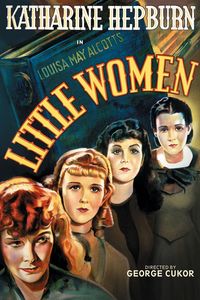
    (On Cable TV, July 2019) There’s been quite a few film adaptations of Louisa May Alcott’s Little Women over the decades, with the 1994 version being most familiar to modern audiences and two more versions released in 2018 and 2019. Still, one of the most enduring versions remains the George Cukor 1933 Little Women, featuring no less than Katharine Hepburn in one of her earliest featured roles. The story is episodic—it’s about the coming-of-age adventures of four Massachusetts sisters during and after the Civil War, as they try to keep the household together in their father’s absence. Romantic and dramatic vignettes follow. This being a 1933 film, barely six years out of the silent movie age, there’s quite a bit of period melodrama in what is presented on-screen. Still, it was a big-budget, good-natured blockbuster movie at a time when the movie industry was under fire for pushing vulgar sensibilities … and it became a hit. The can-do spirit of the film found resonance in the then-current Depression, and the absence of an outright villain was (and remains) a nice change of pace. It can still be watched with some amount of interest, although frankly you can be there just to watch Hepburn and Edna May Oliver. (This being said: I’m a big fan of 1930s Katharine Hepburn, but she gets some serious competition here from Jean Parker.)  It’s a film of its time, but it was close to being the best of what was produced in early-1930s Hollywood. As an actor’s showcase from past generations, Little Women is still worth a look.