Luke Evans

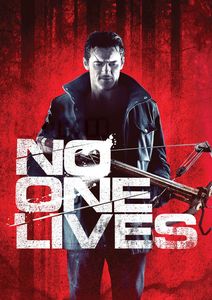
  • No One Lives (2012)

    No One Lives (2012)

    (On Cable TV, February 2021) Some movies seem custom-made to irritate me, and No One Lives threads perilously close to the point where I’d condemn the film entirely. It’s a horror film that plays rough: The violence is frequent and brutal, with pieces of people casually flying, spilling, exploding or flowing. It makes a protagonist out of an amoral serial killer that takes pride in the flamboyance of his evil and tries to get another character to follow in his footsteps. It’s largely shot at night in grimy environments. The plot doesn’t make sense if you think even slightly about it, depending on a paranoid vision of the world that only exists in horror movies. The line-by-line dialogue is frequently terrible, indulging in exasperating clichés. Perhaps worst of all, it’s far more interested in the detail of its gore than using horror to discuss larger topics. In other words, it has nearly everything that I truly hate about the dumbest variants of the horror genre — it’s the find of film that just makes me sad about humanity in general. Don’t watch No One Lives — it’s a nihilistic gore-fest that will only make your day worse. But even with that assessment, it does have one or two things to save it from worthlessness. The premise is mildly amusing, what with psychopath killers going after what they think is an easy mark in the form of a well-to-do travelling couple, only to realize that they’ve stumbled onto something much worse than they are. Then there is the above-average execution: director Ryuhei Kitamura is stuck with a terrible project, but his execution is dynamic and interesting even despite the gory interludes. Furthermore, Luke Evans is not badly cast as an utter psychopath. In other words, if you’re the kind of person who likes those movies, then this is a well-made movie in that genre. Too bad I’m not part of that group.
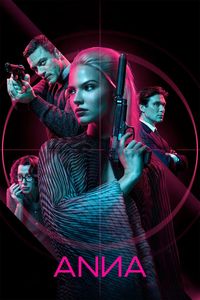
  • Anna (2019)

    Anna (2019)

    (Amazon Streaming, December 2020) Every storyteller has their favourite archetypes, and based on the evidence I’m sure that writer-director Luc Besson’s go-to is that of a female assassin. (Also one much younger than he is – and that’s been known for a while.) Anna is something like the seventh dip into that kind of character after, …let’s see…, Nikita, Point of No Return, Leon (split archetype), Bandidas (somewhat), Colombiana and Lucy (sort of). It’s probably the dullest of the lot, too. Our heroine is a product of the Soviet assassin training program who finds herself in Paris living the life of a supermodel by day, assassin by night. Turning to become a double agent, she really is fighting for her freedom to disappear. The rest is action sequences, tough-person posturing, an enjoyable turn from Helen Mirren, some standard spy fiction tropes, and reasonably energetic direction. Anna is an unobjectionable time killer, although the tortured timeline filled with flashbacks and skip-forwards is better suited to mathematical exam questions than casual watching. I’m not that susceptible to Slavic blondes like Sasha Luss, but she does generally well, and is supported by the likes of Luke Evans and Cillian Murphy. Besson-as-director can deliver the strict minimum (and occasionally a bit more, like the restaurant scene) but I’m not seeing any evidence of trying to become any better. (And with recent affirmations of his terrible behaviour, it’s not clear if he’ll get to direct another film any time soon.) If he does write something else, let’s hope he tries to do something different than another female assassin.

  • Professor Marston and the Wonder Women (2017)

    Professor Marston and the Wonder Women (2017)

    (On Cable TV, November 2018) I know that celebrity crushes are not a valid component of clever critical assessments, but I do have a big crush on brainy brunette Rebecca Hall, and seeing her pop up as a strong lustful muse in Professor Marston and the Wonder Women checked off an impressive number of boxes in my list of reasons why I had to watch it. As it turns out, it’s a film about one of my favourite bits of comic book history: the remarkably daring origin story of Wonder Woman, as coming from the feverish imagination of an academic with a number of then-unusual fetishes. Wonder no more why Wonder Woman loves detecting lies, strong rope, and a bit of bondage: this was right out of its creator’s own preferences. The bulk of the story takes place during the 1930s, a time not usually known for its free-thinking attitudes. In this context, William Moulton Marston, his legal wife Elizabeth and their polyamorous partner Olive Byrne are people out of time. Driven out of academia after inventing the lie detector but having rumours of their unconventional relationship get around, they make ends meet through various means, until Marston hits upon the idea of vulgarizing their ideas through the medium of comic books. Alas, the story doesn’t have a happy ending … but the way there is unusually interesting, with three strong performances from Luke Evans, Rebecca Hall and Bella Heathcote, as well as skilful screenwriting and direction by Angela Robinson that manages to navigate a tricky topic without falling in exploitation. Professor Marston and the Wonder Women is probably doomed to remain unseen and under-appreciated, but I’m glad that it exists—not only as a showcase for Hall (who apparently has good fun in the early parts of the film as a foul-mouthed headstrong woman a few decades ahead of her time), but as a decent illustration of an iconic heroine’s fascinating creation, and a great portrait of freethinkers stuck in a society unable to accept them.

  • Dracula Untold (2014)

    Dracula Untold (2014)

    (On Cable TV, August 2015) Uh oh… I’ve got a problem.  I’ve seen Dracula Untold a few weeks ago, waited a bit too long to write my review and now I’ve got almost no memories of the film.  Worse: I’m not sure if what I remember is from this film or from the Underworld series.  Yeah, it’s that bad: Generic to a fault, once again obsessed with telling the origin story of a character that frankly doesn’t need any, Dracula Untold is as dull as the modern fantasy film can be.  About half a dozen other films have trod the same ground recently and they all fall neatly into the same unremarkable mold.  The special effects don’t add anything more to a dull story, and the film has the gall to end on a coda that suggests more installments.  (Heck, according to some rumors, this is the film that’s supposed to start an interlocking “Universal Monsters” film universe.)  Frankly, the studio is going to be lucky if anyone remembers this film a week after seeing it, let along years later for a sequel.  There is little in Luke Evans’ lead performance to create much sympathy for the vampire, or to inspire much in terms of appeal.  There’s nothing else in the script either, and the dialogues as the same kind of tripe we’re been hearing in all films of that subgenre lately.  I like Dracula, but in Dracula Untold they should have taken inspiration from the Untold part of the title and made another movie instead.