Mae West

  • I’m No Angel (1933)

    (On Cable TV, July 2021) There are star vehicles, and then there’s I’m No Angel featuring Mae West — few other films have been shaped so thoroughly by the personality of their lead actress. Some context may be useful to understand why: Mae West got to Hollywood rather late at nearly 40, but with a fully formed stage persona from bawdy performances in New York City. She had the good fortune of making her entry in movies during the very brief period of time, the Pre-Code era, where Hollywood was testing the limits of what audiences were willing to embrace in terms of risqué content. Already an accomplished writer and an independent-minded performer, it made sense for West to make her own movies, especially as producers were courting her commercial potential. Hence I’m No Angel, a film in which Mae West, in full Mae West persona, is the centre of attraction as she dispenses her brand of saucy dialogue, has other characters fawn about her, and is unquestionably the one who’s always right. It’s a measure of her star power that you can add, “Oh, and Cary Grant is also in the film” as an honest afterthought. As a Pre-Code film, it’s probably the purest capture of Mae West’s stage persona, more so than She Done Him Wrong. (Indeed, I’m No Angel was one of the movies that was used as justification for the Production Code that started to infantilize American cinema the following year.)  It helps that West is indeed an intriguing character — she may not strike twenty-first century viewers as a remarkable beauty, but the attitude is still impressive in its own right. The truth about star vehicle is that some of them are amply justified.
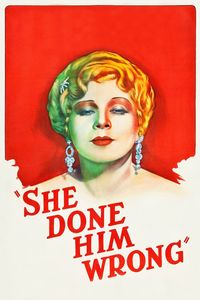
  • She Done Him Wrong (1933)

    She Done Him Wrong (1933)

    (On Cable TV, January 2020) There are many things that are simply wrong about She Done Him Wrong if you take a look at it from a conventional perspective. The script’s pacing is lopsided, with nearly nothing happening for a while, only for the movie to rush through murders and revelations in its last third. In many ways, this 69-minute-long film feels like the first two acts of a longer movie, as it spends so much time setting up a situation that is quickly defused without going further in plotting. Even worse is how the lead character has all the spotlights (narrative and literal) aimed at her—prior to her entrance, characters keep talking about how wonderful she is, her entrance practically comes with a fanfare, and she spends the rest of the film cutting down other characters with withering bon mots followed by a repetitive moue. In other hands, this would have been a laughably bad movie, forgotten in the fog of time. But here’s the thing: This isn’t just any lead actress—this is Mae West, and she wrote much of the script, adapting her own theatrical showpiece. She Done Him Wrong was deliberately planned to be a celebration of her sex appeal, and sold as such: everyone involved in this film in 1933, filmmakers and audience alike, knew what they were there for. As legend has it, they may have gone too far: She Done Him Wrong was a key justification for the enforcement of the Hays Code that would emotionally stunt American cinema for decades and clamp down hard on the kind of sexually liberated character that was Mae West’s stock-in-trade. West herself is an interesting case study in sex appeal: While her appearance is nothing special, things are different when considering her attitude and quips, several of whom would still have HR departments apoplectic if used in a corporate setting. The film is built around her (yes, Cary Grant plays the hero here—but let’s not pretend that the film is about him) and still acts effectively as a primer for contemporary audiences as to what Mae West was all about. She Done Him Wrong is far more interesting as a monument than a movie… even though you may have to power through much of the film’s weaker moments to get to its finest ones.