
Mahershala Ali

  • Alita: Battle Angel (2019)

    Alita: Battle Angel (2019)

    (On Cable TV, January 2020) For longtime Robert Rodríguez fans, it’s been quite a journey watching him go from the threadbare budgets of El Mariachi to the expansive blockbuster filmmaking of a movie like Alita: Battle Angel. In some ways, however, it was the perfect training: throughout his career, Rodríguez has always squeezed the most out of production values to give the impression of much bigger budgets, and it’s that kind of directorial prowess that is essential to Science Fiction spectacles such as this one. Well, that and a focus on sheer entertainment, which Alita keeps intact. Working from a much-delayed James Cameron adaptation (I’ve heard Alita rumours since the late 1990s, and no wonder technology took a while to catch up to the vision), Rodríguez brings his energy, Latin influences and tight editing to the project. The result is a surprisingly good cyberpunk action movie at the top of the technological sophistication scale. Featuring an android girl taking on a corrupt system, this is an action movie with good intelligible sequences and an editing style that keeps viewers involved in the mayhem. The story does feel familiar (the original manga, after all, is now decades old) and indulges itself into making sure that all characters are connected in some way (again, another manga-compression artifact), but it does move its pieces efficiently and leads to what we expect from a science-fiction spectacular. Rosa Salazar does well in the title role, as a heroine taken apart an improbable number of times. Meanwhile, Christoph Waltz and Mahershala Ali don’t exactly slum it in supporting roles. Robo-fetishists will get their money’s worth here, whereas for everyone else there’s Jennifer Connelly in stockings, garters and bustier. While I wasn’t expecting much, I should have trusted Cameron and Rodríguez (not to mention co-writer Laeta Kalogridis): the film is an interesting, sometimes fun, not necessarily mindless SF action movie—the likes of which we don’t often see enough. Despite my anti-sequel stand, I’m actually annoyed that the disappointing box-office results of the film look as if we’re not going to get the sequels so blatantly set up in the film’s conclusion. Hey, maybe if it does well on the home video market…

  • Green Book (2018)

    Green Book (2018)

    (On Cable TV, October 2019) Considering our increasingly sophisticated understanding of (North)American racism, it’s getting obvious that the approach of previous eras isn’t quite enough today. At a time when the Oscars are being awarded between Black Panther, BlacKKKlansman and Green Book, well, it’s infuriating when the Academy ends up picking the absolute safest choice. Green Book, is, in many ways, a throwback to the comfortable anti-racism message of previous decades: White people should be nice to “The Other” so that they should feel better about themselves. In this simplistic message, the inner lives and culture, agency, and aspirations of “the Other” are irrelevant to showing the evolution of the white person. That’s not enough today: “The Other” deserves a full personality, deserves to be the heroes of their own story. In that context, Green Book isn’t all that impressive: as the story of a white protagonist driving around a black musician across the deep south and keeping him out of trouble, it’s clear that the film is more interested in making white audiences feel superior to the cartoonishly racist antagonists of the film. Not to take anything away from the performances of Viggo Mortensen (as the driver) and Mahershala Ali (as the musician, a character of such welcome complexity that the film short-changes him by shoehorning him in a simple story), nor a welcome supporting role for Linda Cardellini, but the result has its limits when comparing it to other best-of-the-year movies. I’d be lying if I didn’t confess to enjoy much of Green Book: there’s a straightforward propulsive quality to the screenwriting that makes it an easy movie to watch and enjoy. I do have the white privilege of liking the film’s reassuring message. But coming off the movie high of BlacKKKlansman, which confronts racists in its ugliest contemporary forms and refuses any easy comfort by making the point that the fight is still ongoing, well Green Book looks like thin soup. There’s a bit of Spotlight Rot at work here, in that a perfectly good genre piece wilts when examined by sustained attention from audiences outside its comfort zone. But at this moment, with the top echelon of the American government not even hiding its inherent racism, I have little patience by comforting lies when “The Others” are not being merely marginalized or harmed but often killed. Green Book may be a feel-good fable, but I want more.

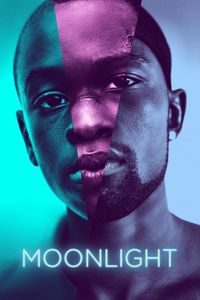
  • Moonlight (2016)

    Moonlight (2016)

    (Netflix Streaming, September 2017) Somewhere in my notional Critic’s Lexicon, there’s an entry for “spotlight rot,” or the tendency for genre work to curdle in appreciation when brought to a wider audience. This phenomenon is most visible during award season, as larger and more generalist viewers take a look at nominated works. What was, up to then, a critical darling of a small group of nominators can wither when considered from audiences who may not be initially sympathetic to the work’s goals and shared assumptions. So it is that Moonlight is, without a doubt, a rather good intimate drama depicting the journey of a young black man as he confronts his homosexuality in an environment that isn’t welcoming to his nature. It’s a film shot with skill by writer/director Barry Jenkins, structured unusually enough to beg attention and blessed with impressive performances by Mahershala Ali, Naomie Harris and Janelle Monáe (who’s good and lucky enough to be in two Oscar-nominated movies this year). But taken out of that context, lauded as one of the year’s best picture and seen from another perspective, however … it does feel rather dull. Matter-of-fact. Imperfect. The rigid three-act structure elides a lot of details and forces the rest in a small window. (Confining Mahershala Ali’s performance to the first act seems like a wasted opportunity.)  The small budget of the film quickly shows its limits. And the point here isn’t that Moonlight is a lesser film—after all, it memorably won the Best Picture Oscar in one of the institution’s most unbelievable presentation screw-up. But the spotlight that the film gets as !!BEST PICTURE OF THE YEAR!! almost diminishes what it manages to accomplish with very little at its disposal. Time will tell if the film ages well … but it’s very possible that future film critics will wonder why it outclassed La-La Land and other contenders … and then we’ll have to explain #oscarssowhite … and maybe the current president. Sometimes, even small movies get swept up in big movements.