The Maltese Falcon (1931)
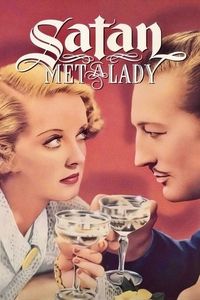
(On Cable TV, September 2022) For movies being remade, the best-case scenario is a forgettable, inferior remake that is soon forgotten and leaves the original with its original lustre. The worse case scenario is pretty much what happened with 1931’s The Maltese Falcon: The remake ended up being a genre-making classic that completely eclipsed the previous version (to the point where it’s often explicitly presented with the caveat that it’s NOT the best-known version) and whose interest is almost entirely measured in comparison to its remake. So it is that the 1931 The Maltese Falcon is… not good. Not as good, anyway. Even putting aside the extraordinary contributions of John Huston and Humphrey Bogart to the 1941 remake, there are two crucial ways in which Roy Del Ruth’s 1931 version falls short. First, obviously, is the technical polish of the production. Dating from early in the sound era and not exactly being a prestige production for the studio, this Maltese Falcon is marred by vexing technical shortcomings: frequent dead audio, incredibly rough editing, static camera shots—no wonder it seemed like a prime candidate for a remake: Even the in-between comic remake titled Satan Met a lady would greatly improve on those aspects even five years later. But the more crucial difference illustrates the importance that tone and style can make on even the same kind of narrative: 1931 was one decade too early for film noir, and so the first Maltese Falcon offers, to seasoned noir fans, the utterly bizarre spectacle of an archetypical noir story being done is rather bland mystery style—missing the added layer of shadowy cinematography, downbeat tone and urban decay that made film noir such a landmark. It does make for hypnotically bemused watching—especially if you’re familiar with the other versions. There is one important aspect, however, in which the 1931 is superior and will surprise viewers, and it’s in the Pre-Code frankness of the script: the sexual aspects of the original novel are toned down but far more obvious than the later versions of the film: it feels harsher and occasionally more honest about its own subject matter. Strike another one up for Pre-Code Hollywood. This version of The Maltese Falcon is, without many realizing it, a modern treat—as with many Pre-Code films judged too racy for the Production Code years, it was unavailable for public viewing from 1934 to 1966. Ironically, this may be why we ended up with the 1941 version—a way to remake it according to the strictures of the time, and accidentally producing a classic along the way. So rests the 1931 version of The Maltese Falcon—forever in the shadow of its successor.