Margot Robbie

  • The Suicide Squad (2021)

    The Suicide Squad (2021)

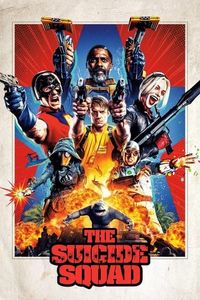
    (On Cable TV, December 2021) Considering that the house brand of both the Suicide Squad as a concept and writer-director James Gunn as a filmmaker is being provocative, it makes no sense to complain that The Suicide Squad is alternately gross, gory, profane and vulgar. That’s all true. But unlike a number of similarly down-and-dirty movies lately, this one is actually funny, entertaining and a sharp improvement over the 2016 David Ayers Suicide Squad. Going into the film completely cold, I was pleasantly surprised by an opening sequence that really messes with audience expectations, then goes on to introduce the real characters. Consciously aiming for the bottom of the barrel of DC universe villains, Gunn does feature more than the usual fare. At the exception of fan favourite Margot Robbie as Harley Quinn, Viola Davis and Joel Kinnaman, the only elements judged salvageable from the previous film, the film focuses on new characters and sends them into a Central America situation somewhat reminiscent of 1980s action movies. But Gunn clearly intends to surprise audiences because nothing (from the opening sequence onward) ever goes to plan. Perhaps the film’s highlight is Harley Quinn’s reaction to being attracted to another bad boy — a perfect relationship that she nonetheless recognizes as being terrible for her. Margot Robbie once again steals the show, but she has a lot of competition — not necessarily from Idris Elba’s rock-solid performance as a professional killer, but John Cena once again grabbing the spotlight. The change of scenery to a fictional Central American capital brings a lot of colour and flavour to the film, and allows a city-smashing climax to feel different from North American metropolises. As usual whenever R-rated Gunn movies are concerned, I have a number of issues with some specific aspects of the execution — the gore, the coarseness, the quasi-nihilism. But The Suicide Squad works well in spite of them, even though I would be wary of recommending the result to anyone but a jaded viewer. I was expecting much worse anyway from a soft reboot of a film few people even liked.

  • Bombshell (2019)

    Bombshell (2019)

    (On Cable TV, August 2020) It only took two years (and I’m not sure we can imply causation), but the first major #MeToo movie has arrived and by its nature it’s problematic. By “major,” I obviously mean “big budget, big stars, big topic” – in this case, Bombshell is about no less than sexism and sexual harassment within Fox News, as played by Charlize Theron, Nicole Kidman, Margot Robbie, John Lithgow and Kate McKinnon among others. Written by Charles Randolph and directed by Jay Roach, the film takes on the style of a dark, fast-paced comedy very much like their previous The Big Short, albeit less successful: there’s a hard limit to how much comedy you can wring out of volatile issues like sexual harassment. What’s more, anything about Fox News in today’s hyper-charged political temperature is going to get it wrong, either by being timid about it or feeling overblown. Bombshell, at a surface level, works rather well: the technical execution is more than adequate, the pacing is steady, the superficial look at how Fox News sells its brand of noxious fearmongering through blandly attractive blonde white women is on-target, and one can’t say enough good things about the central Theron-Kidman-Robbie trio. Hilariously enough for a film about packaging politics through near-identical broadcast blondes, Bombshell won an Academy Award for Makeup and Hairstyling. The film doesn’t go soft on the repulsive Roger Ailes and his actions, and at first seems to be aligning itself with the blowing winds of #MeToo retribution. Start digging just a bit deeper into the film, however, and things get murkier, confusing and irreconcilable. It’s hard to avoid thinking that, for all of their proven skills in making The Big Short so great, the Randolph/Roach duo may not be ideally suited to helm a film about women’s issues: Assuming (as one should) parity in filmmaking skills available to Hollywood producers, a female-driven creative team would have benefited from better optics, and delivered a more authentic result. (I’m not that certain that it would have been different or better, but I do believe in “what looks good” and male creative heads on a women’s issue film is not something that looks good – and retribution for #MeToo should at least begin with giving voices. We’ll talk again in a decade or so about the creative equality of cross-gender takes once we’re closer to true equality.) There are some fine arguments to be made as well about how Bombshell doesn’t quite go to the bottom of the issue of what Fox News sells – fear through sex appeal, through female newscasters who are harmed by the falsehoods they’re selling. But perhaps most vexingly ironic of all is the growing realization that, of all the news networks where this is taking place, Fox was first forced to confront and pay for its structural sexism. You can read op-eds and hot takes and blog posts and academic commentary on Bombshell all day long and end up even more mixed on the film than you could have thought possible. So, can Bombshell be both a fun watch and a film without a strong point to make? Maybe. For once, I won’t even try to wrap it all up with a definite conclusion.

  • Once Upon a Time… in Hollywood (2019)

    Once Upon a Time… in Hollywood (2019)

    (On Cable TV, March 2020) Considering Quentin Tarantino’s fascination for older movies, it was almost inevitable that he’d end up recreating Hollywood history sooner or later. With Once Upon a Time… in Hollywood, he gets to recreate 1969 Los Angeles in his own idiosyncratic fashion, playing up the iconography but avoiding many clichés along the way. In some ways, it’s a less overly experimental film than many of his previous ones: the direction remains grounded most of the time, and the film doesn’t overuse splashy effects. On the other hand, it’s still Tarantino and that means it’s quite unlike most other movies at the multiplex: it eventually becomes an alternate-reality drama, it has fun with narration, it plays off its actors’ career and it makes copious use of very long sequences that play almost in real-time. At times, Once Upon a Time… in Hollywood is less of a story and more of an immersion in a reality fifty years distant, taking in the mundane sights and sounds of a specific time and place. It’s quite a bit of fun even when it multiplies the obscure references of its day-in-the-life style, and the actors look as if they’re having fun. Brad Pitt has a terrific role as the guy who’s usually smarter than anyone else in the room and Margot Robbie is luminous as a Sharon Tate saved from her real-world fate (a justifiable historical inaccuracy) but the real winners here are the viewers for a quick trip through a time machine.

    (On Cable TV, July 2021) Having just read Quentin Tarantino’s “novelization” of his own Once Upon a Time… in Hollywood, which departs from the film in many delightful ways, I had to re-watch it again: both for pleasure but also to make sure that I had a good handle on the differences between both. In many ways, I enjoyed the film even more on a second go-around. One thing that worked better this time was the homage to 1960s Hollywood – but that’s almost inevitable given that my own knowledge of the period has grown in the year since I first saw the film. Knowing what to expect from the film’s staggering running time also helped in settling into the slow pacing of the result. But the book also clarified things that may not have been obvious from a simple second view. It provide some fascinating additional background to the characters, chiefly in establishing Cliff’s incredibly violent personal history apart from Brad Pitt’s personal charm. While I still consider Once Upon a Time… in Hollywood to be middle-tier Tarantino, it does have the advantage of being somewhat better-natured than many of his other films – even the violence, when it ignites, seems to be unusually justified: you’ve never felt so good seeing a hippie girl being repeatedly face-smashed into furniture, considering that it saves Sharon Tate from a terrible death. So are the strange ironies of a film that could only have been made by a filmmaker with the creative freedom of Tarantino.

  • Mary Queen of Scots (2018)

    Mary Queen of Scots (2018)

    (On Cable TV, September 2018) On paper, Mary Queen of Scots sounds like those movies made for Oscar glory—two terrific actresses, and a historical subject matter that allows for Very Serious Business through plenty of costumes, palaces, and drama. Here we have none other than Saoirse Ronan as Mary Queen of Scots and Margot Robbie as Queen Elizabeth I, each of them trying to find a place where they aren’t rivals. Don’t read too much in historical facts, though—the film would be sued for libel if any of the principal characters were alive, delving as deeply into counterfactuals and conspiracy theories. The visual polish of the film is astonishing, mind you—showing how far modern moviemaking can be from the stuffed stage drama of earlier decades. Alas, none of those qualities fully explain why the film feels so overwhelmingly dull, especially in its first two thirds where we should be engaged. Instead, the characters feel like puppets going through motions that are very important to them and not to us. (It doesn’t help that Ronan, for all of her acting skills, can’t manage more than passable mushy French—her dialogue scenes with French actresses are particularly sobering as they emote far better around her pieces of dialogue.)  There are flashes of drama, violence and battles that should make the film more interesting but don’t. It gets slightly better toward the end as we move toward a forgone conclusion and a scene in which the two actresses finally get to share some screen time, but it’s too late to make an appreciable difference. It’s interesting to measure Mary Queen of Scots to The Favourite, the one period drama film featuring female protagonists that did get plenty of Oscar attention—Mary Queen of Scots feels like a stultified throwback to the worst historical biopics of yore rather than reinvigorate the subgenre. In the end, there’s little wonder why this eagerly anticipated film ended up in commercial near-obscurity, critical doldrums and Oscar invisibility: It’s just not terribly good, and somewhat even annoying along the way.

  • I, Tonya (2017)

    I, Tonya (2017)

    (Netflix Streaming, August 2018) Some biopics are more complex than others. It’s one thing to present a universally loved person … but how do you make a movie about someone widely loathed? That’s the bet taken by I, Tonya, a biography of early-nineties skating villain Tonya Harding. The easy approach would have been to explain that Harding had a tough upbringing, that she never fit within the glamour image of figure skating, that she was surrounded by people with poor judgment and that (she says) she was never involved in the infamous knee-capping incident with Nancy Kerrigan. But that would smack far too much of a basic Lifetime movie with added excuses. What I, Tonya does is far more interesting: Using a collage approach where the main narrative is supplemented by fake interviews with the main players and split-second flashbacks undercutting (or at least seriously questioning) interview claims, this is a sympathetic biography that doesn’t quite manage to bring itself to exonerate its subject. It often breaks the fourth wall with no shame, and even calls out the viewer for their voyeuristic interest. It honestly portrays both Harding’s point of view and tries to match it with the public perception of the events, and while it does correct the record, it remains skeptical about Harding’s version. The result is, frankly, far more entertaining than anything we could have expected from such a project. There’s comedy, empathy, drama and a strong actor’s showcase for both Margot Robbie (completely convincing as Harding, doing a complete 180 on her usual glam persona) and Alison Janney (playing a character in the running for the title of worst mom ever). Screenwriter Steven Rogers and director Craig Gillespie each bring a fascinating sensibility to the project—this isn’t your grandparents’ biopic, as is zips from scene to scene and seems to operate on skeptical irony throughout. And yet, and yet, we can’t help but feel some amount of understanding for Harding’s version of the story. It’s not a simple story and it’s not a simple film either—But I, Tonya is an exemplary case study in how to present tricky material on-screen with plenty of style.

  • Suicide Squad (2016)

    Suicide Squad (2016)

    (On Cable TV, April 2017) What’s most fascinating about Suicide Squad isn’t that it’s a film that begs for mixed reviews … it’s that some of the worst things about it are usually strengths in other contexts. I like classic rock soundtracks a lot, for instance, but even I felt that the film was trying too hard by the time its third hit song started playing barely five minutes into the movie. I like exploding helicopters, but seeing three of them go down in a single movie was excessive (and who knew such crashes were all easily survivable). I’m a big fan of dense detail-rich editing, but even I was getting tired of Suicide Squad’s opening act, masquerading a dull exposition structure by plenty of fancy cuts. So it goes, on and on, for much of the movie. The script can’t commit to the idea of villain protagonists, and that’s how we end up with even more exposition to soften their edges. Will Smith takes over a film his character had no business taking over, leaving little to his co-stars of what’s supposed to be an ensemble cast. Margot Robbie’s Harley Quinn runs against nearly everything I usually like about the character, making her an oversexualized strumpet with the special power of … waving a baseball bat around? Jared Leto’s Joker seems self-consciously edgy for no good reason. And let’s not talk about Slipknot, because the film really isn’t interested in him. David Ayer’s direction may use CGI like crazy but can’t put all the pieces of this disjointed film together in a harmonious whole. Tonally inconsistent, the film tries for operatic gritty grandeur but ends up joking around CGI most of the time. Visually, moments of it are nice … but don’t quite amount to anything better than pretty pictures. There are rumors, to be clarified in a decade or so, that the production of the film was marred by reshoots, change of direction and a competitive editing process—who knows where the real problem was? What’s obvious is that Warner Brothers ends up with another ho-hum film in its attempt to compete with Marvel in presenting a coherent shared universe on-screen. I’m not saying that Suicide Squad is a disaster—Michael Jai Courtney here has his best role to date, while Viola Davis is having fun as Amanda Walker. It’s just too bad that the script never used her, or the squad, in ways most appropriate to their characters. As read here and there on fan forums, a far better conceptualized Suicide Squad would have seen supervillains going against superheroes for a noble goal, not fighting another generic super-monster like they do here. Frankly, go watch the “Bohemian Rhapsody” trailer of the film again for a purer Suicide Squad experience.

  • Whiskey Tango Foxtrot (2016)

    Whiskey Tango Foxtrot (2016)

    (Netflix Streaming, November 2016) There’s something tailor-made for Tina Fey in Whiskey Tango Foxtrot’s brainy-and-attractive protagonist, a bored lifestyle writer who decides to take up war journalism in Afghanistan at the height of the American intervention over there. Before long, the pace of the job has transformed her into an adrenaline junkie, breaking off her relationship back home and leading her to taking more and more risks. This dramatic arc, coupled with the built-in absurdity of life in war-torn Afghanistan, makes for a first half that’s decently comic, renewing with the geo-sardonicism American comedy subgenre that reached its peak in 2005–2010. Fey is great as her character gradually evolves from bemused fish-out-of-water to grizzled war journalism veteran, and as the film keeps up the more comic aspect of its story. Margot Robbie also makes an impression as a mentor/rival of sorts, while Martin Freeman takes on a less sympathetic turn than usual. It’s very loosely based on true events, but the film wisely sticks to fiction more than reality when comes the time to deliver entertainment. Still, its last half gets progressively less amusing, to the point of dealing with kidnappings, deaths, maiming, betrayals and absolution. While the dramatic arc progression is understandable, Whiskey Tango Foxtrot doesn’t end on the same kind of high notes on which it begins, taking away much of its impact. Too bad, because in many ways this is a good showcase for Fey’s brand of comedy, and a welcome reminder of the impact of the American intervention in Afghanistan—see it with the equally imperfect Rock the Kasbah for another perspective.

  • Z for Zachariah (2015)

    Z for Zachariah (2015)

    (On Cable TV, May 2016) As post-apocalyptic thrillers go, Z for Zachariah plays things more intimately than most. There are only three characters in the story, hence the drama: Margot Robbie initially stars as a young woman who has almost unexpectedly lived through a global nuclear disaster, her universe now limited to a small valley where the radioactive fallout can’t enter. She’s managing to hang on, but her world is turned upside down when she comes across another survivor, a scientist played by Chiwetel Ejiofor. Their relationship is difficult to begin with, yet things get even more complicated when a third man, much younger and friendlier (Chris Pine) also makes his way in the valley. The resulting tension isn’t pleasant for anyone, especially when science and religion are set up as mutually incompatible pursuits, and an unhealthy rivalry begins between the two men, leaving our heroin scared and disturbed from her lonely life. Far from being cheerful, Z for Zachariah works well as an acting showcase for all three actors (with Robbie earning a chance to prove the kind of dramatic talents that don’t fit with her persona in blockbuster movies) but get annoying when it aims for simplistic allegory. As a feminist twist on post-apocalyptic stories, it’s inconclusive—another five minutes of definitive resolution may have helped matters, especially given the liberties taken from the original novel. It amounts to a film that qualifies as mildly interesting but not essential, unless you’re a post-apocalyptic junkie or a fan of the three actors. At least it does a few unusual things in the sub-genre, and it handled with some competence.

  • Focus (2015)

    Focus (2015)

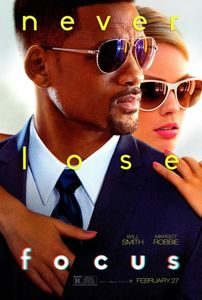
    (Video on Demand, June 2015)  Con-man romantic comedies (con-rom-coms?) are, by now, such an established sub-genre (The Thomas Crown Affair(s), Duplicity, Confidence… and that’s from memory alone) that they can work on recognition rather than surprises, even if surprises are the point of the film.  We already know that such con-rom-coms will end with the romantic leads driving off into the sunset, that we’ll witness elaborate triple-cross confidence tricks, that the entire thematic structure of the film will be the tension between greed and love, and the trust issues in all human relationships, whether they be romantic or criminal.  So, when Focus comes along, it feels as if we already know how it’s going to play out, and a proper appreciation of the film can be boiled down to basic questions: Are the lead actors sympathetic?  Is there some romantic chemistry between the leads?  Are the confidence tricks interesting?  Does the film hold our attention from one moment to the next?  Fortunately, Focus succeeds even when it’s not being particularly original.  The showcase sequence of the film, a high-stakes gambling sequence in a stadium luxury box, may not be original, but it clicks perfectly.  The film’s two biggest assets are Will Smith, playing his usual brand of charismatic confidence (his best such role since Hitch, and a substantial return to form after the After Earth debacle), and Margot Robbie, making another serious case (after The Wolf of Wall Street) as to why she’s more than Today’s It Girl: her role is a tricky mix of deception, sexiness, vulnerability and mixed agendas, and she hits all of the right notes.  With both of them playing off each other, Focus feels like an old-fashioned movie-star vehicle, far more worthwhile for its slick execution than any conceptual boldness.  And it works.  Sometimes, behind the analytical façade and the numerous references to trends and industry terms, the critic abides and simply repeats the obvious: it works.

  • The Wolf of Wall Street (2013)

    The Wolf of Wall Street (2013)

    (Video on Demand, March 2014) Presenting the grandiose life story of a criminal isn’t new grounds for veteran director Martin Scorsese, and that may explain why he has chosen to pile so much excess in a film that could (but probably shouldn’t) have been told far more economically. Centered around Wall Street trader Jordan Belfort’s short-lived (but lucrative) career in the waning days of the twentieth century, The Wolf of Wall Street does make an attempt at the usual tragic structure of such films: The introduction to a life of crime, the excessive fun and games of the high-flying protagonist, the enemy forces closing in, and the final disgrace as the protagonist loses everything. But the proportions are different of the norm: The introduction is frantic, the downfall takes less than two minutes and the rest of the film is pure excess piled upon pure excess: Drugs, sex, nudity, profanity all jostle for screen-time in this three-hour paean to the utter corruption made possible by a multi-million-dollars annual salary and an enabling environment without restraints. Leonardo DiCarpio is simply magnificent as the protagonist: Smart, driven, charismatic, absolutely corrupt and unable to stop himself. He directly addresses the audience as the revelry is unleashed around him, reassuring us that this is all illegal and that we wouldn’t understand all of the details. Not that we need to: At a time where Wall Street excesses are well-known and even celebrated, The Wolf of Wall Street doesn’t need to waste its time giving us a moral lesson: It would rather give us a full-throttle ride through decadence without false reassurances that sociopathic behavior always gets what it’s due. It makes for a lousy Sunday-school example, but an absolute marvel of a film: The Wolf of Wall Street is rarely less than hypnotically compelling, the work of a director working at his best. Many actors get their chance to shine here besides DiCaprio: Jonah Hill gets a ton of laughs (especially during a Qualuude-fueled scene with DiCaprio that already ranks as a classic bit of physical humor), Matthew McConaughey continues his white-hot acting streak in a pair of film-stealing scenes, while Margot Robbie gets a plum role that requires as much sex-appeal as honest acting talent. It amounts to a terrific thrill-ride of a film, slick in all the right ways and unusually respectful of its adult audience. Frankly, I’d rather see this film a second time than have a first look at many other films in my playlist.