Martin Freeman

  • Ode to Joy (2019)

    Ode to Joy (2019)

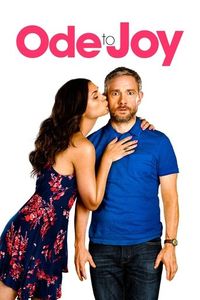
    (In French, On TV, September 2021) A clever premise goes a long way to making a romantic comedy memorable, even if it ultimately ends up going somewhere familiar. A great cast also helps, so when we see Martin Freeman show up in Ode to Joy as a man with a neurological condition that has him fainting at the slightest strong emotion (especially joy), we’re in good hands — and the same goes with having Morena Baccarin as the exuberant woman who catches his eye. The film’s most interesting segment comes next, as our eminently reasonable protagonist concludes that he literally can’t process life on such an emotional roller coaster, and arranges for her to date his brother and for him to find companionship with an emotionally-muted colleague of hers. Practical! Clever! And doomed to failure! As we shift into our third act, it becomes clear that nothing is going to keep our lead couple apart except for some temporary misunderstandings, and so Ode to Joy eventually ends where we expected it to be, albeit with truly interesting moments along the way thanks to unobtrusive direction from Jason Winer. Freeman and Baccarin have a good chemistry despite the dangerous nature of the male lead’s condition — the film’s epilogue is cute and poignant at once. Some good supporting work from Jake Lacy and Melissa Rauch wrap up the lead quartet. While not a great movie, Ode to Joy is fun and likable and, yes, joyful — perfect undemanding entertainment if you just want to see something that ends well with enough good times along the way to the expected conclusion.

  • Whiskey Tango Foxtrot (2016)

    Whiskey Tango Foxtrot (2016)

    (Netflix Streaming, November 2016) There’s something tailor-made for Tina Fey in Whiskey Tango Foxtrot’s brainy-and-attractive protagonist, a bored lifestyle writer who decides to take up war journalism in Afghanistan at the height of the American intervention over there. Before long, the pace of the job has transformed her into an adrenaline junkie, breaking off her relationship back home and leading her to taking more and more risks. This dramatic arc, coupled with the built-in absurdity of life in war-torn Afghanistan, makes for a first half that’s decently comic, renewing with the geo-sardonicism American comedy subgenre that reached its peak in 2005–2010. Fey is great as her character gradually evolves from bemused fish-out-of-water to grizzled war journalism veteran, and as the film keeps up the more comic aspect of its story. Margot Robbie also makes an impression as a mentor/rival of sorts, while Martin Freeman takes on a less sympathetic turn than usual. It’s very loosely based on true events, but the film wisely sticks to fiction more than reality when comes the time to deliver entertainment. Still, its last half gets progressively less amusing, to the point of dealing with kidnappings, deaths, maiming, betrayals and absolution. While the dramatic arc progression is understandable, Whiskey Tango Foxtrot doesn’t end on the same kind of high notes on which it begins, taking away much of its impact. Too bad, because in many ways this is a good showcase for Fey’s brand of comedy, and a welcome reminder of the impact of the American intervention in Afghanistan—see it with the equally imperfect Rock the Kasbah for another perspective.

  • The World’s End (2013)

    The World’s End (2013)

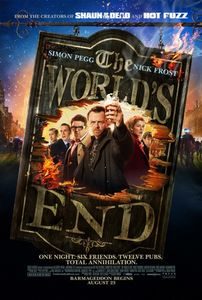
    (Video on Demand, January 2014) Given the quasi-classic status that Shaun of the Dead and Hot Fuzz enjoy in my own personal ranking, I was waiting for The World’s End with loaded expectations: As the concluding entry in the so-called Cornetto trilogy, would it be as funny, as tightly-written, as visually innovative and as purely enjoyable as its two predecessors? Well, while it may not be as hilarious as Shaun of the Dead, nor as satisfying as Hot Fuzz, The World’s End definitely holds its own as a great piece of genre moviemaking. A boozy nostalgic comedy that eventually evolves into something far more outrageous (with a daring ending that crams another film’s worth of content in the last five minutes), The World’s End is perhaps most impressive for the interplay between structure and surface, as written signs comment upon the action, as the story is outlined in-text as a flashback before re-occurring during the film, or for the various (sometimes less-than-pleasant) questions raised by the ending. There is a lot of depth here, and some of it may not be entirely apparent at a first viewing. Still, The World’s End is no mere puzzle box: it works well on a surface level, whether it’s the actors reunited for the occasion (Simon Pegg and Nick Frost interchanging their hero/cad roles, obviously, but also Martin Freeman, the lovely Rosamund Pike, and a glorified cameo by Pierce Brosnan), the impressive fight choreography, the ironic dialogue and Wright’s usual attempt to push film grammar in new directions. While a first viewing leaves a bit unsettled, The World’s End steadily grows in stature as you reflect on it –another characteristic it shares with its predecessors. Mission accomplished for Wright/Pegg/Frost, then, as the wait begins for their next films.