Martin Landau

  • Mistress (1992)

    Mistress (1992)

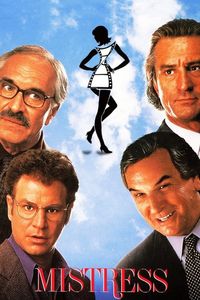
    (On TV, June 2021) Despite the self-aggrandizing nature of such projects, I love it when Hollywood makes a satire about itself. They don’t even have to be all that insightful — as a cinephile, I can appreciate the attempt to tell a joke. In Mistress, we follow a pair of past-their-prime director and producer as, out of the blue, a passion project long left abandoned has a chance of being revived. The only catch (as is the case in 1,000% of film projects) is financing, and the three investors interested in the project each want their mistress to be cast in a prominent role. Much of the film tracks how a purely artistic project ends up compromised by multiple overlapping contradictory requests — while it’s a comedy, the ending is unusually grim (well, not that grim) in that nothing comes out of it. Mistress is fun enough, but it punches above its weight due to some very good casting. Robert Wuhl and Martin Landau are likably pathetic as a bottom-feeding writer-director-producer pair trying their best to exist in a system that doesn’t care for them. Their will is tested by three investors, played by Robert de Niro, Danny Aiello and Eli Wallach in three strong performances. But as far as I’m concerned, the most memorable casting here is Sheryl Lee Ralph as a high-powered woman who’ll take advantage of a break but not let anyone walk over her. She does bring a lot of energy to what is, overall, a much more low-key affair. Mistress belongs to the kind of self-deprecating Hollywood comedy that’s probably equally funny and anger-inducing to insiders. Fittingly for a film aimed at professionals, the focus here is more on producing and financing than the shooting of the film itself. It’s watchable enough even today, although I suspect that it was probably released too close to The Player to make waves of its own upon release.
  • B*A*P*S (1997)

    B*A*P*S (1997)

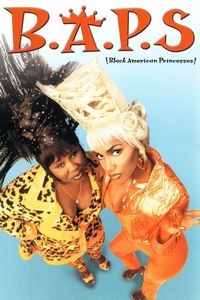
    (On TV, May 2021) Sometimes, silliness is all you need. In B*A*P*S (Black American Princesses), we have two feisty young black women somehow finding their way to a rich white man’s Beverly Hills house, upsetting the neighbour’s habits and prejudices. It’s all executed according to silly farce, what with stereotypes crashing into one another, but director Robert Townsend does get to mount a stealth attack on white orthodoxy, sending the down-to-earth exuberance of its protagonists crashing against the staid manners of their new surroundings. You can easily tell who’s good and who’s not from the way they embrace black culture — all the way to the well-mannered butler with a secret fondness for black TV shows. Martin Landau plays the charmed ailing white millionaire, but the stars of the show are clearly Halle Berry and Natalie Desselle as the titular BAPs as they set out to improve Beverly Hills culture with their own flair. Berry looks surprisingly good as a blonde, although I also liked Troy Byer (who also wrote the screenplay) as a no-nonsense lawyer. The silliness of the film’s execution is less interesting than its overall status as a racially subversive dismantlement of the white establishment. (I’m sure someone, somewhere, already wrote at length about how so-called “dumb” black comedies à la B*A*P*S and How High are far more interesting as tools of systemic racial derision.)  No, the film is not always that clever or witty in its moment-to-moment execution — I’m sure that there’s a better movie to be made from the same material (from Byer’s public disappointment with the results, the original screenplay is probably worth a look), but let’s highlight for a moment the worth of a black-written black-directed black-starring comedy openly espousing black values as explicitly opposed to the white Southern California establishment. While contemporary reviews were harsh (even Roger Ebert, normally a sympathetic audience for this kind of film, hated it), I suspect that more recent assessments are kinder to it — indeed, B*A*P*S seems to have become a bit of a fondly-remembered cult classic in the meantime, which sounds about right for the kind of silly film it appears to be.

  • Crimes and Misdemeanors (1989)

    Crimes and Misdemeanors (1989)

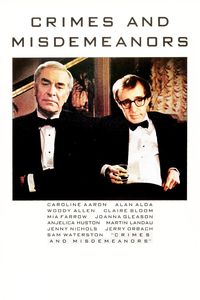
    (On TV, October 2020) I can objectively recognize that Crimes and Misdemeanors is a good movie and I can understand those who maintain that it’s one of writer-director Woody Allen’s best… but I don’t have to agree. Much of this disagreement is the overwhelming impression, sometimes left by his later movies, that we’ve seen all of this before. Taking place in Allen’s favourite upper-middle-class Manhattanite intellectual strata, it’s a film that blends witty dialogue, existential musings, comedy and drama in a mixture very much like, well, half a dozen of Allen’s other films, perhaps most closely with Manhattan Murder Mystery (which, in retrospect, can almost be called an affectionate parody), but also backward to Manhattan for the setting and character and forward to Irrational Man for the nods to existentialism. In other words, if you’ve seen the rest of Allen’s filmography, Crimes and Misdemeanors (to which I’m a late, late arrival) doesn’t hold anything new. It does not entirely help that the film abruptly gains meaning, narrative coherency and an extra star (or whatever you call a better reviewer’s grade) in its final scene, as it finally melds the twin strands of the plot into something looking like a point. Oh, I still liked it: No matter what I think of seeing Allen as a nebbish loser blowing up his marriage with extramarital longing, there’s still a comfortable atmosphere to the result, and despite what I just said, I’m not going to begrudge him another exploration of New York City intellectuals. The acting talent assembled here is, as usual, splendid: Martin Landau, Mia Farrow, Alan Alda and Anjelica Huston as a semi-hysterical mistress… yes, that does it. The comedy here is well dosed with the drama and the philosophical suspense, providing a film that neither errs too heavily on the side of ruminations nor (alas) on the side of absurd gags. It’s finely controlled, and my quip about the plots fusing only in the end scene is belied by plenty of thematic transitions between the two subplots. Still, I can’t help but feel that, given my zigzagging path through Allen’s filmography, I have come to Crimes and Misdemeanors too late to enjoy it at its fullest.

  • Alone in the Dark (1982)

    Alone in the Dark (1982)

    (In French, On Cable TV, September 2020) Coming at the tail end of the 1979–1982 slasher craze, Alone in the Dark definitely knew what it was doing in revolving around a handful of psycho killers escaping from an insane asylum during a power outage and targeting their psychiatrist. Quickly shifting to home-invasion thriller, the film clearly upholds the tropes of the subgenre, and doesn’t care much about narrative cohesion. The biggest draw of the film, even today, is a cast that throws in Jack Palance, Donald Pleasence and Martin Landau together as psychiatrists and psychopaths. (Elsewhere in the film, Lin Shaye has an early brief role.) Better executed than average by writer-director Jack Sholder, Alone in the Dark does, however, remain a first-wave slasher—interesting if you’re into the whole psychopaths-with-knives thing; otherwise not very much.

    (Second Viewing, On Cable TV, January 2021) Not remembering my first viewing, it took me a few false starts before I was able to make it (again) through Alone in the Dark. Either I stopped midway through, or I left it running while I was doing something else and realized by the end of it that I was never compelled to follow what was happening. When I finally sat down to watch with (mostly) undivided attention, I’m not sure I got much more out of it. The first half-hour does have something worth paying attention to: As a psychologist takes residence at an insane asylum, he has trouble connecting to a close-knit foursome of violent criminals, who blame him for the death of their previous psychiatrist. When a power outage strikes, they soon escape and head for his residence. The rest of the film, alas, is more or less a home-invasion thriller, albeit with a twist that can unfortunately be seen (or rather not seen) from the very introduction of the antagonists. If there’s any reason to watch the film, it’s probably for the casting of a few familiar actors: Jack Palance, Martin Landau and Donald Pleasence all have substantial roles here, with none other than Lin Shaye (who finally achieved horror stardom three decades later!) making a short appearance early in the movie. Alone is the Dark does work well in its execution, but it does boil down to a very average early-1980s horror film. That may not sound like much (it partially explains why I didn’t even remember seeing the film a few months ago), but it’s slightly more interesting than the omnipresent slashers of that time.