The French Line (1953)
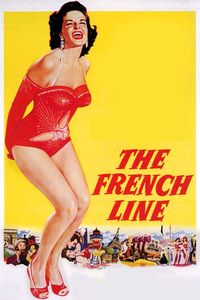
(On Cable TV, November 2020) There have always been Hollywood star vehicles designed to feature specific actresses’ ample assets, but The French Line’s dedication to showcasing the great Jane Russell is exceptional by any standards. Produced by Howard Hugues, this is a film that explicitly set out to capitalize on Russell’s considerable sex appeal. Not only is it a film that revolves around her character, not only is it a film that shows her off in surprisingly skimpy outfits during dance numbers, this is a movie that was shot in 3D mainly to show off her curves to a thirsty public. (“J.R. in 3D—Need we say more?” bluntly goes the poster.) Legend goes that Hugues had a very personal interest in Russell, and designed many of the film’s outfits. He arguably overstepped—the film was judged so salacious that it was refused a production code seal of approval, earned scathing ratings from the era’s moral guardians, was banned from a few cities/countries and had to have an entire musical number trimmed before being shown in other territories. Today, of course, it’s quite tame—you can see more revealing numbers in PG-13 films. And once absent the titillation element, The French Line becomes another ordinary musical, once whose similarities to the previous year’s Gentlemen Prefer Blondes become a handicap more than a selling point. Oh, it’s watchable enough: Jane Russell became a sex-symbol for good reasons, and they go far beyond skimpy outfits. She gets a few good numbers as a Texan oil magnate looking for love at sea and abroad—While the infamous final number “Looking for Trouble” gets most of the attention, I really enjoyed “Any Gal from Texas.” The tone is amiable, and there’s enough going on around the edges of the supporting characters to be interesting: Mary McCarthy looks good, and Arthur Hunnicutt gets his fair share of smiles thanks to a grander-than-life Texan character. Still, there’s no denying that The French Line is about Jane Russell and little else: it’s her film, curves and all.