Matthew Modine

  • Pacific Heights (1990)

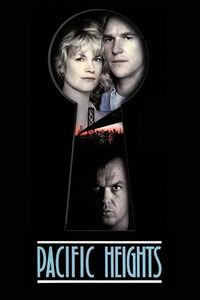
    Pacific Heights (1990)

    (On TV, August 2021) As much as Pacific Heights tries to stack the deck in making us sympathize with its young couple of protagonists (they’re in love, they’re in debt, they’re expecting a baby!), I’m not sure that a thriller in which we’re meant to side with the landlords is going to find much of an audience in a twenty-first century defined by unaffordable housing. Ah well — 1990 was at the end of the ultra-capitalistic 1980s and renting was the ultimate achievement for middle-class bourgeois. Not that Pacific Heights particularly cares about the plight of the common man or even simple plausibility: not when the antagonist is a consummate conman who’s able to manipulate the laws of California to his advantage. Step one is getting the apartment; step two is doing whatever he wants, knowing that he can’t be evicted; and step three is ruining his landlord’s lives so that they either go to prison or bankrupt. (Since there are two of them, why not in prison and bankrupt?)  It’s particularly far-fetched, so it’s a good thing that the film has one lawyer character to explain the labyrinthine way in which our protagonists are trapped. It does feel like an unusually conservative film in-between glorifying yuppies, criticizing renters’ rights and justifying extreme violence from the landlords. It doesn’t help that the script is occasionally slapdash — the male lead (played by Matthew Modine) often explodes in violent confrontation in ways that could have been interesting to explore in their own right. I’m really not fond of Melanie Griffith most of the time, so having her become the protagonist of the film didn’t do it any favours. But there’s one bright spot, and that’s Michael Keaton playing the brilliant yet utterly deranged tenant who becomes the film’s deliciously cartoonish villain — Keaton plays against type here and does it really well. It’s not quite enough to make Pacific Heights a good movie, but it does take the edge of what could have been a much worse film.
  • Hollywood North (2003)

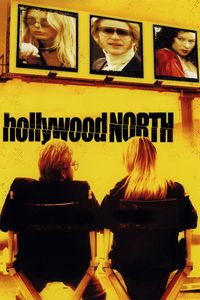
    Hollywood North (2003)

    (On Cable TV, May 2021) By my count, Jennifer Tilly has now played three roles (Hollywood North, Made in Romania, Bride of Chucky) in which she pokes fun at moviemaking, often playing “herself” along the way. It’s not a lot in a career that already spans five decades (!) and ninety-some movies, but it’s enough for a triple feature. The links between Hollywood North and Made in Romania are particularly interesting, as both movies attempt to portray the inner working of the making of a film from the producer’s perspective at different periods. In Hollywood North, we go back to 1979ish Toronto, as a Canadian producer purchases the rights to an acclaimed work of Canadian literature and almost immediately has to make compromises in order to get the film going. Hiring an ultra-patriotic American action star in the middle of the Iranian Embassy hostage crisis isn’t the best idea, and the problems around the production escalate with an unfortunate accident that takes out a supporting actor, embezzlement of funds from another filmmaker, weather woes, script changes, and an on-set affair that annoys everyone. Matthew Modine stars as a producer trying to keep the entire production together, with supporting roles from Tilly (playing a sultry actress) and Deborah Kara Unger as a documentary filmmaker associated with the production. Hollywood North is reasonably entertaining even if it’s rough around the edges. The limits of the budget are obvious, and never more so in an overambitious climax that half-works and then half-doesn’t. Still, it’s amusing enough to be worth a look if you’re the kind of person interested in movies about filmmaking, even if the comedy gets a bit broad at times. Tilly is wonderful — Try to pair Hollywood North with Made in Romania for a contemporary update on low-budget filmmaking, thirty years later.

  • Cutthroat Island (1995)

    Cutthroat Island (1995)

    (In French, On TV, June 2020) Infamous for being such a box-office bomb that it killed Carolco Pictures, Cutthroat Island is, like many celebrated flops, not quite as bad as its historical reputation would suggest. Now that its notoriously troubled production and budget overruns are things of legend, twenty-first century audiences are free to assess the film on its own merits as a pirate-themed swashbuckler. I will not try to pretend that Cutthroat Island is a misunderstood work of genius—it’s sufficiently flawed that you can see where the disappointed reviews came from. While the film does have its strong points (some of the sets, stunts and action sequences are really good), much of it plays far blander than it should for a film of its type. Geena Davis may look spectacular, but she’s ill suited to the role; the same goes for Matthew Modine, who’s clearly not as memorable as he should be in playing the male lead. The seams of the film’s troubled production are glaringly obvious in the inconsistent writing, cinematography, set design and pacing issues: an added layer of polish is simply missing from the final result despite what feels like a large budget. Other moments (like the baffling presence of a monkey) show that director Renny Harlin was unable to keep the production under control. While the result is watchable, Cutthroat Island merely has everything one expects from a pirate movie, but nothing more. But swashbuckling adventure is a subgenre that thrives on excess, and comparisons with the Pirates of the Caribbean series show how much better the film could have been had it featured sharper characters, more appropriate actors, stronger set-pieces and a savvier use of familiar tropes.

  • Memphis Belle (1990)

    Memphis Belle (1990)

    (On TV, May 2018) I saw bits and pieces of Memphis Belle back in high school, but sitting through from beginning to end doesn’t really change my opinion of the film: This is as basic a movie as it’s possible to make about WW2 bomber crews. It’s willfully schematic, reusing plenty of familiar wartime movie tropes in order to comfort its audience. It’s the story of a single bombing mission, supercharged with dramatic intensity (if they come back from their fiftieth mission, they can go home!) and every single incident of interest that may have happened at any point in WW2. It does work in that while Memphis Belle is familiar, it’s not really boring: there’s enough going on to keep watching the film without effort, and the familiarity ensures that the film will still make perfect sense once you come back from a kitchen snack visit. Don’t try to go read up on the film’s historical accuracy—it’s safe to say that most of what’s on the screen happened, but certainly not all at once. There is some additional interest in the cast, given that many of the young men in the Memphis Belle crew have gone on to other things: Most notably Billy Zane, Matthew Modine, Eric Stoltz, Sean Astin and Harry Connick Jr., with special mention of David Strathairn and John Lithgow in ground support roles. Much of the film was shot practically, making the rather jarring special effects stand out more—nowadays, much of the film would be a pure CGI spectacle, although whether this would be an improvement would depend on the director—see Red Tails for an example of going too far. The nice thing about Memphis Belle is that you get almost exactly what it says on the plot summary. Nothing transcendent, but nothing terrible either.