Maureen O’Hara

  • Mr. Hobbs Takes a Vacation (1962)

    Mr. Hobbs Takes a Vacation (1962)

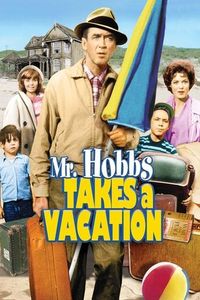
    (On TV, November 2021) As much as I wanted to like Mr. Hobbs Takes a Vacation, there’s so much wasted potential in the milquetoast result that it starts to grate. Of course, that may be an overreaction — the film was obviously built by director Henry Koster to be an innocuous broad-public comedy, and isn’t meant to sustain more elaborate expectations. Still, as a family goes to a beach house for an extended vacation, the film skirts the edge of something more interesting but never gets there. James Stewart remains the film’s best asset as a harried father driven nuts by the entire family vacation (the framing device has him narrate a very funny exasperated letter, his drawl making everything even better — a shame that the finale of the film never quite goes back to it.), and having Maureen O’Hara play the mother is not a bad choice at all. Occasional set-pieces involving a persnickety steam heater, or a steam-filled bathroom, hint at a better film. (And the two references to a father purchasing a Playboy magazine for his son are… surprising.)  But for most of its duration, Mr. Hobbs Takes a Vacation ends up being a curiously tame affair, content to let Stewart run exasperated at everything going wrong during his vacations. It works fine in the way many subsequent family vacations films do — a bit of humiliation comedy, a dash of comic contretemps, and a heaping of traditional values at the trip brings the family back together as one unit. Familiar stuff, perhaps tamer than expected by modern audiences, considering how the envelope has been pushed since then. I can’t, in good conscience, call this a bad movie, but it’s certainly disappointing — although one notes that it led to the somewhat better Take Her, She’s Mine the following year with the same director/star combo.
  • Dance, Girl, Dance (1940)

    (On Cable TV, November 2021) One of Lucille Ball’s better early starring roles, Dance, Girl, Dance has her as a burlesque dancer, competing with a higher-class ballerina (Maureen O’Hara, playing up her distinguished persona) for the affections of a rich heir. In many ways, it’s a very conventional film of its time: Broadway stories were exceptionally commonplace in 1930s Hollywood, and it takes a while for the result to distinguish itself. But it eventually does in its third act — through a (now tame, but then-daring) burlesque striptease from Ball, through a memorable onstage fight between its two female leads, through a script that clearly places the focus on its female characters, and perhaps most visibly through director Dorothy Arzner’s unimpressed depiction of the men attending strip shows. That’s not too bad for a 1940 film — and as a piece of Ball’s filmography, it’s clearly an essential.

  • This Land Is Mine (1943)

    This Land Is Mine (1943)

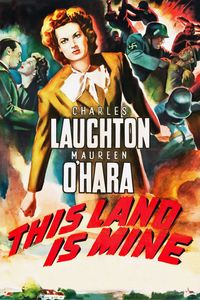
    (On Cable TV, April 2021) It took an exiled Frenchman to credibly portray the horrors of Nazi occupation to an American audience, and that’s why This Land is Mine still ranks today as one of the finest WW2 films made during WW2 itself. Narratively, it shows the Nazi occupation of France on a very personal level by focusing on a small town and some of its inhabitants. A great set of actors is up to the task — George Sanders as an informer, Maureen O’Hara as a teacher but especially Charles Laughton as a cowardly teacher who finds hidden reserves of courage under adversity. Clean directing from Jean Renoir and a striking script do the rest of the work. Renoir resists the temptation to get caricatural about both the French and the Nazis, and the result is something this lives on as something more than propaganda. The entire film works pretty well, but the ending is suitably poignant. This Land Is Mine remains a mild surprise and a great discovery.

  • The Spanish Main (1945)

    The Spanish Main (1945)

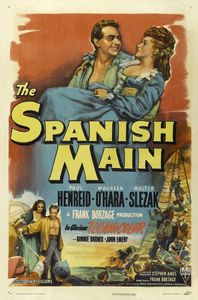
    (On Cable TV, April 2021) Ah, pirate movies: For a long time in Hollywood, seeing one of them meant that you’d seen half of them. They’d have a capable hero, a good person forced in service of a pirate until he became the pirate, largely to have the allure of piratical protagonists without, well, being as repellent as a real pirate. Adventures on the high seas would follow: ship battles, sword fights, swinging for the rigging, capturing the corrupt governor, navigating through a storm, but especially romancing a reluctant beauty, progressively seducing her through good deeds and fearless action. In this context, The Spanish Main is no outlier. Perhaps its most distinctive trait is the unusual casting of Paul Heinreid (not normally known as a swashbuckling hero) in the lead role. Oh, there are other niceties as well: Maureen O’Hara is wonderful as the heroine, especially when the colour cinematography does justice to her red hair. Some of the action sequences are thrilling. The dialogue is not bad. In other words, you get what you expect from a pirate adventure in seeing The Spanish Main. Where the film doesn’t do as well is in distinguishing itself from similar films — it’s an average example of the form, without the extra flourish of other better-known examples. But that’s already not bad (and have I mentioned O’Hara?), especially if you know what you’re getting yourself into.

  • The Parent Trap (1961)

    The Parent Trap (1961)

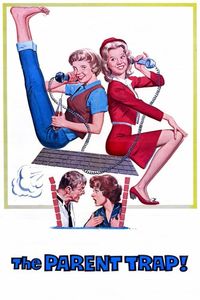
    (Disney Streaming, April 2021) I’m coming to the original The Parent Trap a few years after watching the 1998 remake featuring Lindsey Lohan. I still think that the premise is among the dumbest, most ludicrous ever suggested on film: Oh sure, what divorcing parents of twins wouldn’t each grab one and raise them on opposite coasts in complete ignorance of each other? But if you go with it, the film does work well. The young Hayley Mills is clearly the star of the film, what with her dual roles as a California tomboy and a Boston debutante. The special effects to put them both on screen at once are crude but effective, and they get the point across. While Brian Keith is serviceable as the dad, Maureen O’Hara does get a few great sequences as the mom, especially when she (softly) declares war on her ex-husband’s fiancée and they go at it with veiled insults and catty remarks. The film actually gets more than its fair share of laughs through some good screenwriting, grounding the idiotic premise into something almost believable and executing it with skill. Even the supporting characters get good moments. The atmosphere of the early 1960s is more charming than you’d think… especially considering that much of the film takes place in settings—summer camp, posh Boston house, California mountain ranch—where the passage of time isn’t as obvious. I was, frankly, a bit surprised at how well The Parent Trap still plays today. Sure, it’s a film of its time, but it still hits its marks.

  • Only the Lonely (1991)

    Only the Lonely (1991)

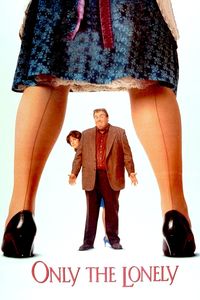
    (On TV, March 2021) In the John Candy filmography, Only the Lonely remains a bit of an oddball. Eschewing the typical slapstick comedy starring Candy as an idiot who eventually does well, this romantic comedy takes its cues from the classic Marty in presenting Candy as a gentle but single policeman with a domineering mother who finally gets a chance at a romance with a shy girl… if only his mother stopped interfering. Candy avoids most of the slapstick here, in service of a more heartfelt and vulnerable character. It’s very much a film about an urban neighbourhood and the people that live in it: neighbours, shops and community events. In this context, Ally Sheedy makes for a rather adorable love interest, albeit one whose main role for much of the film is to absorb a terrifying amount of nastiness and scorn from the protagonist’s mom (a detestable Maureen O’Hara) until she snaps and precipitates the climax of the film. Written and directed by Chris Columbus (but produced by John Hughes), it’s never a surprising film (we all know where it’s going, and that’s part of the charm) but it’s reasonably well-made even when it’s almost completely unmemorable. But Candy is at his likable best, and Only the Lonely runs a long, long time on that strength. All the way to the happy ending, in fact, anything else would have been a betrayal.

  • Sinbad, the Sailor (1947)

    Sinbad, the Sailor (1947)

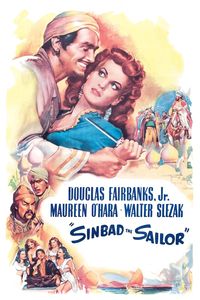
    (On Cable TV, March 2021) Presented as part of TCM’s lineups of “Reframed: Classic Films in the Rear-view Mirror’” of March 2021 (i.e.: Popular films from the Hollywood golden age that, when seen from a contemporary perspective, contain problematic elements that would not pass without criticism today), Sinbad, the Sailor clearly belongs to that category for its stereotypical depiction of Arabic characters and culture. Not only do you have Caucasian Douglas Fairbanks, Jr. playing Sinbad in dark makeup, you also have a festival of clichés in its Arabian setting, lines that would be considered blasphemous to Muslim viewers, fake-Arabic dialogue and cultural misappropriation galore. It’s a lot to take in, but little of it actually distracts from the swashbuckling effectiveness of the film. Shot in lush Technicolor to take advantage of the colourful sets and costumes, it’s an adventure film with lavish production values and a scope to match. Telling us about Sinbad’s “eighth voyage,” it’s a trip featuring villains (Anthony Quinn!), damsels in distress (Maureen O’Hara!), sword-fighting and deliciously florid dialogue delivered with gusto. In other words — yes, it’s dated, but dated in interesting ways… and I’m not the right audience to ask about whether I should be offended by a work of pure fantasy. This is, to be fair, really not Hollywood’s worst offender when it comes to Arabic culture: Have a look at The Thief of Baghdad or any of the versions of A Thousand and One Nights to realize that Hollywood used Middle Eastern settings as a fantasy playground throughout much of its early history. Meanwhile, Sinbad, the Sailor is mildly enjoyable — not a swashbuckler of the highest order, but something reasonably entertaining, with a spirited performance by Fairbanks and plenty of visual delights. Even though it’s not possible to exonerate it, I can think of some far more problematic films.

  • The Rare Breed (1966)

    The Rare Breed (1966)

    (On Cable TV, November 2020) It takes some audacity to even think about making a western about livestock, but that’s what The Rare Breed goes for. James Stewart here plays an adventurer hired to ensure the safety of a lovely widow (Maureen O’Hara in her red-headed glory) as she brings a prized British heifer out west for breeding purposes. There are a few complications, including a lustful rancher, competing clans, budding romance and intergenerational tensions. It all culminates in a happy ending tempered with a little bit of sadness. Steward here has a tough outdoorsman role more akin to his many 1950s westerns, albeit tempered by age and a slightly softer attitude toward women and cattle: If you’re lived this long without seeing Stewart carry a calf in his arms, then this is the film for you. The focus on cattle warms my former farmhand’s heart, and still feels unusual for the western genre, despite cattle being such an important part of the wild west. (But cattle don’t carry guns, so that doesn’t make them as interesting to filmmakers.) Otherwise, I’m somewhat muted in my appreciation for The Rare Breed—I like Stewart, the bull, the ending and O’Hara, but the rest of the film feels a bit inert to me compared to the high points. Ah well—at least it concludes with cute calves galloping around.

  • Jamaica Inn (1939)

    Jamaica Inn (1939)

    (On Cable TV, November 2020) I like Alfred Hitchcock and I like Charles Laughton, but if my understanding of Jamaica Inn’s troubled production history is correct, the on-screen result is what remains after a spectacular clash of egos. As the story goes, Hitchcock took Daphne Du Maurier’s novel (the first of three adaptations of her stories, followed by Rebecca and The Birds), but had trouble with Laughton-the-producer-and-actor, who wanted to transform a dreary gothic novel into something funnier, more eccentric and not quite some faithful to the original. The result is, for lack of a better word, often weird. The still-unnerving premise (an innocent woman discovering that she’s in the middle of a village of marauders, attracting ships to a treacherous coast where the ships run aground, then, killing the survivors and selling the cargo) runs into a semi-comic performance by Laughton and bizarre touches of humour. The film can’t quite make up its mind about whether it has revelations to tell us, and the ending just gets more and more ludicrous, as the heroine is kidnapped by a lusty villain because… well, there’s no real good explanation, since his plan is untenable from the get-go. This is really not top-tier Hitchcock, and probably not second-tier either—while the film was a commercial success and stands as the last of Hitchcock’s British period before going to Hollywood with Rebecca, it’s weaker than many of Hitchcock’s other 1930s films. Aside from the always-interesting Laughton, special mention should be made of the heroine being played by Maureen O’Hara in one of her early leading roles. The 2014 Cohen Media Group restoration of the film is nothing short of terrific—great image quality and clear sound make this a joy to watch — if it wasn’t for the content!

  • McLintock! (1963)

    McLintock! (1963)

    (On Cable TV, May 2020) Considering how little I like John Wayne either as an actor or as a personality, my less-than-impressed reaction to McLintock! is entirely predictable. Wayne isn’t good enough of an actor to play comedy, especially slapstick comedy, and finding that he had much to do in imposing the film’s more retrograde aspects (which includes spanking the heroine for her independence and also for the audience’s laughter) certainly did me no favours. Wayne (whose company produced the film) finds himself irresistible as a fanny-spanking straight-talk anti-government mildly-idiotic protagonist, and thinks that the height of humour is pushing people down a muddy slide. Sure, there’s Maureen O’Hara as a Technicolor redhead that’s worth watching… but overlong McLintock! gets worse every moment that Wayne is on-screen. I’m sure that your enjoyment of the film will be higher if you actually like racist misogynistic Wayne… but why?

  • Rio Grande (1950)

    Rio Grande (1950)

    (On TV, November 2019) I’m cooler than other reviewers on John Ford Westerns and John Wayne as a lead, so I wasn’t expecting much of Rio Grande … and those low expectations worked in the film’s favour. As it starts, we meet a typical Wayne protagonist (actually, the same one as in Fort Apache): a commanding officer in a faraway posting, competent and living as unremarkable a life as possible in those circumstances. But then two new characters walk in: First, his long-estranged son joins the post as a recruit sent from the East, leading to a reunion that is less emotional and more along the lines of no favouritism being tolerated. Then, to complicate everything in between the enemy attacks and peacekeeping role, his estranged wife (Maureen O’Hara, about a third less spectacular without the red hair in a black-and-white film) also walks in, demanding that her son be bought from military service. (And, um, also discuss how her plantation was burnt down by her husband’s men.)  Those familial complications do bring a lot to Rio Grande, and offer a slightly more unusual aspect to this western that the typical frontier genocide material. Because, of course, the hordes of Native Americans are out to kill everyone in this film—your average mid-century western was still horribly racist and Rio Grande doesn’t really deviate from that orthodoxy.  It certainly works better if you can ignore that aspect, but I’ll completely understand if you can’t, especially as the film’s later heroics all focus on killing as many undistinguished nonwhites as possible. This fairly important caveat does explain why Rio Grande is far more interesting today when it deals with tensions between a family and the military life. To be clear, it’s a slickly made Western by the standards of the time, but it’s not groundbreaking, nor does it offer anything spectacular from either Wayne, O’Hara or director John Ford. At times, especially when coupled with Ford’s two other “Cavalry” films—Fort Apache and She Wore a Yellow Ribbon—it often feels like another episode in a longer-running series. But it’s more interesting than I thought, and any movie that manages to overcome my overall dislike of John Wayne has to be complimented for it.

  • The Hunchback of Notre Dame (1939)

    The Hunchback of Notre Dame (1939)

    (On Cable TV, October 2019) I’m clearly showing my age when I say that it’s weird to see a big-budget live-action version of The Hunchback of Notre Dame when it’s so readily compared to the Disney version. I know—it’s an unfair comparison, especially to the original Victor Hugo novel or the 1923 silent film. But it’s not entirely without foundation: The 1939 version, after all, codified many of the elements that even the 1996 Disney version reappropriates for its own use. There are a few other interesting things as well: Charles Laughton is quite good as the titular hunchback, even in the grotesque makeup he has to wear for the entire film. Meanwhile, Maureen O’Hara is spectacular as Esmeralda. Then there is the lavishness of the production, which doesn’t skimp on the massive crowds and the expansive sets that its premise requires, revolving around Notre Dame Cathedral and the rest of Paris as it does. (It was, at the time, one of the most expensive movies ever made by RKO studios.) There’s a little bit of weirdness in having the story interrupt itself to explain the power of the printing press, but that’s forgivable in its own way. This 1939 version of The Hunchback of Notre Dame is a big-budget spectacular in all senses of the word, and that quality does make it watchable even today.

  • The Quiet Man (1952)

    The Quiet Man (1952)

    (On TV, March 2018) There’s quite a lot that I don’t particularly enjoy about The Quiet Man, starting with John Wayne and the overly romanticized portrait of the Irish. I should probably add right now that I don’t have anything against Ireland of the Irish diaspora—after all, I’m part Irish myself (much diluted) due to a quirk of French-Canadian history—but I’ve seen enough Irish romanticism in my life to be largely immune to it by now. As for John Wayne, the irony is that I don’t like him but I like many of his movies especially when they feature him as a quasi-villain. Alas, that’s not the case here, as Wayne is out of his traditional element as a disgraced 1920s boxer returning to Ireland to reclaim his family farm. As with most “stranger coming to town” stories, he falls in love (understandably with a character played by Maureen O’Hara), makes a few friends and temporary enemies that he’ll have to deal with before a happy ending comes back. The Quiet Man is in colour largely to showcase Ireland’s Green tone and O’Hara’s fiery-red hair. It ends with a memorable knock-down drag-out fight played for laughs in the middle of the village. Wayne looks a bit lost in trying to act tough in the middle of a comedy, while the film’s blatant idolization of the rural Irish lifestyle will be lost on those who, like myself, can’t see what the fuss is about. As a result, the film is a bit obnoxious at times, and definitely too long otherwise. Director John Ford knows what he’s doing, so I suspect that this is as clear a case of “this film is not for me” as it’s possible to get. The Quiet Man is a fine film, but it just didn’t resonate. At all.

  • How Green Was My Valley (1941)

    How Green Was My Valley (1941)

    (On Cable TV, March 2018) Not all Oscar-winning movies are created equal, and it’s mind-boggling that a dull movie such as How Green Was My Valley would beat out Citizen Kane as the best picture of 1941. Not that this is entirely surprising: Director John Ford’s film is the kind of maudlin chronicle of a small town that Hollywood finds it easy to love. Unchallenging, promoting easy virtues and executed with maximum pathos thanks to a few well-chosen deaths and overall atmosphere of nostalgic longing, topped with an entirely respectable sad ending. The title tells you almost everything you need to know. How you’ll react is up to you—I found myself intermittently entertained by some of the episodes, but generally bored by the entire thing. The black-and-white cinematography, though excellent, does How Green Was My Valley no favour—it’s one of those rare cases where a colour film would have been more appropriate (and not solely for Maureen O’Hara’s red hair). Everyone’s mileage will vary. I’d rather watch Citizen Kane another time.

  • Miracle on 34th Street (1947)

    Miracle on 34th Street (1947)

    (On DVD, January 2018) Due to cultural osmosis, you already know how Miracle on 34th Street ends, with mailbags proving the existence of Santa Claus. But what may not be so iconic is the rest of the film, with its sugar-coated view of Macy’s department store, and especially with its Santa Claus character barging in on human affairs for a while. There’s a tension in seeing as pure a character as Claus trying to fit within the harsh reality of ordinary humans and Miracle on 34th Street does manage to get quite a lot of mileage out of this premise, and resolve it in a way that works for everyone. In-between, we get a rather lovely look at mid-century Manhattan in its airbrushed glory. Maureen O’Hara is fine as the sensible lead character, but Edmund Gwenn owns the movie as Kris Kringle in his genial charm. One of the quintessential Christmas movies, Miracle on 34th Street remains surprisingly interesting even absent the holiday element.