Maximilian Schell

  • The Eighteenth Angel (1997)

    The Eighteenth Angel (1997)

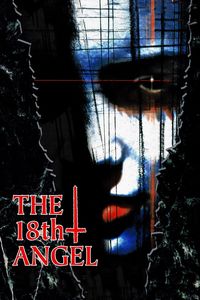
    (In French, On Cable TV, June 2021) An intriguing cast is certainly no guarantee of success, and while you may feel bad for skipping over horror film The Eighteenth Angel given its top-billed cast, I can assure you that you haven’t missed a thing. Sure, here you have Christopher McDonald, Rachael Leigh Cook, a young Stanley Tucci (an actor who has aged remarkably well) and Maximilian Schell in a story about a father/daughter pair battling an apocalyptic cult obsessed with hastening the return of Satan. But the execution is soporific in ways that defy prediction. For a film delving into prophecies, satanic rituals, age-old cults and the weight of a mother’s death (much of it against the backdrop of rural Italy), The Eighteenth Angel seems detached, almost entirely uninterested in what it’s presenting. The narrative is dull, and the slow-moving, pedestrian execution does nothing to improve on the substance. While it’s true that there have been many, many, many more similar films since then, it really doesn’t excuse the failings of The Eighteenth Angel. Just ignore the cast and go watch something else.

  • Topkapi (1964)

    Topkapi (1964)

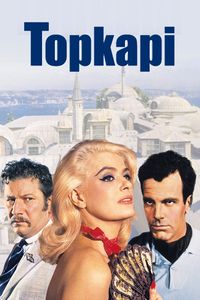
    (On Cable TV, June 2021) In my own developing history of Hollywood movies, I’ve earmarked the 1960s as the decade where Europe came to the rescue of American filmmaking: you can clearly feel the stagnation of post-studio-era Hollywood in the decade’s first years, and the energy of filmmaking being concentrated in censorship-busting Europe. Much of those lessons crossed the Atlantic during the decade and culminated in a 1967 crop of movies that changed everything. In this admittedly incomplete historical summary, Topkapi finds its place as one of the films that regurgitated the American heist film into something slightly grander, slightly more colourful (literally, in this case) and with a different sense of style. It certainly makes sense that Jules Dassin would be the director to do the transition — a successful Classic Hollywood director during the film noir age, Dassin was essentially exiled from the United States due to the McCarthy blacklist and re-established himself in Europe. By 1955, he was making the classic Rififi and already adapting the American style to the French palette. Topkapi feels like an extension of this work, going even farther even as other American movies such as Ocean’s Eleven were starting to digest his lessons from the earlier Rififi. An exotic and lighthearted heist film shot in glorious colour in Istanbul, Topkapi goes through the now-familiar motions of its subgenre: Assembling the specialized members of the crew (often by unfortunate happenstance), having them describe the heist, suffering from an execution that flies off in all directions, and wrapping things up in a bittersweet but amusing conclusion. There’s intra-group conflict, an alluring prize (a jewel-encrusted dagger), elaborate plans and freakish deviations getting bigger — in short, everything you’d want from that kind of film from a narrative perspective. It does help that Dassin knows what he’s doing behind a camera, and that he managed to bring together an impressive number of actors — with a lot of attention paid to Peter Ustinov’s bumbling hustler inadvertently brought into the plot (a role that earned him an Oscar), and Maximilian Schell as a master criminal having to deal with smaller fry. You can see bits and pieces of heist film DNA being put together here, most visibly the acrobatic tricks that would later be amplified in the first Mission: Impossible film. For twenty-first century viewers, the impact of all of this is curiously mixed: While impressive by mid-1960s standards, Topkapi suffers from being so successful and being imitated ever since. It’s fun to see where much of this started, or as part of an essential double feature with Rififi, but many viewers may shrug and ask about the hubbub if they compare it with its imitators. Still, it is a cinematic piece of history, and it’s still quite entertaining.
  • Cross of Iron (1977)

    Cross of Iron (1977)

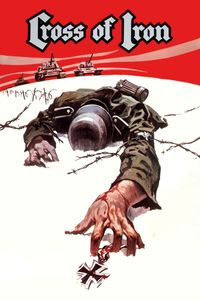
    (On Cable TV, September 2020) Director Sam Peckinpah and war movies seem like an ideal match, and one of the surprises of his filmography is that there are so few of them in there. Maybe producers couldn’t trust him with the budget of a war movie; maybe he felt that there were only so many ways he could say he was anti-war. No matter the reason, at least we have Cross of Iron to fall back on—a gritty, non-sentimental, harsh and nihilistic view of WW2 as seen from the German officers fighting against the Soviets. (The question of their allegiance to Hitler is minimized—one character admits to hating Hitler, and the Nazi political officer is a reprehensible person even by the standards of the film.) The story is substantial, having to do with a glory-seeking officer facing off against a more pragmatic one, but the real worth of Cross of Iron is in the implacable battle sequences filled with explosions, death and futility. Peckinpah is in his element here, as he apparently revels in the senseless violence, the machismo of the soldiers, and the innate ugliness of it all. At least we get decent performances out of James Coburn, Maximilian Schell, James Mason and David Warner. Cross of Iron isn’t for everyone: even those viewers familiar with Peckinpah’s brand of violence may be put off by the unrelenting pace of this film and the way it sees no way out. But that does put Cross of Iron squarely in-line with the rest of the 1970s war films, digesting Vietnam through increasingly meaningless war films that were much closer to the war-is-hell end of the spectrum than war-is-an-adventure Hollywood movies of an earlier generation.