Melanie Lynskey

  • Lady of the Manor (2021)

    (On Cable TV, December 2021) For a low-budget comedy, Lady of the Manor certainly boasts an intriguing cast of actors with a known pedigree — Melanie Lynskey as a stoned unladylike underachiever who stumbles upon a tour guide position at a historical house; Judy Greer as the ghost of the lady she’s supposed to talk about; Justin Long as a likable history professor; Ryan Phillippe as the unlikable cad-of-an-owner who’s more interested in sexual harassment than historical significance; and even Luis Guzman as a harried bartender. Oh, and Patrick Duffy as a patriarch. It’s an interesting blend that can handle the film’s good-natured comedy that emerges when modern irresponsibility meets timeless grace. Much of the credit for the cast probably goes to Long and his brother Christian, since they co-wrote and directed the film. Lady of the Manor is not that impressive of a film considering its budget and limited ambitions, but it manages to get a few laughs, create some striking characters and wrap it all up in a satisfactory finish. The actors do much to elevate middling material into something more interesting than anticipated — in other words, some good work by the Long Brothers to do justice to their material. It won’t become a timeless classic, but it’s more than worth a look as a slow evening’s entertainment.
  • The Intervention (2016)

    The Intervention (2016)

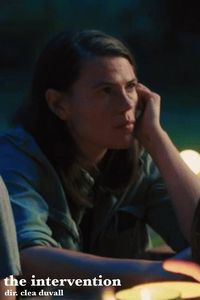
    (In French, On TV, September 2020) There are a few actresses out there that may not be household names, but have attracted my attention one way or another. I make a half-hearted effort to follow what they’re up to, especially when they leave the world of big-budget movies to do smaller movies. The Intervention not only brings together four of those actresses, but is also written and directed by none other than Clea DuVall, an actress whose first decade in the business was filled with roles in big-budget pictures, and then switched to lower-profile projects and TV series. With The Intervention, she works on both sides of the camera and delivers what could be called a Hollywood home movie: a low-stakes drama set in a secluded location, featuring an ensemble cast of characters played by friends and acquaintances. As a strategy to become a writer-director, it’s a clever one: the budget stays low, the friendships between the actresses translate into screen chemistry and the film can be approached as an actor’s showcase without the logistical complication of big costly sequences. The flip side of Hollywood home movies, however, is that they often feel similar: As with a theatrical piece, we get a first half of growing complications, and a second half of detonations. The camera moves in traditional ways, the script is good enough to provide a template, and the focus is on the performances. The Intervention does not escape the mould and, at times, feels like half a dozen other movies. Still, it does have its advantages. It’s set in Georgia rather than in the Hollywood Hills, and the cast is filled with recognizable names. You may not care as much as I do about Melanie Lynskey and Natasha Lyonne (here reuniting with DuVall seventeen years after the classic But I’m a Cheerleader!), or Alia Shawkat and Cobie Smulders, but here they are playing off each other. I found the overall result more interesting than entertaining, but it’s true that I’m far from the target audience for the film. I wish the film could have taken more cues from theatre plays in setting up and then playing off its interpersonal conflicts: there’s a tendency here to pull back from confrontation that I found annoying, but only in the context of wishing for a harder-hitting piece. If DuVall wanted to deliver something softer, then it’s up to her, and The Intervention accomplishes those objectives.