Mercedes McCambridge

  • Johnny Guitar (1954)

    Johnny Guitar (1954)

    (On Cable TV, October 2020) I don’t normally like Joan Crawford (Mommy Dearest didn’t help), but she is a force of nature in Johnny Guitar, a film that, despite its title, actually revolves around her. The titular Johnny (played by Sterling Hayden) initially gives us the impression that he’s going to be one of those singing cowboys matinee idols as he enters a saloon in the middle of nowhere and starts strumming and crooning. But the drama quickly displaces the music, as Crawford’s character (the owner of the saloon) comes in and sets the plot in motion. Her saloon is not built in the middle of nowhere as much as on the path of a future railway; nearby townspeople are insanely envious, and she has close ties to one of the local hoodlums. Our guitar-toting hero is also an ex-flame, and when the local bank is robbed in her presence, everything goes up in flames. A somewhat unpredictable screenplay and a steady descent into heavier and heavier drama do help make the most out of Johnny Guitar’s western elements. Crawford finds an equally impressive opponent in Mercedes McCambridge’s vengeful antagonist (a somewhat unusual case of a female antagonist in western films, if I’m not mistaken)—it’s said that the two women wouldn’t stand each other off the set as well. Nice outdoors colour cinematography also helps in wrapping up a package that’s far more interesting than your usual western.
  • All The King’s Men (1949)

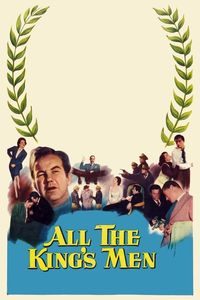
    All The King’s Men (1949)

    (On Cable TV, February 2018) Americans have a long history of examining their political system through popular entertainment, and All the King’s Men (an adaptation of a popular 1940s novel) endures even today given its subject matter, tragic arc and acknowledgment of how power corrupts. The tale of how an idealistic lawyer becomes a corrupt governor, as narrated by a journalist turned political operative, this is a story that stands on its own in addition to being a roman-à-clé about Louisiana governor Huey Long. It spans decades, charting corruption as it transforms the protagonist of the story. It’s a clear-eyed view of the political system that still holds a lot of resonance today, and it’s told well enough to still be interesting. Some of the montage sequences have a very modern feel (the film was nominated for an editing Oscar), supported by clever cinematography that goes from pastoral to noir as the mood of the story changes. Broderick Crawford is very good as the character at the centre of the story, equally credible as a young populist and as an older corrupt politician. Writer/director Robert Rossen does spectacular work transforming a novel in a solid movie (although we’re told that merciless editing saved the film), with good supporting work by Mercedes McCambridge (as the dour yet lovelorn Sadie) and John Ireland as the self-effacing viewpoint character. All the King’s Men was remade in 2006 but the remake, despite very polished visuals and an astonishing ensemble cast, doesn’t quite manage to capture the energy of the original.