Mervyn LeRoy

  • Lovely to Look At (1952)

    (On Cable TV, August 2021) Now that I’ve seen most of MGM’s biggest musicals of the 1950s, I’m left to track down the rest of them, and Lovely to Look At certainly isn’t one of their best. You can tell a lot about a film’s status by how it looks when it’s shown on standard-bearer TCM, and in this case you’ll have to struggle through a 1.37:1 TV-like aspect ratio (apparently the original shooting ratio) and a terrible blurry image quality that suggests that the film hasn’t been on anyone’s recent restoration schedule. Still, even a second-rate musical from the best years of the genre does have its qualities. It opens on a rather good musical number, “I’ll Be Hard to Handle” that features a splendid later-day appearance from Ann Miller in a leggy purple outfit. The cast includes not only Kathryn Grayson (almost as beautiful as Miller), but Red Skelton doing his usual comic mugging for the camera, and a feature film debut for Zsa Zsa Gabor (as “Zsa Zsa”). Vincent Minelli reportedly directed the fashion show toward the end of the film, although then-veteran Mervyn Leroy is the credited director. The premise and music are taken from the early Fred Astaire vehicle Roberta, but the details are very different from the start. Alas, this doesn’t necessarily lead to anywhere very interesting — sure, the romance and the comedy work, but little of it sparks in the way other MGM musicals of the time did. It’s still not bad (the craftsmanship, comic acting and overall tone are enjoyable no matter what), but Lovely to Look At is one of those films that’s best approached by those who have already seen better examples of the form and can appreciate the details even when the whole is lacking.

  • Show Girl in Hollywood (1930)

    Show Girl in Hollywood (1930)

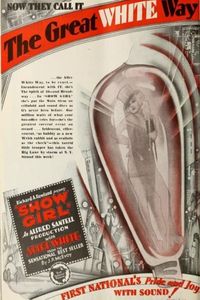
    (On Cable TV, May 2021) There’s not a while lot to say about Show Girl in Hollywood by itself, because it’s intensely prototypical of an entire sub-genre of pictures that first came to prominence early in Hollywood’s history: the naïve young woman travelling west, convinced that she’s going to become a Hollywood star. In this specific version of the story, our heroine is a Broadway showgirl heading to California on promises that are invalidated by the firing of a studio executive, the first of many to be let go through the film in oddly amusing ways. It’s an early musical from the first years of sound cinema, so the technical qualities are a bit rough — but the script can be funny at times considering that, even then, Hollywood was all too eager to make fun of itself. It’s also directed by Mervyn LeRoy, one of the first true professionals of Hollywood. It does occur to me that Hollywood making movies about Hollywood in 1930 could be seen as advertising for movies themselves — the beginning of the Hollywood glamour pushed to the masses, the dream factory revving up to full production. At times, the well-worn clichés enthusiastically embraced by the film can be oddly comforting: Show Girl in Hollywood is the archetypical fresh-off-the-bus story of a young woman stumbling into film stardom, and it’s not all that surprising that it still works well enough ninety years later.

  • Page Miss Glory (1935)

    Page Miss Glory (1935)

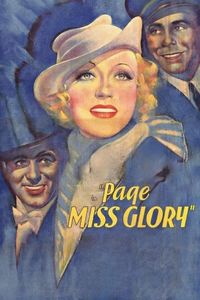
    (On Cable TV, February 2021) While I like 1930s comedies a lot more than you’d think, an issue I’m noticing from those films is that they are frequently featureless from an audiovisual perspective compared to later movies. This is not a criticism — more an acknowledgement that technical means being limited at that time, 1930s films work within a narrow range of audiovisual constraints, something that can be further throttled by films that have not been (or cannot be) restored. It’s almost all black and while, or rather shades of gray with very little dynamic range. The audio is usually scratchy, with very little range between the highs and the lows. Soundtracks are usually made of classical music pieces with few variations. The result, unfortunately, means that movies of that era will not catch your eyes and ears as well as later films — if you happen to be distracted, the film will not draw you back in through an arresting colour scheme, flashing lights, loud noises, catchy songs or any of the techniques that decades of filmmaking have perfected. I’m bringing this up regarding Page Miss Glory not only as an example of a widespread issue, but also to explain why, despite a promising plot in which a made-up star has to be played by a real person, the film had a really hard time keeping my attention. There’s no real reason, from a script-centric point of view, why it should be so: the story itself still has some originality, the stars are fine (including Marion Davies, Pat O’Brien and Dick Powell), director Mervyn LeRoy’s work is adequate for the time… but the film itself seems to flitter away at the slightest distraction. I could, I suppose, watch Page Miss Glory again under the strictest constraints to give it my full attention. Or I could just complain about its relative flatness.

  • Broadway Babies (1929)

    Broadway Babies (1929)

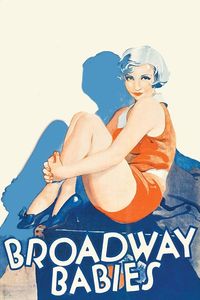
    (On Cable TV, January 2021) The first few years of sound cinema were filled with Broadway backstagers, as the newly audible medium reached for the closest equivalent in an attempt to figure out what to do with a soundtrack. A blend of backstage drama, criminal thrills and song-and-dance numbers, Broadway Babies pales in comparison with the better examples of the form that was burgeoning at the time. It’s a bit dull, quite stiff, not yet comfortable in the ways to use sound, and the film had the bad luck of being semi-lost in time: the only surviving copy is a 16 mm copy-of-a-copy—meaning that it looks unusually soft and blurry compared to many other films of the time, even though it wasn’t necessarily as bad when it premiered. Despite technically qualifying as a Pre-Code film, there isn’t much racy material here—there are more shootouts than scantily clad ladies, in keeping with Hollywood tradition. An early effort from famed director Mervyn LeRoy, Broadway Babies is perhaps more interesting as an example of the kinds of things that Hollywood was playing with in its early sound era. Still, there are far better films from the same time—The Broadway Melody and The Hollywood Revue of 1929, both from the same year, have some innate interest rather than being simply examples of the form.

  • East Side, West Side (1949)

    East Side, West Side (1949)

    (On Cable TV, October 2020) There’s a glorious, fascinating messiness to East Side, West Side that shows how the Hays Code era wasn’t necessarily an impediment for some heavy-duty melodrama. The film begins with a seemingly-happily married couple. But this façade soon comes tumbling down when, first, an ex-flame of the husband comes to town and then an ex-crush of the wife comes to town. That would be enough to power a film by itself, but the script peppers complications throughout, throwing in performers such as Cyd Charisse in a minor role that serves no real big purpose, then hinges an entire third act on the murder of one of the four main players, leading to a detective subplot that suddenly involves another main character. (It also leads to a fairly long and now-shocking sequence in which the male detective gets into a slaps-and-punches struggle with a female killer.) There are characters and sudden shifts of tone here that add a lot of texture, at the expense of what we would consider a polished script. It’s messy but a lot of fun, although you’ll have to work harder than usual to keep up with the twists and turns. An all-star cast sweetens the deal. James Mason is quite good in his own distinctive fashion as the protagonist cad, while Barbara Stanwyck is equally compelling as his increasingly estranged wife. Ava Gardner is the temptress that exposes the fault lines in their marriage, while Van Heflin rounds up the main cast with a character that increasingly reveals how resourceful he truly is over the course of the film. Top dialogue keeps things rolling, while the cinematography gives a noirish edge to New York City. Director Mervyn Leroy has enough experience to keep all the moving pieces together, and the result is a strong drama that will keep you invested from beginning to end despite its lack of clear focus.

    (Second Viewing, On Cable TV, June 2021) The interesting thing about revisiting East Side West Side, even after a few months, is its all-star cast. In-between James Mason, Barbara Stanwyck, Eva Gardner and Van Heflin (with none other than Cyd Charisse being fifth-billed in a remarkably small role), it’s very much a collection of some of my favourite actors in the business at the time. But here’s the thing: It took me an embarrassingly long time to become a fan of Stanwyck and Gardner – While Mason is distinctive and easy to like, and a previous viewing of East Side West Side made me an instant fan of Van Heflin largely thanks to his remarkable character, it took me years to like Stanwyck given her lack of adherence to a rigid persona. Meanwhile, it took me until Night of the Lizard to finally see what others saw in Ava Gardner. But now that I’m on-board for all of them, East Side West Side takes on a different quality. Oh, the film more than stands on its own as a 1950s Manhattan melodrama – With the plot revolving around an ill-fitting couple contemplating affairs with past flames, it’s rife with dramatic situations, including woman-to-woman verbal combat and a superb mother-in-law-to-no-good-husband put-down. Mason is (as often) surprisingly good as a bad husband, while Heflin gets to play a character than, in most other movies, would be the protagonist: an immensely capable special forces operative with an uncanny ability to solve problems. One of the film’s highlights remains the physical altercation he gets with a murder suspect while they’re both sitting in a car – the fact that it’s a male/female fight is surprisingly shocking, perhaps even more so given that he’s clearly in the right in subduing a killer. The slapping, pulling and grabbing goes on for a surprisingly long time, and the close quarters of the car’s front seats mean that there’s nowhere to go. It’s not necessary to like the entire film (including a slow start and adequate finale) when it has those highlights and those stars. East Side West Side is well worth a revisit, especially if you get to appreciate the actors in other films in between those viewings.
  • Gold Diggers of 1933 (1933)

    Gold Diggers of 1933 (1933)

    (On Cable TV, September 2020) In some ways, Gold Diggers of 1933 is very similar to the other top musicals of the period: It was a time, only a few years out of the silent film era, when you could still feel the giddiness of film producers in wowing audiences with dazzle-dazzle singing and dancing. The story takes place on/near Broadway, as many musicals of the time did, in order to provide audiences a familiar frame of reference as to how the music was integrated in the film. Recognizable names such as Ruby Keeler, Ginger Rogers and Dick Powell are in the cast, as the story focuses on four women trying to marry rich and make it big. Perhaps more interestingly to modern audiences, it’s a pre-Code film, meaning that it features scantily-clad women and a playful attitude toward risqué subject matter that wouldn’t fly even two years later. (Indeed, its direct sequel Gold Diggers of 1935 would be far tamer in that regard, the Hays Code having taken over Hollywood by then.) While Mervyn LeRoy directs the comedy material of this musical comedy, the dance numbers are directed by Busby Berkeley, whose touches become more and more apparent as the film goes on. “We’re in the Money” kicks things off with a memorable tune sung by Rogers, “Pettin’ in the Park” is pure pre-Code hilarity, but the film really reaches its apex during “The Shadow Waltz,” especially during a moment where the dancers carry neon-lit violins and the overhead camera shot practically turns to animation. “Remember My Forgotten Man” concludes things with fewer pyrotechnics, but more striking result. Worth noting is how, in a decade known for escapism, the Great Depression is an integral part of the plot (and the songs, given that “We’re in the Money” imagines an end to the Depression), giving us a tiny glimpse at life outside Hollywood fantasies. Being like the other musicals of the time isn’t a bad thing when most of them still hold up nicely today, and Gold Diggers of 1933 does have a few added qualities.

  • Waterloo Bridge (1940)

    Waterloo Bridge (1940)

    (On Cable TV, September 2020) I can’t say that I was all that impressed by Waterloo Bridge—playing from grand riffs on old-school themes such as a tragic wartime romance, it’s clearly meant to move audiences, give the filmmakers some space to stretch their “serious movie” muscles and (incidentally) court after the same audience that went flocking to the earlier 1931 film. By a stroke of good luck, the project attracted talent such as director Mervyn LeRoy, Viven Leigh and Robert Taylor, and the darkening news from the United Kingdom in the early days of the war added heft to the result. For modern audience, Waterloo Bridge plays as an old-fashioned weeper, perhaps a bit more daring than most considering that prostitution is a plot element of the heroine’s downfall and that the ending is a downer of significant proportions.

  • High Pressure (1932)

    High Pressure (1932)

    (On Cable TV, August 2020) It’s amusing that the two kinds of roles in which William Powell did best were either amateur sleuths or fast-talking hucksters. High Pressure is one of the best of the second type: Powell plays a loquacious promoter who has specialized in giving legitimacy to high-risk investment schemes, not quite resorting to fraud but not quite doing things the most orthodox way. (Or what we’d call today a serial start-up entrepreneur.) The latest venture is about synthetic rubber and it seems to work well until the protagonist meets the “inventor” of the product and concludes that he’s made a terrible mistake in trusting a crackpot. But plotting his overseas exit isn’t so simple when romance with his long-suffering girlfriend is involved. High Pressure isn’t that good, but it does sport rather wonderful art deco sets, a very charismatic Powell spitting one convincing pitch after another, and moves forward rather amusingly thanks to director Mervyn LeRoy. The satirical look at the exaggerations required for success in business remains evergreen. (Why bother having a hiring process for a president when you can just hire someone who looks the part?) Since the same theatrical play was adapted four years later as Hot Money, it’s easy to see both films and appreciate just how much Powell brings to the result. Powell fans will love High Pressure, and those who don’t know Powell just may become fans.

  • Five Star Final (1931)

    Five Star Final (1931)

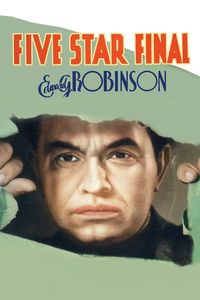
    (On Cable TV, August 2020) Considering today’s issues with social media, it’s either comforting or dispiriting to realize that every era has had its problems with then-new communication mediums… and that cinema has been there to chronicle the issues since the 1920s. Five Star Final takes us in the heated tabloid newspaper scene of the big city 1930s, when newspapers published multiple editions per day, and raced hard to outdo the competition in circulation. If sleaziness was the way to boost readership, then the answer was obvious. Here we have Edward G. Robinson as a two-fisted newspaper editor, not comfortable with the sensationalistic direction that his publisher requires, but reluctantly dragged into a sordid tale of public shaming with real consequences. Boris Karloff also appears in a few scenes as a menacing reporter. The film, being from the everything-goes pre-Code era, is markedly more interesting than many newspaper movies of later decades (and I say this as someone with an inordinate fondness for newspaper movies)—not to spoil anything, but characters don’t necessarily make it out alive of this story, and the attitude toward tabloid journalism is decidedly critical. Mervyn Leroy’s direction is relatively fast-paced, and there are a few flourishes here and there—most notably the use of split screen and fancy special effects at the time. It does make for a compelling movie, more for its time-capsule experience than a story that has been done in more recent years (albeit not from the Code years from 1935 to 1955) but still interesting, and not simply because it was nominated for a Best Picture Oscar.

  • Blossoms in the Dust (1941)

    Blossoms in the Dust (1941)

    (On Cable TV, January 2020) If you want a specific illustration of the kind of overwrought melodrama that the major studios could produce in the 1940s (and get them nominated for an Oscar along the way), then Blossoms in the Dust can be your pick. Tackling social issues (in this case; advocating for adopted children) using a weeping dose of personal tragedy (a dead sister and child all in the first act), this is a film that wants to make you cry your eyes out and think that it’s all coming from an admirable source. Bleh. The film’s saving graces are its colour cinematography (still a rarity in the early 1940s, and a measure of how much of a prestige production this was despite the unspectacular nature of the visuals) and the first pairing of Greer Garson and Walter Pidgeon as the likable lead couple. Garson could make even the most hackneyed material look dignified and she does not disappoint here, even as the entire film around her is a pure weeper. The plot itself is manipulated for maximum pathos—while adapted from a real story, it’s cheerfully tweaked for drama whenever it can, even at the expense of basic credibility. Director Mervyn LeRoy was a veteran at that point, but even he can’t make Blossoms in the Dust work for modern audiences.

  • I am a Fugitive from a Chain Gang (1932)

    I am a Fugitive from a Chain Gang (1932)

    (On Cable TV, June 2019) As much as I like using movies to point out the similarities between past decade and modern times, there are times when films will remind you that the past was something else entirely. It’s bad enough that I Am a Fugitive from a Chain Gang highlights that there was such a thing as chain gangs, or “a group of prisoners chained together to perform menial or physically challenging work as a form of punishment” as Wikipedia bloodlessly puts it. The barbaric reality on the ground was far more horrific, and this 1930s prison melodrama clearly has a provocative intention in highlighting the inhumanity of southern state’s legal systems: as with many other 1930s prison movies, this one carries the spirit of reform. The plotting is an upsetting blend of prison escape thriller and uplifting by-the-bootstrap melodrama, as our likable protagonist (another great Paul Muni performance) ends up in a chain gang, escapes, is tricked back into another one and escapes again, forever condemned to live in the underworld. Director Mervyn Leroy has a sure hand on his material, making interesting choices on how to portray elapsed time for a multi-decade story, taking us through WW1 and Depression-era America with its day labourers and relaxed moral code. The Pre-Code nature of the film feels vigorous here, being far more suggestive than later movies (what is she doing in his room … oh) and character behaviour (such as spouses cheating on each other) that would be nearly eliminated from moviemaking a few years later. Chain gangs aren’t the least of the film’s dated nature—hearing a female character bluntly state “I’m free, white and 21” had me spending a significant amount of time going down a rabbit hole of 1930s slang that really hasn’t aged well at all. Perhaps the biggest shock of the film comes at the very end, which comes abruptly and refuses us any comfort after the triumphant escape that precedes it—you can see here a very early glimmer of the moral fatalism that would later come to dominate American film noir and unsettle audiences. Despite a few misfires (such as uninteresting female characters), I Am a Fugitive from a Chain Gang easily fulfills the expectations set by its exploitative title, and has us carefully measuring the distance between ourselves and bad ideas of the past.

  • Anthony Adverse (1936)

    Anthony Adverse (1936)

    (On Cable TV, March 2019) While Hollywood literary adaptations have been a constant in cinema’s history, there is a definite flavour to 1930s movies based on famous works of popular English literature: By then, Hollywood had sound technology and enough experience to fully realize costume dramas without breaking a sweat, and such films were the next best thing to a sure commercial bet given that novels were the only other popular entertainment game in town before the explosion of new media. (Even radio wasn’t all that common coast-to-coast.) There are some great movies in that subgenre, and then there are films such as Anthony Adverse. Adapted from a monumental 550,000+ words novel (five times the length of an average novel) by now-forgotten Hervey Allen, this film is equally lengthy at 141 minutes and it feels like it. Telling us about the adventures of one young man living through Napoleonian Europe, bouncing between continents as the unusually melodramatic events of his life make things even harder for him. (Napoleon himself appears, with La Marseillaise hilariously used as an ominous leitmotif.) It’s a big multi-decade historical drama, complete with multiple title cards throughout to explain even more of what couldn’t fit in the film. And yet, despite the length and the often-unbelievable accumulation of plot turns, Anthony Adverse itself feels badly paced, rushing through some things and languishing on others. It takes a long time for the film to even show its main stars Fredric March and Olivia de Havilland: Director Mervyn LeRoy did much better before and after, but trying to compress too much in even a generous two-plus-hours running time is asking for trouble—in modern days, this would become a miniseries. The number of plot points that come up by sheer coincidence is your biggest indicator of the film’s extreme melodrama. I won’t be too harsh on the result—after all, Anthony Adverse does have its charms if you do like melodramatic Victorian-era plot devices and/or the glamour of 1930s Hollywood trying to deliver a period drama. But be prepared for a long, sometimes frustrating sit.