Mia Farrow

  • Crimes and Misdemeanors (1989)

    Crimes and Misdemeanors (1989)

    (On TV, October 2020) I can objectively recognize that Crimes and Misdemeanors is a good movie and I can understand those who maintain that it’s one of writer-director Woody Allen’s best… but I don’t have to agree. Much of this disagreement is the overwhelming impression, sometimes left by his later movies, that we’ve seen all of this before. Taking place in Allen’s favourite upper-middle-class Manhattanite intellectual strata, it’s a film that blends witty dialogue, existential musings, comedy and drama in a mixture very much like, well, half a dozen of Allen’s other films, perhaps most closely with Manhattan Murder Mystery (which, in retrospect, can almost be called an affectionate parody), but also backward to Manhattan for the setting and character and forward to Irrational Man for the nods to existentialism. In other words, if you’ve seen the rest of Allen’s filmography, Crimes and Misdemeanors (to which I’m a late, late arrival) doesn’t hold anything new. It does not entirely help that the film abruptly gains meaning, narrative coherency and an extra star (or whatever you call a better reviewer’s grade) in its final scene, as it finally melds the twin strands of the plot into something looking like a point. Oh, I still liked it: No matter what I think of seeing Allen as a nebbish loser blowing up his marriage with extramarital longing, there’s still a comfortable atmosphere to the result, and despite what I just said, I’m not going to begrudge him another exploration of New York City intellectuals. The acting talent assembled here is, as usual, splendid: Martin Landau, Mia Farrow, Alan Alda and Anjelica Huston as a semi-hysterical mistress… yes, that does it. The comedy here is well dosed with the drama and the philosophical suspense, providing a film that neither errs too heavily on the side of ruminations nor (alas) on the side of absurd gags. It’s finely controlled, and my quip about the plots fusing only in the end scene is belied by plenty of thematic transitions between the two subplots. Still, I can’t help but feel that, given my zigzagging path through Allen’s filmography, I have come to Crimes and Misdemeanors too late to enjoy it at its fullest.
  • Husbands and Wives (1992)

    Husbands and Wives (1992)

    (On TV, March 2020) One of the issues with Woody Allen and trying to separate his art from his somewhat unsettling life is that his movies are big giant signposts telling us about his state of mind at any given time. Husbands and Wives, for instance, is a tale of marital dissatisfaction that just happened to come out at the end of his relationship with Mia Farrow—with Farrow and Allen fighting it out on celluloid. Whew. There’s more, of course—the seediest things in Allen’s filmography are the constant relationships between much older men and women at most half his age, and we get that once again here—hey, Allen, can’t you at least stop writing that stuff in your scripts? As for Husbands and Wives itself, there’s a reason why it generally holds up when compared to the other Allen films of that era: the intense navel-gazing eventually leads somewhere, and the film doesn’t even unfairly evoke the memory of Allen’s comedies. The mixture of Manhattan DINK lifestyle, documentary style and messy examination of personal foibles is certainly classic Allen, done in a still interesting-enough way compared to some of his later works. He also, as usual, gets great performances from his supporting cast: Juliette Lewis makes an impression in a more sedate role than the ones she’d play throughout most of the 1990s, a rising-star Liam Neeson barges into the plot and Blythe Danner makes a very quick appearance. Husbands and Wives is a kind of film best suited for adult audiences, not so much for any risqué content than because it’s glum and unromantic about long-term relationships—and it takes some living to relate to that.

  • The Omen (2006)

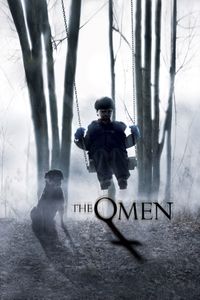
    The Omen (2006)

    (In French, On Cable TV, March 2020) Exactly no one will be surprised by this remake of The Omen, and it almost seems by design—More akin to a theatrical revival than a new movie, this update changes very little to the 1976 script (to the point where original screenwriter David Seltzer got the sole writing credit respite a few rewrites without his input!) and essentially updates the actors, cinematography, direction and setting to 2006 standards. As a result, it does feel slicker than the original (the dog attack sequence isn’t quite so ridiculous, for one thing) but loses almost all of its authenticity… if that’s the right word. Not that I’m a big fan of the original—which may account for my not-pleased-nor-displeased disposition toward this remake. It’s almost interesting (like the 1998 Psycho remake) to see essentially the same script given a new coat of paint and taken out for a spin. If nothing else, a double bill of both the original and the remake, while tedious, would be instructive as to how filmmaking evolved in three decades even as the themes of the original have held up. Going back to the theatrical revival analogy, well—why not? For director John Moore, isn’t it better to redo what seemed to work well in the first place than to take chances with modifications that don’t pan out? Despite my lack of affection for the original, it’s rather neat to see Julia Stiles, Liev Schreiber and Mia Farrow step into these well-established roles for a film. It’s not that good, but then again: The Omen’s over-the-top histrionics can be reasonably entertaining, and if the remake doesn’t bring anything new, maybe it does have familiarity to its credit—although by 2020, with immense streaming libraries that can include the original, it remains to see whether there’s a reason for 2006’s The Omen to exist. Aside from, let’s admit it, the rather amazing “2006-06-06” release date.

  • Broadway Danny Rose (1984)

    Broadway Danny Rose (1984)

    (On Cable TV, January 2020) As a reviewer, I often have issues in discussing Woody Allen movies from the 1980s. They often fall into a good-enough zone that escapes sustained critical discussion. They’re (canonically) not as funny as his earlier 1960s movies, not quite the specific genre or character exercise that his later 1990s+ movies would become, and certainly not (at a few exceptions) as groundbreaking as the 1970s ones. There is, in other words, an evenness to them, even in their quality, that makes it difficult to dissect. (My review of Bullets over Broadway is one of the shortest on this site.) In that context, Broadway Danny Rose, is an ironic story gently told, offering just enough space for Allen to play his usual persona and for Mia Farrow to grab a striking mafia moll role. The framing device has to do with comedians at a New York deli (the New York deli, some argue) telling themselves tales about Danny Rose, and one of them taking up the most defining tale of them all—how perennial loser impresario Danny Rose went through hell for one of his clients and his mistress, only to be dumped by the client. In the grand scheme of Allen movies, Broadway Danny Rose is at once comforting—here’s Allen playing his utmost persona and doing it perfectly—and somewhat atypical, as the heroine is about as far from Allen’s usual intellectuals as it’s possible to be. Shot in black-and-white for artistic reasons that I find uninteresting, the film is also a look at the Manhattan impresario milieu and the incredible length at which they will go to for their clients. Broadway Danny Rose is a bit sad even despite the jokes and it does wrap up to an intriguing whole… a bit like most of Allen’s 1980s films.

  • The Great Gatsby (1974)

    The Great Gatsby (1974)

    (In French, On TV, April 2019) As someone who’s lukewarm about F. Scott Fitzgerald’s The Great Gatsby but enthusiastic about the first half of the 2013 Baz Luhrmann adaptation, I was curious to see what the sometimes-derided 1974 film adaptation had to offer. Clearly, it couldn’t touch the CGI-fuelled exuberance of the Luhrmann version, but did it have its own strengths? As it turns out, director Jack Clayton’s earlier The Great Gatsby is far more mannered, significantly more realistic, but not distinctively dissimilar from other versions of the story: Love and lust on Long Island, and the unbolting of a man’s statue. I may dislike flapper fashions, but the party scenes are fun and the story moves through the expected beats. The film isn’t without its own stylish elements: There’s at least one good scene transition reusing symbolic imagery. Despite a remarkable cast (Robert Redford! Mia Farrow!)  The actors aren’t particularly remarkable, but the atmosphere is. Otherwise, it’s pretty much the same thing, done mid-1970s style. There is some humour: I had to laugh at the line “I’ll travel somewhere, to Montréal maybe.”  The ending does feel drawn-out, however, going on much longer after the final shocking events of the climax. Still, as an adaptation, I can see how The Great Gatsby managed to portray some tricky material, and how it clearly could be improved upon.

  • Hannah and her Sisters (1986)

    Hannah and her Sisters (1986)

    (On TV, March 2017) As I’m watching Woody Allen’s filmography in scattered chronological order, I’m struck by how his works seems best approached sequentially—there are definitely phases in his work, and they partially seem to be addressing previous movies. Hannah and Her Sisters does echo other Allen movies—Manhattan (which I saw between watching this film and writing this review) in tone and setting, I’m told that there’s something significant about Mia Farrow’s casting, and there’s a continuity here between Allen’s nebbish hypochondriac and the rest of his screen persona. Absent most of those guideposts, however, Hannah and her Sisters feels a bit … slight as a standalone. It’s nowhere near a bad movie: the quality of the dialogue, twisted psychodrama of unstable pairings and Allen’s own very entertaining persona ensure that this is a quality film. But in trying to find out what makes this a lauded top-tier component of Allen’s filmography, answers don’t come as readily. Part of the problem, I suspect, is that Hannah and Her Sisters does things that have since then been done more frequently—Northeastern romantic dramas about a close-knit group of friends and family? Might as well tag an entire sub-genre of independent dramas … at least two of them featuring Jason Bateman. Familiarity, of course, is trumped by execution and so Hannah and Her Sisters does go far on Allen’s script. Allen himself is his own best male spokesman, although Michael Caine and Max von Sydow both have their moments. Still, the spotlight is on the sisters: Mia Farrow is terrific as the titular Hannah, while Barbara Hershey remains captivating thirty years later and Dianne Wiest completes the trio as something of a screw-up. There’s a little bit of weirdness about the age of the characters—although I suspect that’s largely because Allen plays a character much younger than he is, and I can’t reliably tell the age of the female characters. It’s watchable enough, but I’m not sure I found in Hannah and her Sisters the spark that makes an average film become a good one. I may want to temper my expectations—after all, not every Woody Allen movie is a great one, even in the latter period with which I’m most familiar.