Michael Cimino

  • Thunderbolt and Lightfoot (1974)

    Thunderbolt and Lightfoot (1974)

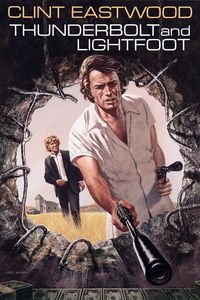
    (YouTube Streaming, September 2020) Ah, the 1970s New Hollywood! A time so predictable in its overdone nihilism that it couldn’t have even a simply buddy road movie without killing off one of its lead characters by the end! I’m not jesting: While most saner hands at another time in Hollywood’s history would have maintained Thunderbolt and Lightfoot’s lighthearted tone throughout, here is Michael Cimino doing his Cimino thing of ensuring that no one in the theatre is happy by the end of the film. Headlined by Clint Eastwood as a grizzled robber and Jeff Bridges as a happy-go-lucky drifter, Thunderbolt and Lightfoot starts out firmly in outlaw comedy, as Eastwood is disguised as a preacher and pursued by a gunman through field, after which he’s hit by Bridges’ car. Taking the younger man under his wing (and vice versa, up to a point), the veteran tells of a robbery haul still in the wild, hidden behind the blackboard of a one-classroom rural school. Pursued by two ex-members of Eastwood’s crew, they drive across a chunk of the American heartland to discover that the school is gone. Thinking of nothing better to do, they hatch another robbery, taking aim at the same place with the same tactics. For much of its duration, Thunderbolt and Lightfoot is a decently entertaining crime comedy, with antagonists not quite willing to pull the trigger on the protagonist and the protagonist working with the antagonists to reach their objectives. But this amiable façade comes crashing down at the very end, with characters meeting messy ends and one of them slumped over dead. How did we get there? The answer is “early 1970s,” obviously. While people always talk about Cimino’s second (The Deer Hunter) and third (Heaven’s Gate) films, this debut is worth noticing as well: Other than the downbeat ending, we can see Cimino taking utmost advantage of widescreen cinematography in his portrayal of the modern American west and the roads on which our characters travel from one part of the script to the other. Still, movies live or die on their endings, and the ending of Thunderbolt and Lightfoot seems unearned and unlikely to make anyone want to revisit the film as a romp.

  • Heaven’s Gate (1980)

    Heaven’s Gate (1980)

    (On Cable TV, July 2019) Some films live in infamy no matter their content, and so Heaven’s Gate is usually remembered nowadays as one of the most infamous bombs of all time, a critical and commercial flop so famous that it not only destroyed the career of then-renowned writer-director Michael Cimino, but killed the studio United Artists and is credited with ending the New Hollywood movement, thus altering the history of movies themselves. Whew. Of course, that’s not true: New Hollywood was already on the way out by the time Star Wars opened in theatres three years earlier, United Artists was being mismanaged by its corporate overlords, and Cimino’s reputation as a difficult auteur was going to catch up with him sooner or later. The point being that Heaven’s Gate commercial flop and troubled production history certainly contaminated its critical reception: Like near-contemporary Ishtar, critics piled on the film far beyond its putative lack of qualities. The result, for contemporary moviegoers approaching Heaven’s Gate by way of its reputation, may be a pleasant surprise at the film’s undeniable qualities. Now, let’s be careful: I am not accusing Heaven’s Gate of being a good movie. It’s incredibly indulgent, often boring, exasperating at times and certainly not as good as it could have been given its premise, cast or means. If you’re allergic to the New Hollywood style, with its digressions, long-winded pacing, gratuitous and repetitive scenery shots, then this will not help you. On the other hand… this is clearly a big-budget production (one of the main causes of its reputation) and a lot of it is on the screen, what with a convincing recreation of the American West, elaborately constructed set-pieces and convincing sequences. The cast remains fascinating forty years later (if you’ve ever wanted to see Kris Kristofferson and Christopher Walken go at each other in a fist-fight, then this is the movie for you) and Cimino’s eye as a director, while flawed in terms of pacing and concision, remains a cut above most other directors of the time. Even the flawed quirks of the film (including an interminable sequence with a roller-skating fiddler) are sort of impressive in their own way. I don’t really like Heaven’s Gate and will not try to rehabilitate it, but it’s better than expected and better than what its reputation would suggest.

  • The Deer Hunter (1976)

    The Deer Hunter (1976)

    (Second viewing, On Cable TV, October 2016) I saw The Deer Hunter decades ago, but couldn’t remember much other than the Russian roulette sequences. Watching it again reminded me why. As much as there’s a lot to like in the story of blue-collar workers being irremediably damaged by their Vietnam experience, the film is just too long and meandering to be as effective as it could be. The interminable wedding sequence springs to mind as the worst culprit here (boo, director Michael Cimino, boo) although there’s enough fluff elsewhere in the film to make the running time balloon even higher. At least the film is blessed with a few terrific performance, the best being a very young Robert de Niro as a quiet hunter, an equally young Christopher Walken as the one who goes crazy, and Meryl Streep as the object of their affection. Great sequences also fill the movie, but the connective material between them kills much of the film’s urgency, and takes away from the relatively straightforward plotting. The Deer Hunter’s then-daring portrait of soldiers as real people without glorifying war heroics doesn’t come across as clearly now, given the steps taken to humanize warriors in later movies. A classic for a good reason, The Deer Hunter is not a bad piece of work—although its emotional impact is bound to vary widely.