Michael Curtiz

  • The Adventures of Huckleberry Finn (1960)

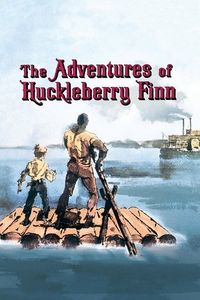
    The Adventures of Huckleberry Finn (1960)

    (On Cable TV, August 2021) I tried staying interested in The Adventures of Huckleberry Finn. I did. But as much as the original novel has become a respectable part of American culture (being old and a childhood favourite of previous generations), this adaptation is aiming to be as unremarkable as possible. It doesn’t do anything wrong: the period atmosphere is credibly re-created, and the film’s lavish colour cinematography clearly marks it as a prestige project for MGM and director Michael Curtiz. The Mississippi River remains an imposing presence, and the actors help tie the episodic nature of the novel into a coherent whole. On the other hand, well, the film feels perhaps more educational than entertaining — it’s there, it’s meant to translate the novel to the screen and it does exactly that. Enthusiasm is not necessarily supplied. The Adventures of Huckleberry Finn could have been worse, of course, but it’s not as if the result is gripping.

  • Doctor X (1932)

    Doctor X (1932)

    (On Cable TV, May 2021) The Universal Monster films of the early 1930s get a lot of acclaim even today, but there were many other interesting horror films from other studios during the Pre-Code era, and some of them can feel surprisingly modern. From Warner Brothers, for instance, we had Doctor X and the subsequent Mystery of the Wax Museum, both of them shot in two-colour Technicolor and clearly anticipating later horror film tropes. Doctor X immediately announces itself as being Pre-Code for quickly jumping in a story with a cannibalistic killer, with dismemberment, rape and necrophilia not being far behind. What makes the film odder today is its insistence on keeping a somewhat prominent comic relief character as protagonist — a terribly unprofessional journalist played by Lee Tracy meddling around the edges of a police investigation into mysterious deaths whose culprit can be narrowed down to one of the mad scientists at a local medical academy. Doctor X remains foreboding — the colour scheme of the film oscillates between sickly green and disquieting orange, and director Michael Curtiz often plays off German expressionism in his use of shadows. The mad-scientist aspect of the plot still has quite a bit of charm (I found myself imagining how the same plot could work in a 2020s setting), and there’s no mistaking Fay Wray (future star of the following year’s King Kong) in the damsel-in-distress role. The contemporary setting of the film in 1930s New York City is interesting, and the slick dialogue adds another layer of interest. (Surely I can’t be the only one fascinated by a 1930s film with a “Doctor Xavier” heading an institute for gifted youngsters mad scientists?)  Doctor X is well worth a look even today, and takes up a surprisingly high spot on my list of essential 1930s horror films. Like its stablemate Mystery of the Wax Museum, the 2020 colour restoration of Doctor X makes it look fantastic and far more modern than its production date.

  • Mystery of the Wax Museum (1933)

    Mystery of the Wax Museum (1933)

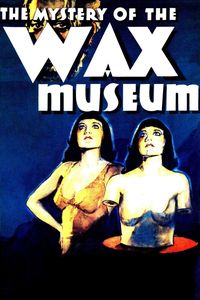
    (On Cable TV, May 2021) There are a few fascinating things about Mystery of the Wax Museum — but they don’t all have to do with the film’s narrative.   Perhaps the most noteworthy one is the look of the film — it’s one of the last Hollywood two-colour films, using an early process that allowed for greens and reds to be added to the black-and-white. As a result, it does feel a bit more modern than its release date, and the effective cinematography of a horror film allowed for the bright reds and sickly greens to enhance the mood of the movie. It’s directed by Michael Curtiz in his pre-stardom years, and makes (along with the same two-colour process and similar cast) a great double-bill with Doctor X. Also of interest to horror movie fans is that this is the first in a surprisingly long line of war museum horror films stretching from the well-known Vincent Price 1953 vehicle House of Wax to its 2005 horror-remake-craze remake of the same name. (Watching all three back-to-back-to-back would be… interesting.)  Now if you’re noticing that I haven’t said much about the content of the film, well, that may be by design: While the narrative of Mystery of the Wax Museum is certainly not terrible, it’s nowhere as fascinating as the elements surrounding the film. Reading more about the two-colour look of the movie alone was a bit of a revelation into the prehistory of colour cinematography in Hollywood. There’s also quite an odyssey to say about the film’s tortuous restoration through multiple attempts at enhancing the material, resulting in this rather impressive 2019 restoration partially financed by none other than George Lucas. There’s quite a bit of Hollywood history just waiting to be discovered in reading about Mystery of the Wax Museum, and I’m not sure it’s a bad thing even if it ends up overshadowing the content of the film itself.

  • The Sea Wolf (1941)

    The Sea Wolf (1941)

    (On Cable TV, October 2020) Let’s see: A Jack London maritime adventure novel brought to the big screen by director Michael Curtiz, and starring no less than Edward G. Robinson as a sadistic sea captain, John Garfield as a hero protagonist and a beautiful Ida Lupino as the love interest? Oh yes, there’s ample reason to have a look at the 1941 adaptation of The Sea Wolf. Reportedly the best of the numerous film version of the novel, this one does get a crucial element right: Robinson as the antagonist, a formidable presence for an equally fearsome character. Lupino is certainly an asset as well, but the film’s execution through a foggy studio set means that the atmosphere of the seagoing ship is appropriately claustrophobic and oppressive. The plot goes a bit further than an already-interesting adventure story to become a small-scale illustration of the dangers of fascism, which adds quite a bit to the result. Good special effects (for the time) and tons of atmosphere complete the portrait. While it has the clunkiness of the technical means available to studio-bound 1940s filmmakers, The Sea Wolf is nonetheless a good adaptation and a fair adventure story in its own right.

  • The Kennel Murder Case (1933)

    The Kennel Murder Case (1933)

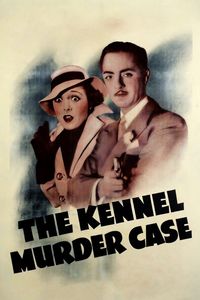
    (On Cable TV, August 2020) Come for William Powell as a sleuth; stay for a locked-room mystery so convoluted that it becomes a performance piece in The Kennel Murder Case. This was the fourth time Powell played then-popular literary detective Philo Vance (in the fifth film adaptation of the character). The actor, of course, was suited to portraying an upper-class gentleman investigator, but Vance isn’t quite the same as his later Nick Charles interpretation: Vance is single, serious and not quite as much of an alcoholic. Still, Powell’s charm and unflappability serve him well even when the script can’t quite serve up the quips. It helps that then-journeyman director Michael Curtiz does well in giving energy to the talky thriller through stylish decisions. The 1930s were a strong decade for murder mysteries, and The Kennel Murder Case does rather well in its elevated company: it’s intricate, presented smoothly (especially for a film of the early sound era) and engrossing – and doesn’t last more than 73 minutes! Narratively, it’s not quite perfect: Powell without a sparring partner feels like a missed opportunity, and the very last bit of the ending is slightly disappointing after the high-flying summation of all evidence. But generations of moviegoers have demonstrated an unquenchable thirst for good murder mysteries, and The Kennel Murder Case will satisfy even today.

  • The Private Lives of Elizabeth & Essex (1939)

    The Private Lives of Elizabeth & Essex (1939)

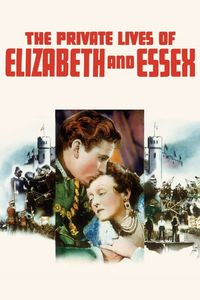
    (On Cable TV, February 2020) Historical costume dramas aren’t to everyone’s taste, but there’s something to be said in the case of The Private Lives of Elizabeth & Essex for an engaging cast. Bette Davis as Elizabeth I? Solid. Having her surrounded by Errol Flynn, Olivia de Havilland, and Vincent Price? Now that’s interesting. Directed by Michael Curtiz, the film becomes more compelling than most equivalents in large part due to Davis’s steely performance and some deliberate choices to make the story more dramatic and accessible. Technical credentials are quite good, considering that this was a Technicolor production and Warner Brothers was willing to go all-out on the spectacle. It’s not so much about Elizabethan England than about 1930s Hollywood studio conventions, and that’s perhaps for the best. The Private Lives of Elizabeth & Essex remains a costume drama, but a click one, and more interesting than most.

  • Four Daughters (1938)

    Four Daughters (1938)

    (On Cable TV, November 2019) It’s an exaggeration (perhaps blasphemy) to call out similarities between Four Daughters and Little Women, but both offer middle-American small-town drama involving sisters living in a house with a single parent (here: Claude Rains as the patriarch of a musical family), with suitors popping up and a story that plays over many years. Everything else is different, but from the 2010s all we see are stories with a similar feel. What’s distinctive here is that three of the four sisters were real-life sisters as well—the Lane sisters, who went on to play as a family in other films. But the highlight here is John Garfield as the young beau who sends the daughters aflutter, through some less successful suitors who come and go. Directed by Michael Curtiz, the film was regarded well enough to warrant an Academy Award nomination for best picture—but while it’s still reasonably good, it does feel a bit like a self-imposed ordeal if you’re trying to complete the Best Picture nominees marathon. There’s nothing wrong with Four Daughters—but if your mind wanders to find comparisons with Little Women, it may be because it’s not engaging enough by itself.

  • Dive Bomber (1941)

    Dive Bomber (1941)

    (On Cable TV, November 2019) Calling Dive Bomber a pre-WW2 military aviation thriller is underselling it severely—shot in colour in near-documentary style, it’s a showcase for the pre-Pearl Harbor US Navy aviation, and it’s far more colourful than you’d expect from other black-and-white thrillers of the same era. (Especially given the bright peacetime livery of the planes.)  It’s also strong in terms of marquee names—Errol Flynn headlines as a military doctor trying to find a way to prevent high-G blackouts, while Fred MacMurray plays a rival officer. Behind the camera, Michael Curtiz handles the demands of a highly technical production with a veteran’s aplomb, although the film’s history is rich in on-set clashes between Curtiz and Flynn: this would end up being the last of the twelve collaborations. As far as the result is concerned, Dive Bomber is remarkable without being all that good from a strictly narrative viewpoint: the script is made to string along the aerial showcases, although the focus on medical research is not necessarily something you’d expect from an airborne military thriller. (Just ignore the omnipresent cigarettes smoked by the doctors.)  Flynn and MacMurray probably would have been better in each other’s roles, while Alexis Smith wanders in and out of the film as female lead without much to do. Still, I found Dive Bomber more fascinating than I expected—although I suspect that my fondness for techno-thrillers had a role to play in this.

  • The Sea Hawk (1940)

    The Sea Hawk (1940)

    (On Cable TV, March 2019) If you want to see swashbuckling adventures at their best, you must see an Errol Flynn film and if you want to see Flynn at his best, there aren’t many better choices than The Sea Hawk. Pitting an Elizabethan-era English hero against the might of the Spanish Armada (doubled with a few parallels to the enemy as Nazis, to whip up patriotic fervour along the way), this is not a film that deals in nuances—the heroes are virtuous, the villains are perfidious, the English ruler is just and the love interest quite lovely indeed. It works, though: the spirit of adventure runs high enough to bulldoze through any credibility objections. Take the first boarding sequences, for instance—dodgy tactics and overconfidence by the British, but it’s still a great sequence. Few genre tropes are left unused, even in the spying business back on the home front. Flynn makes a terrific hero, and Brenda Marshall is quite good as well as the beautiful Spanish girl who can’t help but fall for him. Michael Curtiz directs with energy and confidence, all the way to the landmark final sword-fight, which features energetic performances, shadowed cinematography, cut candles, broken furniture and people being thrown through windows. It’s a final sequence that caps a quintessential adventure film with generous period detail and costumes. The Sea Hawk remains quite an experience event today—it’s still at the top of the genre.

  • Mildred Pierce (1945)

    Mildred Pierce (1945)

    (On Cable TV, May 2018) As a family drama that drives steadily toward becoming a crime thriller, Mildred Pierce has something for everyone: family conflict, rags-to-riches development and a plunge into noir as a final act, bringing us back to the opening framing device. Joan Crawford holds the film together as the titular Mildred, a woman who gets over her first marriage by working hard and establishing a chain of restaurants, only to be held back by a spoiled daughter, a loafing second husband and a terrible family tragedy. That Mildred Pierce ends in murder is no spoiler (that’s how it begins), although the killer may surprise you. The black-and-white cinematography is top-notch, and Michael Curtiz’s direction impressively brings together the sunny domesticity of toxic family life with the harder shadows of criminal noir. The intersection between independent-woman drama and murder mystery is unusual, and makes Mildred Pierce stand out even when slotted in the noir tradition.

  • The Adventures of Robin Hood (1938)

    The Adventures of Robin Hood (1938)

    (On Cable TV, April 2018) Perhaps the best thing about 1938’s The Adventures of Robin Hood is how it doesn’t feel like a 1938 film at all. You can credit the colour for that: One of the first big movies shot in Technicolor with decent image detail, it’s visually distinct from other movies of the time and would remain so for nearly two decades as colour took until the early sixties to truly become the standard. As a result, the film does feel as if it’s from the 1950s, something that director Michael Curtiz’s fast narrative pace helps support. The fantastic Errol Flynn plays the lead part with bravado and wit—the sequence in which he first confronts the enemy in their castle could be transposed with few modifications a modern superhero movie. Olivia de Havilland is nearly as striking as Maid Marian, but let’s be honest—this is Flynn’s film. The other reason why The Adventures of Robin Hood still feels so modern is that it has been endlessly re-used in other modern movies. Nearly every take on Robin Hood (notably the 1973 Disney version, 1991 Kevin Costner vehicle and 1993 Mel Brooks parody) has been inspired by this one, often to the point of re-creating scenes. It does make for a film that can be readily re-watched today with a considerable amount of fun, especially for audiences (kids, for instance) where black-and-white could be an obstacle.

  • Casablanca (1942)

    Casablanca (1942)

    (Second or third viewing, On DVD, January 2018) I first saw Casablanca in the mid-nineties, as I was rummaging through my university library’s collection of film classics. I really, really loved it at the time, to the point of writing a Science Fiction parody that has thankfully not escaped my hard drive since then. Casablanca remained my standard for accidental greatness from the Hollywood studio system, the kind of film where magic just happens from competent people just doing their job. (In discussions about classic cinema, I usually oppose Casablanca to Citizen Kane, both of whom I love dearly but the second of which was designed to be a masterpiece while the first just sort of happened.)  I wasn’t necessarily looking forward to another viewing now: What if the film wasn’t as good as I remembered? What if it fell flat next to the thousands of movies I had seen since then? I shouldn’t have worried: Casablanca is still as good today as at any time since its original release. It’s a film that grabs you quickly and seldom lets go, whether it’s firing on romantic or thrilling energy. Blending comedy, passion, suspense and political issues (now deliciously historical), Casablanca is one of the original four-quadrant triumphs, seamlessly going from one thing to another along the way from a gripping opening to a memorable conclusion. Humphrey Bogart is impeccable as the protagonist, but the supporting performances are fine across the board, from Claude Rains to Ingrid Bergman to Paul Henreid, all the way to the extras singing The Marseillaise given how (Casablanca histories tell us) that they were nearly all European exiles or refugees. Historically, Casablanca rolled the dice and landed a solid 12, describing a personal tipping point right after the country decided to go beat up Nazi Germany. Still, there is something for everyone in this film—you don’t have to catch the allusions to the date of the events to feel for its heroes at the most basic level. The Paris scenes may feel redundant, but they provide some of the film’s best quotes and movie-star moments. All told, iconic Casablanca remains a triumph of moviemaking, as good as the genre ever gets. I look forward to seeing it another time.
  • Yankee Doodle Dandy (1942)

    Yankee Doodle Dandy (1942)

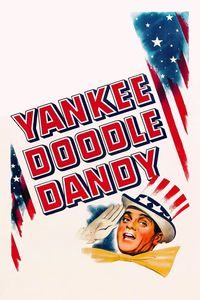
    (On Cable TV, December 2017) I really wasn’t expecting much from Yankee Doodle Dandy other than checking off a list of classic movies I should see, so imagine my surprise when I started to be honestly engaged in the film. Initially drawn in by the time-capsule aspect of the film (as a 1942 framing device leads us to late 1800s vaudeville, and then the birth of Hollywood musicals), I really started enjoying myself in-between the honestly funny comic routines inspired by state work and the birth of American musical movies. Academy Award-winner James Cagney (looking like a young Anthony Hopkins?) shows some serious skills in giving life to actor/composer/dancer George M. Cohan through some sixty-some years. By the time the film ends, we’ve been given front-row seats to a highly dramatized depiction of the evolution of American entertainment from theatre to movies, as well as a full biography ending with a striking piece of palatable pro-American patriotism both in topic matter and presentation. The re-creation of lavish stage spectacles is striking, many of the tunes are toe-tapping good and the film remains sporadically very funny even now. Add to that some directorial flourishes from Michael Curtiz (most notably a sequence charting the evolution of Cohan’s Broadway shows) and you’ve got the makings of an unexpected great movie that has appreciated in the seventy-five years since its release. I’ve been watching more older movies lately, and Yankee Doodle Dandy is the kind of happy discovery that will keep me going deeper into the archives.