Michael Ritchie

  • The Island (1980)

    The Island (1980)

    (In French, On Cable TV, February 2021) Michael Caine’s career is so long and varied that his filmography has anything and everything in it, from the best to the worst. Fortunately, he’s usually charismatic enough to make even the terrible films somewhat watchable, and it’s that spirit that does sustain The Island through its dodgier moments. Caine here plays a journalist who, while investigating the Bermuda Triangle (remember that?), discovers a long-lost colony of pirates cut off from the world but with a steady job of hijacking ships. The ludicrousness of the concept can’t readily be assigned to the usual studio meddling — the screenplay is by novelist Peter Benchley adapting his own novel. But if the result is too contrived to be believable, the entire thing has its rewards — notably a climactic sequence in which a teeth-clenching Caine machine-guns an entire crew of pirates. It’s not much, but it’s an anthology moment for his fans. Otherwise, director Michael Ritchie’s The Island is forgettable early-1980s fluff, not entirely sure of its tone (horror or thriller?) and too far-fetched to be taken seriously.
  • Divine Madness (1980)

    Divine Madness (1980)

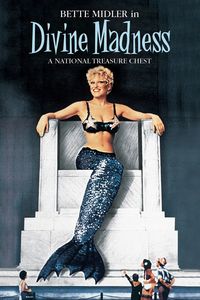
    (On Cable TV, September 2020) I’m coming at Bette Midler’s concert film Divine Madness from a very different perspective than the paying audience did back in 1980—she was then known as a singer, with only one film under her belt. People saw the film as one way for the chart-topping entertainer to extend her reach to the movie screen. I, on the other hand (and like many cinephiles), now see Midler first as a comic actress—that’s what’s been captured and keeps her profile alive even as her earlier musical success has been eclipsed. From that perspective, Divine Madness is an enduring film capture of her singing abilities. It should not surprise any of her fans, no matter how they know her. Here, a thirtysomething Midler demonstrates the three pillars that ensured her success no matter the medium: beauty, charisma and talent. Blending bawdy comic patter with stirring performances and a grander-than-life persona, Midler tears through multiple outrageous costume changes, touches upon half a dozen musical styles, and keeps up the comedy from beginning to end. Director Michael Ritchie innovated at the time by keeping the energy high and the numerous cameras rolling: While this approach has become familiar over the years, it was a revelation at the time and helped distinguish the film from many more conventional concert films. While the time to see Divine Madness and rush out to buy tickets to Midler’s next concert is gone (although she is still performing on Broadway), we can at least keep the film as a capture of that specific moment.

  • Fletch (1985)

    Fletch (1985)

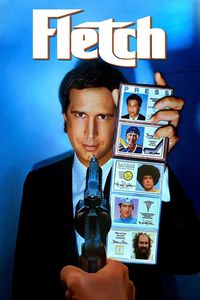
    (On TV, January 2020) The paradox of Chevy Chase is the paradox of Fletch—which makes sense considering how much the film relies on Chase’s comic persona. And that paradox is that Chase’s comedy always ran very close to abrasiveness: arrogance, showboating and self-satisfaction can either lead to good jokes (“I’m Chevy Chase and you’re not” remains a great one-liner) or sheer exasperation. Thus Chase’s performance here as a disguise-loving undercover journalist who turns to amateur sleuthing: while the bones of the story (adapted from an acclaimed Gregory McDonald novel) are solid, the script never misses an occasion to get Chase’s protagonist to play another character, multiplying accents, props, hairstyles and over-the-top histrionics. If you’re a Chase fan, the substantial plotting comes as a bonus to make this a better-than average Chase film; if you’re a mystery fan, Chase’s antics are annoying and stop the narrative drive of the film whenever it indulges him. As far as Chase films go, however, Fletch remains significantly better than the average, even with him indulging in his own worst excesses—director Michael Ritchie walks the fine line between extracting laughs from Chase without necessarily letting him run away with the film. The mid-1980s atmosphere as aged into a period patina and the technical credentials are well in-line with mainstream Hollywood studio polish at the time. Fletch may not necessarily work equally well on everyone, but it usually scores higher than average and that’s not too bad considering the very large Chase-shaped wildcard at its centre.