Michel Hazanavicius

  • Le Redoutable [Godard Mon Amour] (2017)

    Le Redoutable [Godard Mon Amour] (2017)

    (On TV, June 2021) The French student protests of May 1968 in Paris still echo in the Francosphere’s cultural heritage, and there have been no dearth of movies portraying it, helped along by the considerable participation and sympathy of the filmmakers of La Nouvelle Vague to the cause. One of the newest entries in the subgenre is Le redoutable, a Jean-Luc Godard biopic that covers a few years in the filmmaker’s life, through his wedding and breakup with Anne Wiazemsky (who wrote the autobiography from which the film is adapted). As a portrait of Godard, writer-director Michel Hazanavicius (continuing his meta-cinematic obsession that led to the Oscar-winning The Artist) offers a portrait that’s both detailed and uncompromising: intellectually self-obsessed, lisping, not particularly communicative nor warm with his girlfriend and devastated by the events of May 68 that leave him politically unmoored, Godard is not a hero here. Louis Garrel takes on a titan of cinema as Godard, and the result is a treat for anyone, fan or foe, who knows about the Nouvelle Vague and wants another look at the events of May 68. While I’m not overly amazed by Le redoutable, I’m happy to have seen it and even happier that it exists at all — as a contribution to the corpus of cinema about cinema, it’s not a bad entry at all, and it resists the temptation to paint its subject as saint or villain. (I still like Truffaut a lot more.)

  • OSS 117: Rio ne répond plus [OSS 117: Lost in Rio] (2009)

    OSS 117: Rio ne répond plus [OSS 117: Lost in Rio] (2009)

    (In French, On TV, October 2018) The premise of the OSS 117 series is strange but simple: adapt older French spy novels as comedies by repurposing their plot and pushing their sexist and racist content to an absurd degree. It wouldn’t work if Jean Dujardin wasn’t headlining the cast, and in fact it works markedly less well in OSS 117: Rio ne répond plus than in the first film of the series. It turns out that even when exaggerated for comic purposes, sexist and racism aren’t that funny … and the film doesn’t have much more in its sleeve to get viewers laughing. Dujardin does have the comic timing (and the square-jawed looks) to take the parochialism into comic territory, but there the jokes fall flat as being irritating and repetitive. It’s no surprise if the female characters, played by Louise Monot and Reem Kherici, are far more likable than the misogynistic hero. Director Michel Hazanavicius replicates the original’s self-consciously old-fashioned filmmaking, but he can’t strike gold twice, and the film often becomes an ordeal rather than an enjoyable parody piece. At best, OSS 117: Rio ne répond plus is best seen right after the original film, but I expect that the growing exasperation with the character is liable to grow even worse when they’re watched back-to-back. Too bad, because there’s a kernel of interest here that could have been developed better.

  • The Artist (2011)

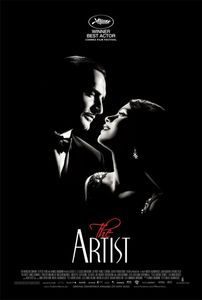
    The Artist (2011)

    (On-demand video, July 2012) The Artist’s success at the 2012 Oscars may, at first, have seemed like a fluke: A silent film featuring French lead actors and director?  What would be the odds?  But it doesn’t take a long look at the actual movie to understand why Hollywood would embrace the film so enthusiastically.  It is, after all, a celebration of one of cinema’s golden age, a painstaking recreation of a time best remembered through a haze of nostalgia.  Set during the last years of silent film, The Artist really doesn’t trouble itself with a complicated plot: It’s a straight fall-from-grace tragedy for the protagonist, mirrored by the rise of another type of performer.  The subplots and plot beats are all familiar, but they’re not the reason to see the film.  Jean Dujardin makes for an exceptionally capable lead (with Bérénice Bejo as a capable foil) , but The Artist’s greatest asset is the way director Michel Hazanavicius apes and recreates the style of silent cinema in all of its jittery glory, occasional dialogue cards making intelligible what the over-acting can’t establish.  By going back to the old, The Artist feels like something new, or at least something sufficiently different from routine that it’s hard not to be charmed.  It has a few lengths (especially in the dog-days of the protagonist’s fall on hard times) but it’s a crowd-charmer throughout, and it ends as it should –on a very high note.  No wonder that Hollywood propelled it to the top of the Academy Awards—along with Hugo, which also featured a mixture of French exoticism and early movie-making nostalgia. The Artist is that kind of film-for-film-lovers, designed to reward cinephiles for doing nothing more than watching a lot of movies.  It’s a curio, but a pleasant one.