Mickey Rourke

  • Diner (1982)

    Diner (1982)

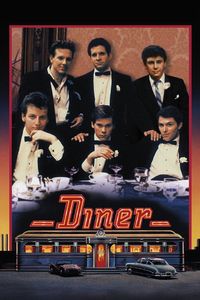
    (On Cable TV, May 2021) Generally aimless but amiable, Diner is the kind of film that plays well but doesn’t leave much of an impression. The first of writer-director Barry Levinson’s “Baltimore Tetralogy,” it’s a slice-of-life piece of nostalgia set in 1959, as a close circle of friends deals with the impending marriage of one of them. Intimate and minimalist, it’s more a series of conversations about 1950s young men mulling about sex, love and marriage than anything else. Today, the film is perhaps more remarkable for a truly surprising cast — young Steve Guttenberg (who never played in a better film), Daniel Stern, Mickey Rourke, Kevin Bacon, Paul Reiser, Ellen Barkin… geez. The production design is convincing yet not overpowering, but this is the kind of film you can almost listen to as a radio play — it’s heavily dialogue-based and very playful. Perhaps more interestingly, it’s not flashy dialogue — you’re not meant to be amazed at the wittiness of it, simply recognize that it’s how people talk. Over the past forty years, Diner has grown to be a bit of a classic — up to and including being made part of Turner Classic Movies’ regular rotation. There are flashier movies out there, but there may not be many more comfortable movies.
  • Girl (2020)

    Girl (2020)

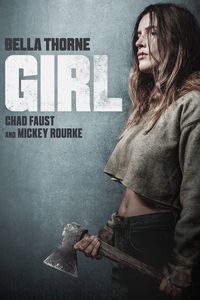
    (On Cable TV, April 2021) I don’t particularly like Girl, but there is something admirable about how crazy it’s willing to become in order to deliver thrills on a budget. Shot in Sudbury and set in AnyNorthernSmallTown, North America, it’s a thriller whose minimalist execution contrasts with its sensational plotting. From the first few moments, it’s obvious that this won’t be like most other movies: As a girl gets off the bus at an isolated stop on a two-lane road and walks to the nearest town, we’re set to understand that this is not meant to be a fun film. And yet, as the minutes advance, the screenplay seems at odds with the directing. The absurdities and implausibilities accumulate, such as the girl finding her father dead and being angry that she didn’t get to finish the job. It gets weirder as the film advances, as she discovers not one but two hitherto unknown uncles, who coincidentally end up being the two men she’s spent the most time antagonizing since the beginning of the film. It gets even better, what with a hidden treasure, the sudden arrival of a missing character, a small-town conspiracy, capture, torture and escape. Girl features revenge, fiery death, a fatal stabbing and near-universal abuse by and to all characters. It could have been an exploitation film, but it’s not always directed as such. Other than a dynamic laundromat fight and some suspense sequences, much of the film plays at a slow, gritty pace, somehow going for grimy naturalism when it should go big and wild in order to match its script. A few more characters may have helped round off the unreality of the result, but I’m not so sure that’s a good idea. The cast somehow includes Bella Thorne as the titular girl and Mickey Rourke as the final antagonist — both do well but not that well. There are some fitful attempts to go for big philosophical material throughout, but it’s clear that the film is most at ease in the suspense and action department — a rewrite could have leaned a bit more in that direction. As a result, I’m generally cool to Girl — there are promising elements here, but they seem mishandled in such a systematic way that I’m even wondering if writer-director Chad Faust understood the kind of film he was making, or the kind of film he could have made.

  • Nine 1/2 Weeks (1986)

    (In French, On TV, February 2021) I don’t think that Nine 1/2 Weeks is nearly as culturally omnipresent as it was back in the late 1980s, but I’m a man of my time, and watching the film today, I was struck by how much of it was referenced, satirized or quoted by other films of the time. (Hot Shots being a specific source of many, many jokes.)  To the extent that the film is remembered today, it’s as one of the few good movies of Mickey Rourke’s first act in Hollywood — he was young, trim and handsome at the time, and the perfect man to play the domineering lead in an erotic thriller. (So much so that he’d essentially reprise the same role in Wild Orchids three years later.) Kim Basinger makes a great foil for him as a submissive art gallery employee who gets caught up in his increasingly wild impulses. Decades before the Fifty Shades of prudish excitement, director Adrian Lyne was the foremost purveyor of titillating erotic thrillers, and Nine 1/2 Weeks remains one of his best claims to fame. Alas, it’s an incredibly dull film once you strip away the lengthy erotic sequences: The predictable plot fits on a paper napkin, and don’t ask where that napkin’s from: the point of this film is a series of music-video-like sequences in which the female lead is progressively controlled and abased by her dominant partner until it all breaks apart. (Many will point at the kinship between this and Lynne’s later Fatal Attraction or Unfaithful, but I found an even stronger connection with the way Flashdance presents its dance numbers as near-standalone sequences.)  What does help in finding Nine 1/2 Weeks boring is, as I’ve mentioned, all the jokes and parodies and references to the film that have popped up since then. It’s practically impossible to watch the film and see its pretentious eroticism punctured by the way it was laughed at. (And if your kinks don’t run along the same lines, well, all dullness is forgiven.)  In other words, I don’t think I received Nine 1/2 Weeks in the same way it was designed: I don’t think it’s meant to be a comedy interrupted by lengthy moments of boredom. I’ll at least recognize that both Rourke and Basinger are game in playing their characters the way they do — lesser actors would have held back. Still, it’s considerably duller than I was expecting, and frequently more ridiculous than alluring. I don’t see it as a tragedy if younger audiences have no idea about Nine 1/2 Weeks any more.

  • Dead in Tombstone (2013)

    Dead in Tombstone (2013)

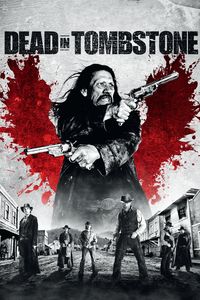
    (In French, On TV, May 2020) No one will ever mistake Dead in Tombstone for what it’s not. After all, it’s a low-budget direct-to-Video supernatural western featuring Danny Trejo and directed by Roel Reiné—all hallmarks of cheap unambitious genre movies made for an evening’s entertainment more than lasting artistic statements. This being said, Dead in Tombstone is better than average within the confines of its chosen lane. Trejo doesn’t just do a fly-by cameo: he’s got the lead role, plenty of dialogue and some action scenes to anchor. Meanwhile, director Reiné is known for maximizing even low budgets, and so the film is packed with slick images and strong visuals. Unfortunately, the film’s choppy editing frequently undermines the visual aspect of the film—for shame. What’s also a shame: that the plotting doesn’t quite equal the strong premise of the protagonist being resurrected for the explicit purpose of taking revenge on those who killed him. I’m also not that fond of Mickey Rourke, even if he’s cast as Lucifer here. Those little slights do damage what the film had to play with. What remains in Dead in Tombstone is not a great movie, but it more than fulfills the modest conditions for its greenlight: it’s reasonably fun, better directed than usual in its class and is a great showcase for Trejo. There can be worse ways to spend an evening.

  • Harley Davidson and the Marlboro Man (1991)

    Harley Davidson and the Marlboro Man (1991)

    (Second Viewing, In French, On TV, August 2019) Now here’s something that younger generations may not understand: there were two solid decades, roughly 1975–1995, where the late 1990s were fiction’s “techno-thriller years”—a time where writers set stories that were a bit like the future but not too much. Harley Davidson and the Marlboro Man is a really good example of that: By setting their story forward in 1996, the filmmakers are free to imagine a slightly more dystopian future (no ozone layer!) with stronger corporate control and, crucially for the story, a new synthetic drug. The narrative gets started when two bikers rob an armoured van and end up not with cash but a substantial shipment of drugs that are, of course, property of corrupt corporate executives. As the title suggests, Harley Davidson and the Marlboro Man dives deep into the biker outlaw archetype, with Don Johnson and Mickey Rourke showing a much-inflated opinion of themselves as they strut around thinking that they are the epitome of cool. But the film is all attitude and bluster, and not as much fun thirty years later. There are some moments that stand out: Vanessa Williams and Tia Carrere have supporting roles (the first as a singer), the portrayal of mooks in bulletproof long coats seems prophetic of a late-1990s cliché, and there’s an occasional so-bad-it’s-good quality to the over-the-top dialogue and mindless action of the film. It’s also interesting to measure the results against familiar western archetypes, making an argument about bikers being modern cowboys. To be clear, Harley Davidson and the Marlboro Man is not good, and nearly everything intriguing about it has been seen elsewhere. You also have to tolerate unearned machismo in order to even get into the film (although the opening monologue from a radio DJ rather efficiently sets the tone). But I’ve seen much, much worse, so at least it’s got that going for it.

  • Angel Heart (1987)

    Angel Heart (1987)

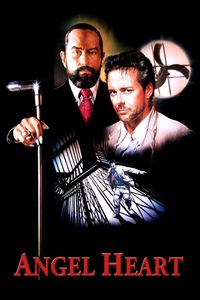
    (In French, On Cable TV, June 2019) I wasn’t expecting much from Angel Heart other than a mild curiosity as to why what looked like a neo-noir murder mystery was doing playing on a hard-core horror Cable TV channel. Well, as it turns out, one of the least of Angel Heart’s qualities is the way it shifts from neo-noir investigation to something quite more horrifying. Mickey Rourke turns in a good early-career performance as Harry Angel, a Private Investigator asked by a mysterious client to find out what happened to crooner Johnny Favourite (no apparent relation with the lead singer of the Canadian Jazz band). The mystery client is joyfully played by Robert de Niro, whose devilish behaviour (along with impeccably clawed fingernails) clearly suggests that he’s enjoying playing the part. Quite a bit of the Angel Heart’s second half features Lisa Bonnet shredding her former nice-girl image with a few unusually intense nude scenes. Much of the film’s initial appeal is going back to 1950s New York noir archetypes, albeit played with more bloodshed than the classics. Things take a turn for the much, much worse once our private investigator travels to New Orleans where (as is movie tradition) everyone seems steeped into some variant of voodoo magic. But that’s not the half of it, and even if you know where things are going, the film as a few more unpleasant surprises in store right until the end. Director Alan Parker does quite well with Angel Heart, creating unnerving sequences when it counts, delving into visual symbolism that’s at least one level deep, and taking great care with the musical atmosphere of the film in between the scares. The unusual coda keeps going throughout the credits. It all amounts to a bit of a surprise—the film isn’t unknown, but I had completely missed it and got to discover something more interesting than anticipated along the way.

  • The Pope of Greenwich Village (1984)

    The Pope of Greenwich Village (1984)

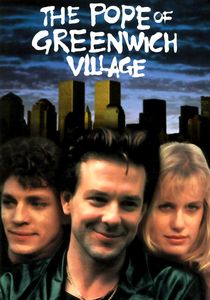
    (On Cable TV, May 2019) Not every film has to be a high concept of startling originality, but even by the standards of low-stake crime drama, The Pope of Greenwich Village struggles to be interesting. Best described as a crime drama featuring two young Italian-American friends trying to make enough money to get out of their stifling NYC neighbourhood, this is a film about scams, hustles and crimes not turning out like they should. Of course, our characters won’t settle for education, good boring jobs and saving enough money on their own time—it must be a get-rich scheme to get them out of there, and it’s not as if the film will seriously question this assumption. Or call out as one of the characters starts by being obnoxious, and then keeps on making life miserable for everyone else involved—including the putative protagonist. There’s a fair case to be made that the film isn’t about anything more than being an actor’s showcase, in this case for Eric Roberts (as the obnoxious one) and Mickey Rourke (as the likable one). (The film started as being for De Niro and Pacino, but things changed along the way.)  I have to say that this is probably the most sympathetic character I’ve ever seen from Rourke. The atmosphere isn’t bad, but everything simply feels dull—occasionally enlivened by a comic moment, but not leading to a convincing or satisfying ending. There are occasional attempts to reach for Godfatheresque grandeur in its depiction of the Italian-American community experience, but let’s not be ridiculous—The Pope of Greenwich Village doesn’t even make it halfway there.

  • Wild Orchid (1989)

    Wild Orchid (1989)

    (In French, On TV, March 2019) One of the fringe benefits of being French-Canadian is a slightly more relaxed attitude toward sex and nudity that translates into some options that would be unusual in the Anglosphere. I’ll spare you the tales of Bleu Nuit’s glory days back when I was a randy teenager, but its spirit lives on in Cinepop’s regular broadcast of the first few Emmanuelle soft-core movies, or Prise 2 having a weekly late-night spot for racier films. Hence being able to record Wild Orchid off non-premium Cable TV and finally having a look at what’s perhaps the Mickey Rourkiest of Mickey Rourke’s roles. Wild Orchid is infamous in cinephile circles for its hedonistic plot, and sex scenes so convincing that generations of viewers have wondered whether they did-it-for-real on camera. (Both actors say they didn’t, so let’s go with that.)  The plot isn’t much more than a fancy excuse for high-gloss erotic scenes, as an American lawyer (Carré Otis) travels to Rio and gets fascinated with a rich businessman (Rourke) and gets swept in the easy Brazilian exoticism. (At least it’s better than Blame it on Rio.)  Rourke’s performance is fit to remind us that he was a sex symbol at the beginning of his career, while Otis is very cute as an innocent Midwestern ingenue thrown in upscale debauchery. Everyone will have their favourite scene, but my money is on that Anya Sartor old-hotel scene—whew! The plot is thin, with 15 minutes of narrative diluted in lengthy slow-motion soft-core sex scenes in a 90-minute film, but it’s familiar because it features many tropes later often imitated: The innocent heroine; the super-rich-and-confident man; the glamorous surroundings—Fifty Shades of Gray never invented anything in the world of racy movies. Wild Orchid isn’t much of a narrative film, but it does have at least a bit of primal interest to it. The Brazilian scenery is gorgeous—and I’m not only talking about the beach, birds, and trees here. No wonder Anglophones across Canada regularly watched Québec channels late at night to, um, learn French.

  • Sin City: A Dame to Kill For (2014)

    Sin City: A Dame to Kill For (2014)

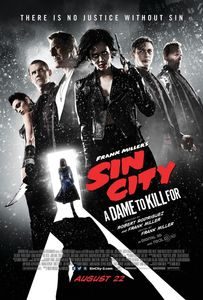
    (Netflix Streaming, April 2015)  It’s been nine years since the original Sin City, and that’s frankly too long in-between installments.  I’m older, wiser and less likely to tolerate the kind of juvenile attitude in which overdone noir can indulge.  It really doesn’t help that A Dame to Kill For seems delighted in showcasing brutes and corrupting whatever innocence had escaped the first film intact: Despite toned-down violence (well, ignoring the mid-movie thirty-second marathon of decapitations accompanied by grotesque audible sploshes), it feels like an even more pointless film than the original.  It’s not all bad, especially if you can get yourself in a mood receptive to noir style and overdone dialogue: the special effects are well done (albeit inconsistently used), the quasi-parodic script is good for a few laughs and anyone wanting a little bit more of that first film’s style is likely to enjoy it.  Director Robert Rodriguez may be repeating himself (it’s about time he directs a film that’s not part of a series), but he’s doing so stylishly.  Mickey Rourke seems to have fun playing the brute once again, while Joseph Gordon-Lewitt and Eva Green (in a typical performance, as seductive as she seems insane) are welcome addition to the cast.  Plenty of smaller roles are given to big-name actors, leading to a sustained game of spot-the-celebrity.  Still, what curdles A Dame to Kill For is the ugly script, which not only has pacing issues but (unlike the original) forgoes the protection of innocence in favor of revenge, revenge and some more revenge: Jessica Alba’s character is corrupted to the point of destruction, more than one sympathetic characters are killed to set up the never-ending avenging and the effect is far more nihilistic than healthy, even for a noir film. (And that’s not even mentioning the troubling glorification of Rourke’s character as an invulnerable killer.) For all of the polish of the film’s style, it doesn’t work if its ideals and plot points leave a sour taste.  It’s not a good sign that of the film’s interlocked stories, the worst two are the ones especially written for the sequel.  I would still watch A Dame to Kill For again (someday, not any time soon) just to enjoy the visuals and the atmosphere, but I would be wary of recommending it to anyone else, and I sure wish the script had been more upbeat and less self-satisfied by its own pointlessness. 

  • Immortals (2011)

    Immortals (2011)

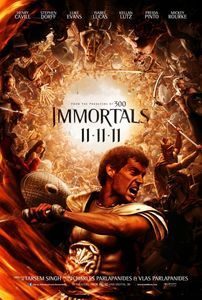
    (Cable TV, September 2012) The most dependable thing about director Tarsem Singh’s work is the astonishing visual polish of his work: From The Cell to The Fall to Immortals to Mirror, Mirror, the least one can say about his work is that it’s pretty to look at.  In terms of story, though, he doesn’t always pick the best scripts: His own writing on The Fall was intriguing, but his other films are disappointing to some degree.  Immortals is no exception to the rule: While it features a number of sequences that are pretty enough to work as classical paintings, its story veers between confusion, dullness and trite clichés.  Based on Greek mythology, Immortals is partly an excuse to produce a turbo-charged fantasy action film using top-notch special effects, and partly an excuse to play in the rarefied sphere of intensely operatic sword-and-sandal drama.  It works, but not completely: While the visuals are one-wow-a-minute, the story takes a long time to get going, and even then merely works in fragments.  Henry Cavill doesn’t have anything to regret in his performance as Theseus, while Freida Pinto perfectly plays the part of a reluctant oracle and Mickey Rourke brings some energy in the picture as the villainous King Hyperion.  Still, this isn’t an actor’s film: it’s really a directorial showpiece, and Immortals has a lot of visually memorable set-pieces.  The atmosphere may feel a bit claustrophobic (at time, it seems as if half the outdoors scenes are set on a cliff overlooking the sea), but the sequences are polished to such a degree that the entire film feels photo-shopped. (Immortals may feature some of the goriest slow-motion deaths in recent fantasy, but it’s so pretty that the only response is an astonished “oooh”.) Too bad the script hasn’t been re-worked to such degree: we’re left with a dull beginning, a muddled middle and a straightforward ending.  A blend of 300 aesthetics with Clash of the Titans mythology, Immortals works best as a plot-less eye candy.  Maybe, some day, Tarsem will manage to combine his superlative visuals with a good script.

  • The Expendables (2010)

    The Expendables (2010)

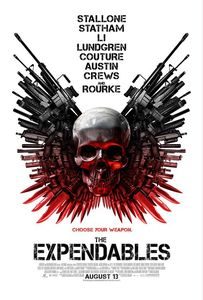
    (On DVD, August 2010) It’s said that films should be judged on the basis of their ambitions, and the least one can say about writer/director/star Sylvester Stallone’s The Expendables is that it really wants to be a gift to 1980s action movie fans.  The ensemble cast is among the most extraordinary ever assembled for an action film, in between Stallone, Jason Statham, Mickey Rourke, Dolph Lundgren, Jet Li and others, with great cameos by Bruce Willis and Arnold Schwarzenegger.  Unfortunately, the cast (Statham in particular) is about the only thing going for this film, which is so successful in recreating the eighties that it has forgotten that most action films of the era were deathly dull.  Reviving Regan-administration Latin-American politics, the film is mired in a dull banana-republic setting where only Americans can kill the right people to restore peace and deniable capitalistic hegemony.  But even worse is Stallone’s action direction, which cuts away every half-second in an effort to hide that the actions scenes don’t have a lot of interest.  The explosions are huge, but the rest is just confused: in-between the excessive self-satisfied machismo of the film, it’s not hard to grow resentful at the stunning waste of opportunities that is The Expendables.  A perfect example is a dock strafing sequence that could have been great had it actually meant something: instead, it just feels like the gratuitous hissy fit of a pair of psychopaths.  But the nadir of the film has to be found in its script, especially whenever it tackles perfunctory romance: Sixty-something Stallone may helm the film, but it’s no excuse to slobber over a girlfriend half his age.  Another dramatic monologue delivered by Rourke stops the film dead in its tracks and sticks out as the endless scene that doesn’t belong.  Too bad that the script doesn’t know what to do with what it has: despite the obvious nods and little gifts to macho cinema, The Expendables quickly indulges in the limits of the form.  Guys; don’t argue with your girlfriend if she wants both of you to see something else.