Mimi Rogers

  • Affairs of State (2018)

    Affairs of State (2018)

    (On Cable TV, May 2020) The duality of political thrillers is that they can be very cerebral affairs dealing with the abstract, even lofty ideals essential to the fabric of the state… or they can be trashy sordid affairs mixing petty transgressions and crime magnified by the whiff of power. Affairs of State reveals its true salacious colours early on with a sex scene featuring Mimi Rogers, and then the congressman having the affair goes on to also have sex with her daughter (but not at the same time, that would be too much). The rest of the film is this fantasy of American politics as being a mush of blackmail, affairs, hot sex, corruption, murder, coverups, people shouting at each other and more hot sex. (I listed hot sex twice because I like what I like.) Directed efficiently by Eric Bross, Affairs of State is at its best whenever Mimi Rogers is on-screen, or failing that whenever it’s wallowing in its own trashiness as if there was no tomorrow. Conversely, it’s at its weakest whenever it tries for loftier political statements, like a new conservative party somehow being viable. David Corenswet does well as the oversexed protagonist—but he’s not going to do well if he sticks to those low-budget potboilers. The ending, unfortunately, doesn’t quite cap off the wild ride to get there and feels as if Affairs of State ends on an anticlimactic letdown.
  • Dark Horse (1992)

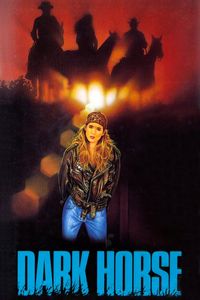
    Dark Horse (1992)

    (On TV, April 2020) I’m not that big of an audience for horse-centric family dramas, but I will watch anything with 1990s vintage Mimi Rogers, and she’s pretty good in Dark Horse as a horse ranch owner who takes in a resentful teenage protégé. The teen rebel is played by Ari Meyers, who’s cute enough in a conventional role. Produced by 1950s-60s movie star Tab Hunter, the film is blunt, simplistic and deliberately feel-good, but it works well enough at its intended purpose. Otherwise, this reviewer struggles to find anything more to say about Dark Horse. Equestrians will enjoy, maybe?

  • The Doors (1991)

    The Doors (1991)

    (On TV, March 2019) I am surprisingly underwhelmed by sex-drugs-and-rock-and-roll biopic The Doors, and even more so considering that it’s from Oliver Stone, a filmmaker who has amply demonstrated his ability to deliver vivid and exciting takes on American history. He doesn’t fail here—it’s more that he half-succeeds, focusing on one specific element without quite bringing everything else together. It’s not uninteresting by the time the credits roll, but the film does itself no favours with a first half-hour spent in a series of false starts and delirious haze. Stone keeps things moving and the least we can say is that the film rarely stays sitting still for long … but the flip side of that is The Doors’ hectic quality, moody intercuts and scattered attention span. The focus here, despite the film’s title is clearly on lead singer Jim Morrison—bolstered by an exceptional performance by Val Kilmer, the film embraces a portrait of the singer as a death-seeking drug-fuelled paranoid. It’s a great topic for a flamboyant film, but maybe not so much for historical accuracy. Saying that the result is pretentious isn’t a criticism as much as an acknowledgement that it has captured a significant facet of Morrison’s personality even as it has downplayed others. Even then, the film does sport some interesting performances in its corners—Meg Ryan and Mimi Rogers, among others, still manage to be memorable. Which, in the middle of a film with great music and an exemplary rock-and-roll superstar subject, is no little feat.

  • Gung Ho (1986)

    Gung Ho (1986)

    (In French, On TV, November 2018) No matter the era, America is always under siege. In the 1980s, even as détente was making the Soviets slightly less threatening, Americans discovered that the Japanese were going to outproduce everyone and buy everything. American industrial management were quick to obsess about Japanese production techniques: why was Toyota producing cars that were so much better than anything Detroit could turn out? 1986’s Gung Ho may not be a particularly well-known film these days despite being directed by Ron Howard, but it presents an impeccable take on the obsession of the time as a Japanese car company buys an American factory and starts imposing its methods. A significant culture clash ensues, spiced up by the fact that the American characters are being challenged to do better. Michael Keaton headlines the film with his usual charm, playing a foreman acting as the link between Japanese management and the American workers. Despite the obvious concessions to comedy, the film was reportedly used in Japan in order to understand how to manage American workers. The result is often more interesting as a time capsule than a conventional film—Howard directs unobtrusively, Keaton is his usual sympathetic self, Mimi Rogers shows up, a few more Howards (Clint and Rance) have supporting roles, and the film has a pleasant blue-collar atmosphere without being weighed down in the kind of dark drama that such mid-1980s setting usually accompanied. It’s watchable enough. A sequel, showing how American manufacturing adopted and adapted Japanese manufacturing techniques, would be sorely needed at the moment.