Miriam Hopkins

  • Old Acquaintance (1943)

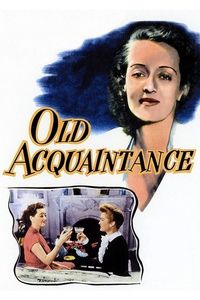
    Old Acquaintance (1943)

    (On Cable TV, October 2021) While the TV Guide log-line for Old Acquaintance has something to do with novelists, don’t be fooled: the film is very much a woman’s drama in which the friendship between two childhood friends (Bette Davis and Miriam Hopkins, who famously clashed during shooting) is described over decades through its highs and lows. It’s not uninteresting, but it does get familiar very quickly, with the usual melodrama and histrionics about wayward husbands, children and overdeveloped egos. The only welcome respite comes late during the film as Davis shakes and slaps Hopkins, bringing a bit more energy into the mix. Otherwise, the entire thing does feel like a Classic Hollywood theatrical production—humourless, technically accomplished, but perhaps more focused on getting the thing done during a difficult shoot. It’s watchable largely thanks to Davis, but hardly remarkable outside the shaking-and-slapping sequence.

  • The Smiling Lieutenant (1931)

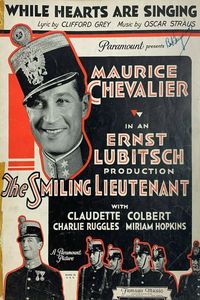
    The Smiling Lieutenant (1931)

    (On Cable TV, January 2021) There are a surprising number of reasons why The Smiling Lieutenant remains worth a look ninety years later. It is, perhaps most notably, an early Oscar nominee—at a time when frothy romantic comedies could actually win (and sometimes even win!) a Best Picture Academy Award. (Amazingly, it disappeared from circulation for a few decades until a copy was rediscovered in the 1990s.)  But it’s also an example of what writer-director Ernest Lubitsch could do in the Pre-Code era, tacking adult themes and racy narratives that would become impossible to sneak past the censors even a few years later. Finally, it’s an early film featuring no less than a dashing and impossibly charming Maurice Chevalier, Claudette Colbert’s adorably round cheeks (with the great comic timing that came with them), and the lesser-known Miriam Hopkins, whose star has faded somewhat in the intervening decades despite being a box-office sensation in the 1930s. The premise has to do with a young officer smiling and winking at his beloved—but the gesture is also being received by a lovelorn princess who, through various circumstances, gets her hooks deep into the lieutenant. What becomes a romantic triangle eventually reaches a still-surprising conclusion, but not before a quick wedding and unlikely makeover by a romantic rival. As with most Lubitsch films, there is a distinctive quality to The Smiling Lieutenant that makes it worth a look even if the results aren’t quite up to the premise—of all comparable films, I still much prefer One Hour with You. Still, it’s funny, sophisticated and substantially more daring than what would follow under the Hays Code. I’m not that happy with the final few minutes of the film and history tells us that the production of the film didn’t match the fun experience on-screen (Chevalier had to contend with the death of his mother during production), but the result is still worth a look with a Pre-Code kick that still amazes.

  • Trouble in Paradise (1932)

    Trouble in Paradise (1932)

    (On Cable TV, March 2018) As I dig deeper in film history, few words become as interesting as “pre-code comedy”.  The more I watch older films, the more I complain about the Hays Production Code that effectively stunted the thematic development of American cinema between 1934 and 1960 (ish). But there is a brief time, roughly 1930–1934, during which Hollywood movies, having more or less mastered the grammar of cinema, was moving toward bolder and more daring subject matter. These movies feel considerably fresher than many subsequent films in their ability to grapple with authentically adult subject matter. While I wouldn’t call Trouble in Paradise an all-time classic nor a boundary-pushing film, its Pre-Code nature makes it so that it’s just spicy enough to be worth a rewarding viewing experience. Focusing on a pair of expert thieves out to swindle a rich French heiress, this is a romantic crime comedy that works decently well on several levels. As a pure comedy, it features witty dialogue, strong characters and an amiable sense of sophisticated style. Herbert Marshall and Miriam Hopkins make for likable criminal heroes (their introductory dinner is a lot of fun), their loyalty to each other tested when Kay Francis enters the picture as a rich target. Director Ernst Lubitsch handles the elements of his film with a deft touch (indeed, “The Lubitsch touch” that could be seen in later movies such as The Shop Around the Corner), producing a well-rounded piece of work. What’s not so obvious to modern audiences since then used to moral complexity is the idea of presenting two outright thieves as romantic heroes: while it’s since been done over and over again in modern cinema, this was a bit of a sensation at the time, and the film effectively disappeared from public circulation for decades (until 1968) once the Hays Code was enforced two years later. Marvel, then, that we twenty-first century cinephiles now have access to something that many earlier audience didn’t. And marvel that, thanks to more natural non-enforced moral standards, Trouble in Paradise still plays really well today, more than eighty-five years later.