Missing in Action series

  • Braddock: Missing in Action III (1988)

    Braddock: Missing in Action III (1988)

    (In French, On Cable TV, November 2020) Chuck Norris once again heads over to south-eastern Asia in order to free up American PoWs in Braddock: Missing in Action III. As is often the case for third sequels of 1980s movies, the level of quality takes a nosedive here, although the opening sequence recreating the fall of the American Embassy in Hanoi is executed with decent production values. The big plot element of this third entry is giving a wife and child to the protagonist as a way to motivate him to head back in the country for more mayhem. It ends on a bridge between the two countries, something that would be echoed in many other later movies. Norris is equal to himself here, meaning that the beard goes hand in hand with the stoic attitude and not too much emotion in dealing with a long-lost wife and resentful son. You might as well watch the film if you’ve purchased the box set, if your streaming provider has it or if your TV channel somehow thinks a marathon of all three films is justified—it’s not that bad. But Braddock: Missing in Action III is really not worth tracking down for anyone but the most dedicated of Norris fans.
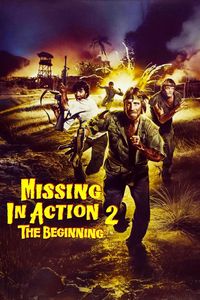
  • Missing in Action 2: The Beginning (1985)

    Missing in Action 2: The Beginning (1985)

    (In French, On Cable TV, November 2020) As its production history goes, Missing in Action 2: The Beginning was filmed at the same time as the first film in the series, and was originally intended to be the first of the two films released in theatres. When the sequel ended up becoming a better film than its planned predecessor, it became the first one to be released, followed by this “prequel” that was not intended as such… but ended up aping Rambo: First Blood even more than just being the rumoured inspiration for the story. Of course, we’re far, far away from James Cameron’s Rambo script here, and the film feels like ninety minutes of misery closely following years of captivity for Chuck Norris’s character. Delighting in showing us the atrocities of interment in a Vietnamese POW camp, Missing in Action 2: The Beginning is far more exploitative than educational or inspirational: it’s about seeing the protagonist stoically endure as much suffering as possible (the screaming is done by the supporting characters) before being able to take revenge on the sadistic camp officer and wreaking complete havoc on the camp along the way. It’s not meant to be subtle, and we can clearly see here the “anger” phase of Hollywood’s dealing with the grief of the Vietnam War. This really isn’t the best film on the topic, but it was meant for quick cash rather than posterity. Norris is equal to himself –who was really surprised by the rat-in a-bag scene? Missing in Action 2: The Beginning plays on obvious emotional chords, and the result is about as formulaic as could be imagined. If nothing else, it’s going to satisfy fans of the first film.

  • Missing in Action (1984)

    Missing in Action (1984)

    (On Cable TV, August 2019) Let’s not mince words: Missing in Action is not a good movie. It’s not subtle. It’s created to cash in on a very specific sub-strain of American pathology, which is the desire to win all the wars they’ve ever been involved in, even if they have to rewrite history to do it. And yet, despite the low-budget and even lower imagination, Missing in Action may very well be a movie of historical importance. As the story goes, James Cameron’s treatment for what would later become Rambo: First Blood Part II was floating around Hollywood, and one of the production companies interested, the low-rent Cannon group, decided to create a new script out of the idea. But The Cannon Group was not interested in what can be laughingly called the sophistication of the second Rambo film: Here, there are no double-crosses from Americans: Everything is a straightforward jingoistic power fantasy in which American firepower defeat the Vietnamese at last and erase the national embarrassment. It’s straightforward to the point where it becomes iconic, and the film is worth seeing for no other reason than the classic unironic shot in which Chuck Norris inexplicably emerges from a river, big gun blazing. Understandably, Missing in Action became a rich source of inspiration for the second Hot Shots! parody. Amazingly enough, it just may be Norris’s best film—certainly the one where the budget is high enough, the distance between persona and character is slimmest, and the one where self-awareness is kept to a minimum. It was an integral part of the Reaganesque might-make-right action/war movies of the decade, and seemingly runs on pure distilled American pride. Again: I’m not saying that Missing in Action is a good movie … but anyone interested in 1980s Hollywood has to see this.