Godzilla vs. Kong (2021)
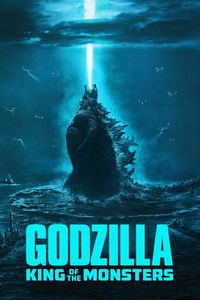
(On Cable TV, August 2021) We’re now up to four movies in the modern “monsterverse,” and a pattern is already clear: odd entries disappointing, even entries better than expected. Godzilla was OK without being good; Kong: Skull Island was surprisingly well-done; Godzilla: King of the Monsters was an overstuffed disappointment but here is Godzilla vs. Kong to make up for it. Arguably the climax to the series, this entry has King Kong and Godzilla squaring off around the planet, then briefly teaming up to take on an even worse threat. I was rather amused at the willingness of the film to go for wild world-building all the way to a hollow planetary core, although that amusement was tempered by the bad decision to make conspiracy theorists the heroes of one subplot. Still, it takes a special kind of audacity to have Kong and Godzilla square off on the deck of an aircraft carrier, as if it was a too-little surfboard on which to fight. Director Adam Wingard is a long way from the modest horror films that first made his reputation, but he’s up to the task of orchestrating a modern special-effects spectacle: by the time the two titular monsters and their foe duke it out in brightly-lit Hong Kong, it’s clear that he’s making a play for the ultimate kaiju fight sequence. The flip side of that success is that the film becomes duller the longer it stays away from the monsters. I enjoy seeing Rebecca Hall in anything, even as a walking exposition device, but Godzilla vs. Kong makes some curiously bad choices when it comes to its human characters. We don’t need conspiracy podcasters as heroes, considering how many problems we’re already having in clinging to the truth. Most other characters are vapid or insipid — although the chief antagonist has a few solid motivations in his favour. I’m also not quite as happy with the delirious nature of the film’s inventions: everything seems to be taking place in an alternate reality with inconsistent fantasy science with antigravity reactors, planetary tunnels, a hollow planet on one side, and a giant ape strapped to a ship on the other. But then again— trying to find too much scientific plausibility in a film designed to have King Kong and Godzilla bash each other is expecting too much. We should just be happy that Godzilla vs. Kong exists and somehow holds together. I’m not sure where they can go after this, though. But that’s their job, not mine.