Morena Baccarin

  • Ode to Joy (2019)

    Ode to Joy (2019)

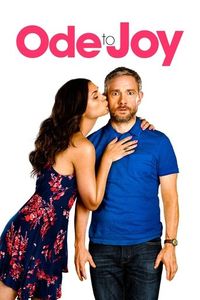
    (In French, On TV, September 2021) A clever premise goes a long way to making a romantic comedy memorable, even if it ultimately ends up going somewhere familiar. A great cast also helps, so when we see Martin Freeman show up in Ode to Joy as a man with a neurological condition that has him fainting at the slightest strong emotion (especially joy), we’re in good hands — and the same goes with having Morena Baccarin as the exuberant woman who catches his eye. The film’s most interesting segment comes next, as our eminently reasonable protagonist concludes that he literally can’t process life on such an emotional roller coaster, and arranges for her to date his brother and for him to find companionship with an emotionally-muted colleague of hers. Practical! Clever! And doomed to failure! As we shift into our third act, it becomes clear that nothing is going to keep our lead couple apart except for some temporary misunderstandings, and so Ode to Joy eventually ends where we expected it to be, albeit with truly interesting moments along the way thanks to unobtrusive direction from Jason Winer. Freeman and Baccarin have a good chemistry despite the dangerous nature of the male lead’s condition — the film’s epilogue is cute and poignant at once. Some good supporting work from Jake Lacy and Melissa Rauch wrap up the lead quartet. While not a great movie, Ode to Joy is fun and likable and, yes, joyful — perfect undemanding entertainment if you just want to see something that ends well with enough good times along the way to the expected conclusion.
  • Greenland (2020)

    Greenland (2020)

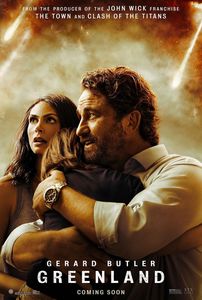
    (Amazon Streaming, May 2021) When the dust will settle, the memories of our COVID/lockdown years will definitely affect the way we make and approach entertainment. Already, I’m fundamentally less amused by zombie movies, and even catastrophe films are feeling less fun now that we have a new baseline against which to measure world-changing events. In taking a look at Greenland, for instance, I’m more inclined to question some of the base assumptions of the film than playing along with it. Part of it is the recent re-demonstration that a strong society works better than rugged individuals at facing down a great peril. In this light, having a film about a man judging that he and his family deserve to be saved rather than everyone else strikes me as distasteful, not matter how cleverly the film tries to weigh down its moral scale. (Meteor strike; pre-approved list of people to save; everyman trying to save his family; etc.) What makes the protagonist better than anyone is not satisfactorily demonstrated here, especially as he often relies on the unsaved to save himself. Yes, yes, I know — the film is meant to be an episodic series of mini-adventures on the way to shelter, and that’s it. But Greenland doesn’t help itself by featuring some fundamentally irritating plot cheats and complications, often presenting a caricatural portrait of other people that the protagonist has to overcome. For Gerard Butler, this is another solid role in a middling thriller: as usual, he’s better than the film he picks, but at the same time feels like an interchangeable part of a generic ensemble — I liked Morena Baccarin a lot more as his wife, but then again, I would in just about any film regardless of her part. There’s a bit of contrived lifeboat ethical dilemma here, and those often end up being ludicrously didactic lessons in semantic bullying, and I don’t think that Greenland, even under the guise of a lightweight apocalyptic adventure, is too far away from that. Director Ric Roman Waugh does have a sure hand on his handling of a large-scale spectacle, at least, which softens the blow slightly. I’ll at least grant that when it comes to disaster films, Greenland doesn’t pull back on spectacle while still presenting a relatively plausible depiction of how it may happen. I probably would have enjoyed the film a lot more a few years ago; I probably will like it more in a few years. Right now, however, it feels slightly distasteful and egotistical.

  • Deadpool (2016)

    Deadpool (2016)

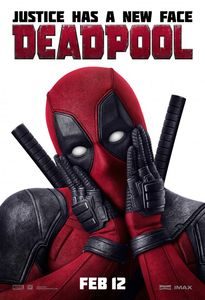
    (Netflix Streaming, October 2016) The behind-the-scenes context surrounding Deadpool (a passion project for Ryan Reynolds, his occasion to atone for Wolverine and Green Lantern; perhaps his last chance to establish himself as a blockbuster lead megastar; the risky bet of an R-rated superhero movie; the unexpected box-office triumph of the film; the provocative comparisons with Batman vs Superman; and so on…) is almost more interesting than the film itself … which is saying something considering how successful the result on-screen can be. Deadpool arrives at a perfect time in the evolution of superhero movies—a time when the basics have been covered, a time at which superhero fatigue is settling in and experimentation can be rewarded. Hence the success of a satirical (but not parodic) take on the usual superhero origin story, commenting on its predecessors, frequently breaking the fourth wall and delivering far more R-rated violence, sexual content and vulgarity than is the norm in mainstream superhero PG-13-land. Ryan Reynolds finally crackles and shines as the lead character, using charm and humour to enliven a character that could have been unbearable played by someone else. Morena Baccarin more than holds her own as the female lead, playing a more interesting character than usual for this kind of role. Deadpool is all about its irreverence, and it consciously dials down the scale and scope of its story in favour of finely tuned execution. It certainly works, what with structural backflips, taut editing, rapid-fire gags and enough satirical jabs to confound anyone who hasn’t been seeing enough superhero movies. It’s not perfect, almost by design: the profanity-laced humour doesn’t always avoid feeling juvenile, the lightweight story is familiar despite its successful execution and it’s very much a film made for the comic-book crowd. (More general audiences aren’t necessarily excluded, but trying to explain even short jokes like “Stewart or McAvoy?” can take a while.) Still, it’s a fun movie to watch, and it certainly meets the considerable expectations that it had to meet from its core audience. Unfortunately, there will be a sequel … and that one will have to try twice as hard not to become an ugly parody of itself. We’ll see.