Morgan Freeman

  • Transcendence (2014)

    Transcendence (2014)

    (Video on Demand, July 2014) Even as science fiction concepts make their way to the mainstream, I remain more and more convinced that there is a fundamental difference between the mindset that gravitates toward cord SF and the rest of the population. And here’s Transcendance to make the case, as it plays with heady concepts while reassuring audiences that technology is inherently evil. Sort-of updating the moral virtual panic of The Lawnmover Man for a new generation, Transcendence once again shows an uploaded mind turning evil: SF as an excuse for horror, and a film in which characters gravely say “we fear what we don’t understand”… before doing exactly that. The technical errors abound in this film, which is almost a relief given the silliness of the entire script (“hey, let’s set up a consciousness upload laboratory in an abandoned high-school gym”). There’s a lot to dislike in the structure of the film that spoils much of the ending early on, while the rest of the script doesn’t quite seem to understand where it’s going besides an apocalyptic conclusion. (The ending can sustain a multiplicity of interpretations, the most charitable being that our two lead characters are still working quietly at changing the world.) Director Wally Pfister has a good eye for ponderous images, but he’s really not as sure-footed during the action sequences, which play out as fairly silly on-screen. Johnny Depp once again plays Johnny Depp, but the film’s tight-lipped seriousness undercuts the eccentricity that is his biggest strengths as an actor. Meanwhile, as much as I like Rebecca Hall (to the point of watching nearly everything she’s been doing lately), she is definitely underused in this film, her usual brainy character being neutered into nothing much more than the damsel-in-distress. There’s also something strange about Morgan Freeman being in the film, but in a nearly-useless role. Other flaws abound, from the herky-jerky nature of technological innovation to risible terrorist antagonists to a climax that looks amazingly cheap considering the scope of the film so far. Transcendence is the kind of maddening film that holds a strong set of ideas, but can’t be bothered to actually do anything interesting with them… or take the leap forward that technological innovations can actually be, you know, beneficial without anyone turning into a creepy omniscient god-monster. I suspect that being a fairly knowledgeable SF reader is tainting my impression of Transcendence in ways that may not occur to the average moviegoer, but such is the baggage that I bring to the film.

  • Last Vegas (2013)

    Last Vegas (2013)

    (Video on Demand, February 2014) Hollywood is growing old alongside a significant proportion of its audience, so it’s not surprising to find more and more movies aimed at older audiences. Suffice to say that Last Vegas is at least better than The Expendables series is confronting how yesterday’s superstars can go gently into semi-retirement. Focusing on four older men coming to spend a wild weekend in Vegas to celebrate one of their own’s nuptials to a (much) younger woman, Last Vegas soon turns to debauchery of a gentle kind, winking in The Hangover‘s direction without quite committing to such outrageousness. It’s sort-of-hypocritical to see stars like Michael Douglas and Robert de Niro (both of whom married significantly younger women) espouse the rightness of marrying age-appropriately, but when the object of their affection is the astonishingly good-looking Mary Steenburgen (still seven years their junior, one notes), it’s hard to complain that much. It helps that the film has a middle-of-the-road comic sensibility, amusing without being outrageous, and carefully pacing its development to gently lull viewers to a surprise-free climax. Kevin Kline and Morgan Freeman provide able supporting performances in filling an aging brat-pack. De Niro sort-of reprises his tough-guy persona (De Niro scholars are already talking about the self-referential second half of his career), Douglas oozes a slightly-oily charm, Kline does fine comic work, while Freeman is fun just being Freeman. Director Jon Turteltaub faithfully directs a decently-structured but timid script, and Vegas’s attractions do the rest. Last Vegas doesn’t amount to much, and that’s probably the point: this is mass-market comedy aiming older, and there’s no need to be bold or outrageous when nostalgia and gentle chuckles will keep the target audience happy. So it goes that the film is light entertainment, almost instantly forgettable but decently pleasant while it plays.

  • Oblivion (2013)

    Oblivion (2013)

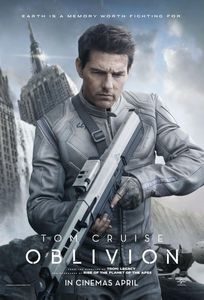
    (Video on Demand, September 2013) For all of the nice things I have to say about Oblivion, there’s something just… off in the way it comes together.  The first few minutes don’t quite establish the required suspension of disbelief required for it to work smoothly: The visuals it presents don’t make a lot of sense and the pandering to modern lowest-denominator audiences seems blatant (let’s see: Yankees cap, Football stadium, dog, motorcycle and a cabin in the woods.  Yup, just one regular guy, no wacky sci-fi to see here…)  For viewers used to prose science-fiction Oblivion seems to pivot entirely on a familiar cognitive breakthrough structure, and the way it self-importantly reveals its secrets is a bit annoying, as if it expected audience’s minds to be blown apart by fairly obvious reveals.  The plot doesn’t quite seem to hold together the longer you look at it, and the visuals it shows (combining a ruined New York with what looks like epochal landscape alteration) are so nonsensical as to make anyone’s head hurt.  But let’s focus on the positive for a moment: It’s a science-fiction film that’s not explicitly based on existing intellectual properties, it features relatively original imagery (the “house in the clouds” is particularly nice) and it has the willingness to combine familiar tropes into a somewhat cohesive whole.  For writer/director Joseph Kosinski, it’s certainly a step up from the pretty-but-vapid Tron: Legacy.  Tom Cruise is overbearingly Tom Cruise-ish in the lead role (see “Yankees cap, football, motorcycle” above), but the supporting performances by Morgan Freeman, Andrea Riseborough and Olga Kurylenko bring a bit of balance in the film.  While there’s little that’s objectionably wrong in Oblivion, it doesn’t click either, and that’s a more crucial problem in SF movies than in other genres due to the required suspension of disbelief.  While it certainly looks nice and feels more original than yet another sequel of a comic-book movie adaptation, it doesn’t seem to have enough heft to it, and given the nature of the film’s revelation it’s hard imagining watching this a second time for fun.

  • Olympus has Fallen (2013)

    Olympus has Fallen (2013)

    (Video on Demand, September 2013) For everyone who thought that overly patriotic high-concept action movies had gone out with the nineties, the good news is that Olympus Has Fallen doesn’t merely exist, but is the first of two “White House taken over by terrorists” films released in 2013.  We’ve come a long way from 9/11 when such big-budget high-concept action movies can be released widely, and that’s a good thing.  Whether the films are any good is another subject entirely, and watching Olympus Has Fallen, it’s clear that while it occasionally hits its mark, it doesn’t quite understand part of what made those 90s action movies so enjoyable.  In a few words: PG-13 action over R-rated violenceOlympus Has Fallen, rated R, seems overly violent, profane and humorless for what is supposed to be popcorn entertainment in the Die Hard mold.  It tries to be broadly amusing with funny quips and overdone action set-pieces, but then it plasters its dialogue with useless profanity and revels in showing gory violence (some of which perpetrated gleefully by the so-called hero).  The result can’t very well be watched with the kind of carefree fun that PG-13 action films usually create: you’re always on guard for the next excursion in violence and gratuitous language.  It doesn’t help that Olympus Has Fallen has little wit, charm or grace: Gerald Butler is merely OK as the lone operator chasing down the terrorists within the White House –anyone else could have done just as well.  Morgan Freeman sleepwalks through another presidential role, and while it’s good to see Angela Bassett get another role, this one won’t leave any lasting impression.  Director Antoine Fuqua is a seasoned veteran who knows how to put together an action scene, but he seems hampered by sub-standard CGI work (some of the C-130 gunship sequences look unfinished) and a script that never exceeds the perfunctory and seems to forget how to tie up (or even acknowledge) loose ends.  Olympus Has Fallen is watchable, but it’s not hard to complain about various elements that could have been improved to produce a better film.  Now let’s see if White House Down does any better… [January 2014: Yes, White House Down is quite a bit better.]

  • Invictus (2009)

    Invictus (2009)

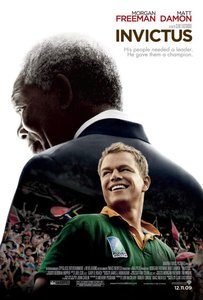
    (In theaters, December 2009) Perhaps the boldest chance taken with this film is the concept of slowly transforming a political thriller into a sports film.  Picking up moments after Nelson Mandela’s 1994 election as the first post-Apartheid South African president, Invictus goes from nation-building drama to underdog sport film in steady increments, placing more and more weight on sports until political issues becomes subordinate to the results of a rugby tournament.  Fortunately, the film is made by skilled technicians: security issues are used as a way to peek into racial reunification, the legend of Nelson Mandela gets a polish, and we’re shown a nation uniting behind a national sports team.  It’s all curiously enjoyable: The South-African setting and accents are different enough to keep us interested (although I couldn’t help wishing for a big spaceship to appear over Johannesburg), there are plenty of misleading thriller cues (one of them leading up to a thrilling CGI flyby), Morgan Freeman is mesmerizing as Mandela (think “role of a career”), Matt Damon is unexpectedly convincing as a rugby player and Clint Eastwood’s direction is as coolly efficient as always.  Even the clichés (such as more and more slow-motion segments as the game gets closer to completion) and the unequal pacing don’t look as bad when dealt by such experienced hands.  For all of its calculated humanity, Invictus does get viewers to feel better about sports, films and mankind in general, which has its own attraction especially in the usual field of Oscar-baiting films.

  • Se7en (1995)

    Se7en (1995)

    (On VHS, April 1997) One of the most satisfying movies in ages: The script is great, the dialogue crackles, the visual style is dark and distinctive and the ending… perfect, just perfect. Plus, the premise: A serial killer is killing according to the seven deadly sins. Is the police going to be able to stop him before his seventh victim? I can’t believe I waited as long as I did to see this movie. I rally to all the positive opinions surrounding this film. See it.