Myrna Loy

  • Another Thin Man (1939)

    (On DVD, November 2021) Nick and Norah Charles are at it again in Another Thin Man, tracking down devious murderers with wit and class. This time, they’re joined not only by Asta the Dog, but baby Nick Jr. — a junior detective who doesn’t track down the culprit, but he definitely has a role to play. As usual, William Powell and Myrna Loy are terrific as the sarcastic married lead couple, even as the threat they face gets more overly violent than in previous films. (As Nick remarks, “during this quiet little weekend in the country, my family’s been threatened, I’ve had a knife thrown at me, I’ve been shot at, and I’ve been suspected of murder. From now on, this is your case. You can handle it. I’m going back to New York!”… and that’s before Nick Jr. gets kidnapped.)  As usual, three films into the series, the criminal whodunnit mechanics aren’t nearly as interesting as Nick and Norah’s dialogue as they multiply bon mots, quips and sarcastic put-down the likes of which only the most loving couples can appreciate. It’s quite a bit of fun (the baby party scene is one of the highlights) and works its way to an ingenious (if impossible) bit of jury-rigged engineering to explain the method of the murder, although the motive and perpetrator remain a case of Nick running down the usual suspects in a single-room climax. Even three films in, Powell and Loy are compelling and Another Thin Man manages to be a treat even when the plot machinations get more intense.

  • After the Thin Man (1936)

    (On DVD, November 2021) Nick and Norah Charles are back for more married-couple high society sleuthing in After the Thin Man, this time going to their hometown of San Francisco for witty repartee and dead bodies. Their triumphant return home is marked by a welcome party they haven’t asked for and, in fact, flee whenever they have the chance. Murder soon follows. As was the case in the first film, the chemistry between William Powell and Myrna Loy (as the very charming married couple trading quips and tracking down killers) is far more interesting than the nuts and bolts of the investigation. Whenever the plot gets going, viewers will wonder when the comedy will get back on track. Still, there are a few noteworthy things about the non-funny scenes: James Stewart is the biggest of them, as his turn as a young romantic premier becomes something quite atypical in his filmography—enough so to make some of his fans very uneasy. Still, it’s Powell and Loy who are the stars here, and the final sequence, in which the usual suspects are brought together, works more on Powell’s pure charm than his deductive talents. Twenty-first century viewers may be particularly interested in the character played by William Law, a rare Asian actor in a cast of Caucasians — and while his role is clearly racist, it eventually ends up portrayed in a somewhat interesting light. As a follow-up to the first The Thin Man, it clearly hits upon the same notes (albeit tempered by the then-recent introduction of the Hays Code) and provides most of the same thrills — namely the comic romance rather than the crime mystery.

  • Love Me Tonight (1932)

    (On Cable TV, September 2021) If you’re looking for the state-of-the-art of what musicals were in the early 1930s, there’s Love Me Tonight to offer a counterpoint to the Broadway revue musicals that were also in vogue (and, alas, about to send the genre into eclipse due to overexposure). The always-compelling Maurice Chevalier stars in a story of a commoner falling in love with royalty, with the usual deceptions and complications that this kind of romantic fantasy usually entails. Jeanette MacDonald ably goes up against Chevalier as the princess, with Myrna Loy in a supporting role. This film was reportedly a technical marvel at the time, with one musical number cutting through several characters and locations. More significant is the film’s place in history as the first “integrated musical” where the songs are tightly integrated in the plot. (Something obvious to us now, but not quite as practised at the time.)  Director Rouben Mamoulian would go on to direct many more musicals, and Chevalier would star in several funnier films, albeit not necessarily better ones. Still, Love Me Tonight has lost some of its lustre: It doesn’t have the immediate appeal of the comedies that Chevalier would make with Lubitsch et al., and the wow-factor of the Broadway revues isn’t there either — as a result, many of the innovations pioneered by the film now go unnoticed. (Although that opening sequence is still really good.) But Chevalier is a charmer no matter the film, and that alone still justifies seeing Love Me Tonight.

  • Too Hot to Handle (1938)

    Too Hot to Handle (1938)

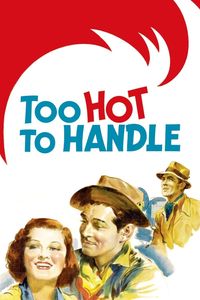
    (On Cable TV, April 2021) Aviation movies were big in the 1930s, and Too Hot to Handle was at least Clark Gable’s second go at the topic after Test Pilot, also reuniting him with Myrna Loy as love interest. Somewhat more lighthearted than the first film, it’s about an unscrupulous newsreel journalist (Gable) faking his way to spectacular footage and having a lively romance with a pilot (Loy). It’s not a bad premise nor a bad execution, but I found myself a bit underwhelmed by the result. Oh, Gable and Loy bring everything they’ve got (which is a lot), the period atmosphere is enjoyable and the adventures keep piling up, alongside a jaundiced look at the news business. But I may have seen just enough similar movies lately to keep me unimpressed — I may have to revisit Too Hot to Handle later on for a better look.

  • Double Wedding (1937)

    Double Wedding (1937)

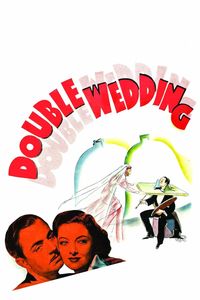
    (On Cable TV, March 2021) By 1937, both William Powell and Myrna Loy were seasoned Hollywood veterans: they were familiar with making movies, familiar with their personas, and familiar enough with each other to play off a mixture of comfort and looking for something slightly different. So it is that, in Double Wedding, Powell plays a bohemian bon vivant living in a mobile home in order to avoid being tied down to anything or anyone. Opposite him, we have Loy as a controlling business owner. They meet and clash over their respective advice to her sister, who’s being courted by an unimpressive young man and can’t quite decide whether to marry him. Double Wedding certainly enjoys playing with classic romantic comedy tropes: there are few surprises along the way here, but it’s a delight to see the two actors delivering exactly what’s expected to them — and a climactic conclusion that ends with the promised double wedding. Behind the scenes, the film wasn’t such a happy experience — Powell’s fiancé Jean Harlow died during shooting, and his grief was shared by Loy, who was a friend of the couple. Accordingly, the mood on the set was sombre — it’s a wonder that little of it appears on-screen. Still, notwithstanding the off-screen drama, the film itself is a perfectly serviceable illustration of what magic Powell and Loy could do together — him taking his debonair persona in a bohemian direction, her carrying her self-assurance in an ice-queen kind of role. Double Wedding is good without being great, but it’s already great when it features those two leads.

  • Midnight Lace (1960)

    Midnight Lace (1960)

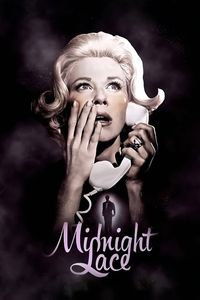
    (On Cable TV, March 2021) If you’re looking for the least Doris-Dayish film ever made by Doris Day, you probably don’t have to look much farther away than Midnight Lace. In some ways, it’s an incredibly familiar kind of movie: one where the beautiful lead actress is threatened by a mysterious man, and has to face both incredulity and betrayal in order to resolve the threat to herself. But here’s the thing: here, the damsel in distress is played by Doris Day, whose filmography does not include any other thriller of the kind. (Yes, she played in Hitchcock movies, but her role in The Man Who Knew Too Much really wasn’t in the same category.)  If you’re in a mood to hear Day screaming and whimpering in fear (a disturbing idea in its own right), this is the film for you, as her mysterious assailant employs everything in his power to frighten her beyond reason. The plot won’t be particularly original for anyone who’s seen more than two of those thrillers — the red herrings get a lot of work here to distract us from the fairly obvious conclusion. Still, it’s a change of pace: I doubt that the film would be nearly as remembered today if it had starred someone other than Day in the lead role — although seeing Rex Harrison as her husband and a secondary role for an elderly Myrna Loy aren’t to be discounted as bonus features. Day herself didn’t like the experience of shooting the film, in which she had a bit of an on-set breakdown — she never starred in another thriller again.

  • Evelyn Prentice (1934)

    Evelyn Prentice (1934)

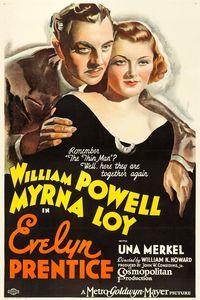
    (On Cable TV, March 2021) The pairing of William Powell and Myrna Loy would be glorious in The Thin Man, but you get another glimpse at their chemistry in Evelyn Prentice, a substantially darker melodrama dealing with contemplated affairs, attempted blackmail and definite murder. Powell is impeccable as a high-powered lawyer who neglects his wife by working too much. Loy’s character, exasperated by loneliness and motivated by an overly affectionate client of her husband, starts looking around for company and ends up manipulated by a seductive poet. When he is found murdered shortly after visiting him for a final time, it’s her husband who ends up involved in a middle act filled with dramatic ironies. By the time he realizes that she may be involved, the film ends on high-powered courtroom drama as he manages to forgive his wife, find the truth and resolve the situation to everyone’s benefit. Evelyn Prentice is short and punchy, not quite going for comedy but not without its share of amusingly ironic moments. Powell and Loy are great even at lower intensity, and the film has the well-polished rhythm of mid-1930s studio pictures, with scarcely an element out of place. Modern audiences will notice that there’s definitely a double standard at play in how adultery affects wife and husband differently, but that’s almost a given for movies of that time. Still, it doesn’t affect the film’s impact as much as you’d think: Powell and Loy are good enough as to make even humdrum material feel much better, and indeed the film is seldom any more enjoyable than when Powell goes on a legalistic rampage, or when Loy wrestles with conflicting emotions. Evelyn Prentice isn’t a great film and it definitely pales in comparison to the duo’s work in the contemporary Thin Man series, but it’s an entertaining time nonetheless.

  • Test Pilot (1938)

    Test Pilot (1938)

    (On Cable TV, February 2021) It’s interesting to note that movies predate aviation by only a few years — the medium was there to chronicle the way humans learned to fly, and even by 1938, aviation was barely in its third decade as more than a research endeavour. For some reason, I have an enduring fascination for aviation movies, especially the heroic age of aviation. That would be reason enough to watch Test Pilot, which is still widely hailed for its mostly realistic treatment of its subject. But then there’s the classic Hollywood touch: The film features no less than Clark Gable, Myrna Loy and Spencer Tracy, in addition to being built as a classic melodramatic blockbuster according to the timeless standards of the genre. (Fittingly, it was nominated for a Best Picture Academy Award.)  The result is not exactly the most unpredictable of movies: As our cocky protagonist (Gable) keeps getting into self-inflicted trouble, barely held back by the intervention of his level-headed friend (Tracy) and the love of a good woman (Loy), it’s not astonishing when he ends the picture a changed, more responsible man. Test Pilot may have been directed by Victor Fleming, but the script is recognizably from Howard Hawks. In between, well, we get a good look at the state of late-1930s American aviation, with bullet-shaped barnstormers and a peek at the B-17 bomber about to get good use during WW2. The special effects still come across as credible. The result is about as old-school Hollywood as can be imagined, but not in a bad way: high technology, melodrama, manly men, and a sex symbol… who could ask for more?

  • The Animal Kingdom (1932)

    The Animal Kingdom (1932)

    (On Cable TV, January 2021) Regrettably enough, I had a really hard time staying interested in The Animal Kingdom, even restarting the film midway through in an attempt to goose my interest as my attention kept wandering elsewhere. It does have elements that I like—a Pre-Code era production (with some risqué themes), a protagonist associated with the publishing world, a choice to make between a safe-but-dull romantic prospect and another wild-but-unpredictable one. Myrna Loy is one of the most interesting actresses of the 1930s, while Ann Harding and Leslie Howard are not to be dismissed either. George Cukor had a hand in directing, and the film has theatrical roots that translate into better-than-average dialogue for the time. Still, there’s something to the rhythm of the film, its approach to the material and its audiovisual flatness (which, to be fair, is common to many early sound-era films) that simply had a hard time keeping my attention. When I realized, late in my second attempt to watch the film, that I simply wasn’t going to enjoy it, I also felt that nothing was going to help this time around. The film is in the public domain—it’s not going to take much for me to watch it again eventually.

  • Night Flight (1933)

    Night Flight (1933)

    (On Cable TV, November 2020) The most interesting things about Night Flight are all about the movie than in the movie itself. Taken at face value, it’s a decent-enough adventure film about the heroic age of aviation in South America, featuring efforts by a company led by an American to establish trade routes through the treacherous Andes, especially when life-saving medication is involved. The technical quality of the film is rough by contemporary standards, reflecting Pre-Code era films’ limited ability to portray complex adventure stories. It’s interesting, and the cast (John Barrymore, Clark Gable, Lionel Barrymore, Myrna Loy and Helen Hayes) is amazing enough… but it’s hard to watch it without pining for Only Angel Have Wings, a very similar 1939 film with much better direction, script and production values. It’s when you start digging into the film’s production history that the most fascinating aspects of the film appear: Based on an Antoine de Saint-Exupéry novel, the author did not like the film and, through contractual shenanigans, had MGM take the film out of circulation in 1942… until 2011, when Warner Bros struck a deal with Saint-Exupéry’s estate to have the film shown again. That’s kind of amazing in itself—that a somewhat popular film starring well-known actors could disappear for nearly seventy years and become available once more to twenty-first century cinephiles, while their parents and grandparents would not have been able to see the film. The movie itself may not warrant that much devotion, but as an illustration of how contemporary film buffs have it much better than any previous generation of movie fans, it’s almost unparalleled.

  • I Love You Again (1940)

    I Love You Again (1940)

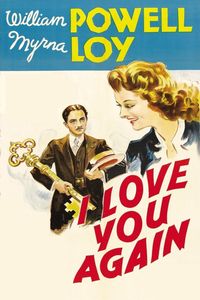
    (On Cable TV, August 2020) You can’t really go wrong with the William Powell / Myrna Loy duo in romantic comedies, and their ninth outing I Love You Again is a good example of that: the premise is ridiculous but the zest with which both Powell and Loy dive into the material is what elevates it to another level. Taking the good old amnesia trope out for a spin, the film begins when a straight-laced model citizen (Powell) suffers a head blow and discovers that he has reverted to a state prior to another blow to the head, ten years earlier when he was a conman. Finding himself in a position to use his good community standing, he launches a few schemes… but also discovers that his fuddy-duddy personality was so dull that his wife (Loy) is planning to divorce him. Deftly navigating between romance, scheming, comedy, preposterous bits of plotting and quite a bit of crackling dialogue, I Love You Again first works as a script, and then becomes even better in the hands of Powell and Loy, both of whom are able to get back into Thin Man-esque repartee without the accumulated weight of the series’ later instalments. While Powell gets the biggest roles in terms of comic shenanigans, Loy’s dialogue is funnier and better delivered. On the other hand, Powell in a boy-scout monitor’s uniform is one for the clip book. Funny, witty and rather cute too, I Love You Again is a demonstration of pure star power: director W.S. Van Dyke lets Powell and Loy do what they’re best at, and doesn’t interrupt of call attention to himself.

  • Mr. Blandings Builds His Dream House (1948)

    Mr. Blandings Builds His Dream House (1948)

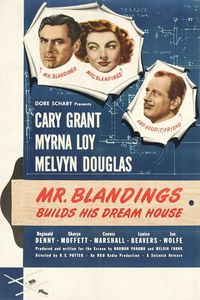
    (On Cable TV, August 2020) Some experiences transcend time and space, and so the premise described by Mr. Blandings Builds His Dream House carries through the decades all the way to now. While I haven’t had the experience of contracting the building of a new house, I have enough experience with major renovations to sympathize with the lead character as he engineers his family’s move from a cramped Manhattan apartment to a Connecticut country estate… which has to be torn down and built anew. Cary Grant is perfect for the demands of the role: he can go from patrician to bewildered in the same scene, not to mention a climactic scene of righteous indignation at the accumulated costs of his new house. Numerous comic sketches pepper the rather simple narrative – obviously, this is a film meant to put one comic set-piece after another, and gradually crank the pressure on the protagonist until he cracks. Grant does get a few capable actors to play with: Myrna Loy makes for a very reasonable wife (except for her flower sink, whatever that is), while Melvyn Douglas brings the snark into the movie as a sarcastic friend/lawyer trying to keep the protagonist out of trouble, only to fall into the same madness from time to time. The picture of dealing with contractors is still hilariously accurate, although a jealousy subplot seems to fit badly. While the film is a comic success, modern audiences may find less to laugh about in a few scenes: There’s a tone-deaf breakfast table discussion in which the children talk about their progressive ideals, for instance… while a black maid works behind them. Later on, that same black maid provides a creative spark that the lead character desperately needs to keep his new house – and while the film acknowledges her contribution by giving her a whole ten-dollar raise, it does leave a less-than-ideal impression. Oh well – this is a film from the late 1940s, after all. Mr. Blandings Builds His Dream House is about as funny as its titles suggest – it got quite a few honest laughs from me, and not all of the film’s success can be attributed to Grant as the headliner.

  • The Bachelor and the Bobby-Soxer (1947)

    The Bachelor and the Bobby-Soxer (1947)

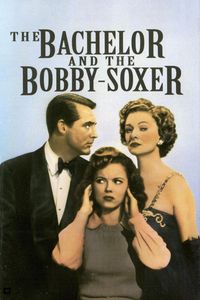
    (On Cable TV, March 2020) As the title suggests, there is one potentially troubling March-June relationship in The Bachelor and the Bobby-Soxer that would make any viewer apprehensive – especially considering that it’s a film from the 1940s. But fear not, enlightened twenty-first-century viewers: Even Classic Hollywood knew that thirtysomething bachelors (even one played by Cary Grant) should not mess around with 17-year-old girls with a crush. Much of the film’s comedy in this film is about the protagonist (Grant) trying to get together with an age-appropriate professional woman (Myrna Loy) while her younger sister (Shirley Temple) interferes. There’s just enough implied naughtiness to make things interesting—the rest is scene-by-scene comedy, as Grant plays both halves of his suave persona unafraid to be humiliated. Cleverly conceived (the script, penned by future potboiler bestseller Sidney Sheldon, won a Best Original Screenplay Academy Award), it’s unobtrusively put together by director Irving Reis and very easy to watch. Grant’s charm does most of the work, but there are also plenty of scattered laughs in the details—my favourite has to be a rapid-fire exchange about “The man with power of whodoo / Who do? / You do!” which sounds like the kind of period nonsense exchange immortalized on screen—and later quoted by David Bowie. While definitely a middle-tier Grant comedy, The Bachelor and the Bobby-Soxer remains a charmer despite a slightly suspicious premise, and a great showcase for its three stars.

    (Second Viewing, On Cable TV, January 2021) Cary Grant had the looks and the charm that could make any kind of creepy nonsense seem amusing, and there’s no better proof of that statement than watching The Bachelor and the Bobby-Soxer, a film in which (as it says in the title) he suffers through an unrequited crush from a flighty teenager. Shirley Temple plays the titular bobby-soxer, but it’s Myrna Loy who’s the prize here as the teenager’s older sister, a judge whose tangles with Grant’s character leads to romance. Before that happens, however, there’s got to be plenty of sequences of misunderstandings, comic complications, bone-headed movie psychology, attempts from Grant’s character to divert his teenage admirer to a more appropriate partner, and some physical comedy along the way. To its credit, the film knows that pairing Grant (who was 43) and Temple (who was 19) is a terrible idea—and if that seems perfectly reasonable to you, keep in mind that other similar Hollywood movies, such as the 1954 farce Susan Slept Here, weren’t even able to do that. There are a few good set-pieces and lines of dialogue here: While I’m ambivalent about the outdoors sports scene, the last restaurant sequence is very funny—even if it ends in a way that leads the film to another ten minutes of decreasing interest as the conclusion peters out rather than build to a strong finale. (Hollywood obviously disagreed, because the film won a screenwriting Academy Award.)   The call-and-response, “The power of hoodoo.” “Who do?” “You do!” is also quite amusing, and wisely used as closing lines to wrap it up. In between Grant, Temple and Loy, The Bachelor and the Bobby-Soxer is an amiable-enough comedy that manages to steer itself away from some pitfalls that befell other similar films. It’s worth a look, especially for fans of the three lead actors.
  • Libeled Lady (1936)

    Libeled Lady (1936)

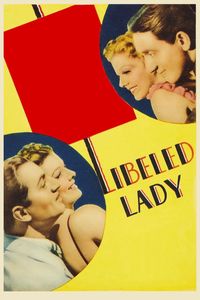
    (On Cable TV, January 2020) If someone tells you that Libeled Lady is one of the top comedies of the 1930s, believe them—there aren’t many better ones. Firmly ensconced in the screwball subgenre, this is a film that plays into the whole weddings-don’t-mean-much (but they do!), harebrained-schemes-are-better-than-honesty, let’s-see-who’s-the-craziest ethos of those kinds of films. The cast alone is a solid treat, what with the legendary William Powell/Myrna Loy screen duo, bonified with Jean Harlow (who was romantically involved with Powell at the time, adding another layer of interest) and a dark-haired Spencer Tracy to round off the main cast. Everything takes place in a gloriously escapist Manhattan upper-class society setting (with a bit of newspaper journalism thrown in) where people have no better things to do than to pursue demented schemes, maintain misunderstandings and riff off quips at each other. It’s a hugely enjoyable film [April 2024: And one that appreciates upon subsequent viewings] because director Jack Conway’s execution is so smooth, not to mention the acting—Powell being Powell, his line delivery is perfect, but every main player has three other gifted comedians to play with, and the result is a small triumph. Even the outdated period detail becomes charming or at least easy to forgive. (There’s a bit of casual racism at the very beginning of the film, but it’s early, quick and more annoying than insulting.) The cavalcade of last-minute twists that serve as resolution is part of the joke: having no reasonable way to untangle the plot, the writers added more things and called it quits while daring anyone to say anything about it. Libeled Lady was, upon release, a box-office hit and an Academy Awards Best Picture nominee. It’s still a marvel even today—easily worth a watch.