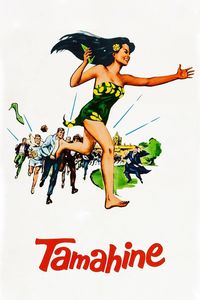
Tamahine (1963)
(On Cable TV, June 2021) The nature of social progress isn’t merely that something quite mainstream will be considered dated decades later, but that even progressive works will be seen as horribly inappropriate. I’ll grant that, in the case of Tamahine, it’s difficult to detect any progressive intention in the first place: As the story of a young Polynesian girl who upsets the staid culture of a respectable all-male English boarding school, it often feels like an excuse to leer at the young girl at the centre of the film. But if you look closer, there’s an argument to be made that the film was daring for its time. Crucially, the film stars Nancy Kwan, one of the rare actors of Asian ethnicity to get prominent billing in the Anglosphere at the time. This was one of her few starring roles, and if you’re willing to be approximate about ethnic casting (Kwan was from Hong Kong; her character is Polynesian), there’s something still remarkable about an entire movie resting on her shoulders. Of course, it’s not all that progressive if the point of the character is to be leered at by characters and audiences — that’s when we flip into exoticism and objectification. Still, not so fast: Our young heroine is firmly in control, as she creates lust wherever she goes, frees an institution from its notional shackles and changes the world around her to fit her worldview rather than the opposite. It’s still not that comfortable to see endless variations on the same sex comedy jokes directed toward a 17-year-old character (not to mention her being The Prize for the male characters), but it’s perhaps not quite as bleak as it sounds on paper. Still, what was then supposed to be a lighthearted comedy has become a much more exhausting film to assess, with its implicit assumptions being far more problematic nowadays. Tamahine may have pushed the envelope of permissible content in conservative early-1960s Great Britain, but today it feels more like the fantasy of a creepy leering old man. But so it goes — I really wonder how some of today’s work will feel like in a few decades.