Noah Baumbach

  • De Palma (2015)

    (Tubi Streaming, August 2021) The standard mode for documentary movies about directors is hagiography (considering the effort, time and clearances required for a documentary, no one is going to go ahead with a critical look at someone who may still be influential) but De Palma is at least honest about it. It’s really a two-hour-long speech from writer-director Brian de Palma, interview footage interspaced with relevant footage of his films as he chronologically goes through his filmography, from film student days to his post-Hollywood European phase. There’s a bit of autobiographical material to kick things off and some concluding thoughts on his career, but considering that the now-80-year-old de Palma has only made one film since the documentary and isn’t likely to make many more, this is about as close as we’ll get to a definitive self-assessment. Despite narrating all the material, De Palma can be surprisingly dispassionate in the way he assesses his films — one of his running themes is how many compromises one must make by working within the Hollywood system. (As he observes astutely, what critics don’t get is that most directors don’t get to plan their careers: they’re working on this or that at the whim of others with money.)  The film does come with a few warnings. One for violence, obviously — you can’t talk de Palma without showing his films, and his films are largely in the thriller genre. But there’s also a contextual warning: This film makes very little effort to contextualize de Palma or his films. If you’re expecting plot summaries and a cool academic take on the films, this isn’t for you: this is de Palma reflecting on his own work, and what’s unfortunate is that with a thirty-item slate in a 107-minute film, we don’t always have time for more than glancing anecdotes… especially for his lesser-known or off-brand efforts. Still, what’s in there is interesting: his filmography has highs and lows, touching upon a good variety of stars, producers or critical reactions. It’s an easy film to watch if you’re moderately aware of his biggest hits. I’m missing a handful of his films since Carrie, plus his pre-Sisters titles, but this is the kind of film that makes me want to seek them all out. It does help that I consider de Palma to be an interesting director. His level of violence is excessive, his themes can be repetitive and his wilder ideas don’t always cohere, but his visual style is often amazing, and on his best titles he’s clearly going for broke, always pushing how hard or how far he can go. That’s much, much more than many of his contemporaries can say and at the end of his career (as we seem to be now), there’s a wistful sense that even a thirty-title filmography isn’t quite enough — we could have had more had a few things turned out differently. Again, I’m not sure we can say that about many other directors of his time. There’s a particular flavour and appeal to a typical de Palma film, and this documentary does much to try to explain what it is. One notes that the self-effacing director behind the film is none other than independent darling director colleague Noah Baumbach, and there’s some fun in trying to make links between De Palma and While We’re Young.

  • Frances Ha (2012)

    Frances Ha (2012)

    (In French, On TV, June 2021) I wasn’t expecting an epiphany from a casual viewing of mumblecore classic Frances Ha, but I got one for free, and a pretty good one at that. By itself, the film describes a few months in the life of one 27-year-old woman, starting from a cozy roommate arrangement with her best friend, and then going on (through a succession of temporary addresses that act as chapter title cards) to her putting down the foundations of a more stable adult life. (The title comes from her putting her name, or at least a part of it, on a more permanent domicile.)  Greta Gerwig is quite good in the title role, and for good reason — she co-wrote the script with director Noah Baumbach. Showily shot in black-and-white with consumer cameras, it’s a film that spends a lot of time among young people scraping together a living in New York City, rooming together to afford small apartments, going from one dead-end job to another, eating in restaurants and having one fling after another. Our protagonist seems even more unmoored than her contemporaries — unable to get a fixed address, overspending, sabotaging her relationships, lying or avoiding the truth. She’s a bit of a mess, but here’s the thing: From the vantage point of my stable mid-forties, I found her more likable than annoying, whereas I am dead certain that I would have been far more critical of her often-self-destructive actions as a younger viewer. That wasn’t what I was expecting from Frances Ha, and neither was the mirror realization that my own disputable actions as a younger person were probably seen with the same amount of amused sympathy by my elders and mentors. Better yet; I’m liable to become even more sympathetic as I age, which feels like one of the keys to elderly contentment that I’ve been hearing about. All wisdom may be found in movies, after all.

  • Marriage Story (2019)

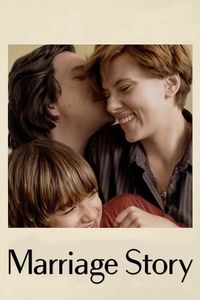
    Marriage Story (2019)

    (Netflix Streaming, August 2020) Oof. As a recent divorcee, let’s just say that Marriage Story (which chronicles the dissolution of a marriage) hits harder than it should — even if my own divorce was an uneventful walk in the park compared to the gratuitous cruelty that the film’s ex-spouses display toward each other. I haven’t always appreciated writer-director Noah Baumbach’s work before (When we Were Young: Yes; The Squid and the Whale: No), but he keeps getting better and in Marriage Story does manage a very uncomfortable success of sorts. Scarlett Johansson and Adam Driver play the estranged couple, incarnating characters that really aren’t meant to be admirable. A surprising supporting cast rounds the acting talent. The divorce steadily gets more complex, as one spouse moves across the country and both hire lawyers that spur them to take dirtier tactics. It packs a lot of drama in its final third, albeit with a conclusion that steps away from the cynicism that almost threatened to overwhelm the film’s late dramatic moments. Marriage Story isn’t my kind of cinema for various reasons – too intimate, not high-concept enough, a bit scattered in its dramedy and covering very familiar ground – but I can’t deny its overall effectiveness, nor the strengths of many individual scenes. Divorce is never easy, but Marriage Story certainly show how bad things can get.

  • The Squid and the Whale (2005)

    The Squid and the Whale (2005)

    (In French, On Cable TV, March 2017) My allergy to muddy family dramas remain just as pronounced, as a viewing of The Squid and the Whale confirms. Writer/director Noah Baumbach takes a small budget, some quirky ideas, well-known actors and a heartbreaking subject as the basic elements of an eighties-set drama in which two boys react badly to their parents’ ongoing divorce. It’s more of a darkly amusing drama than a somber comedy: While the humour is there, much of the film is intensely depressing. At least there are great performances along the way. Jesse Eisenberg turns in a nuanced performance, while Jeff Daniels is fantastic as a deeply flawed, yet oddly captivating father. Laura Linney doesn’t get as good of a role as the mother (given that the film is largely written from the elder son’s unsympathetic perspective, she doesn’t get the best role in the ongoing mess) while Anna Paquin merely … shows up as a student with a deeply inappropriate relationship. Much of the film is mumbled through domestic scenes of heartbreak and aimless fury, set in intellectual-class New York intelligentsia. It’s not fun, but it ends up being more absorbing than you’d expect considering the flawed characters, super-16mm cinematography and life-goes-on ending. The Squid and the Whale was less painful than expected, which actually stands as outstanding praise in this case.