Noel Coward

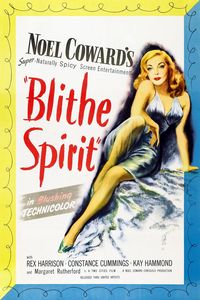
  • Blithe Spirit (1945)

    Blithe Spirit (1945)

    (On Cable TV, February 2021) Surprisingly enough, the 1940s offer a substantial list of supernatural romantic comedies. Beyond the obvious picks of the Topper series, The Ghost and Mrs. Muir and I Married a Witch, here’s Blithe Spirit to show what happens when a séance brings back a man’s first wife from the dead and he has to explain her presence to his second wife. The pedigree of the film is impeccable: Directed by David Lean before he became an epic filmmaker, scripted from a play by producer Noël Coward and featuring a young Rex Harrison in the lead role, the film also showcases British filmmaking at the close of WW2 with decent colour cinematography and Academy Award-winning special effects. You can see the basic elements of an American 1930s screwball comedy filtered through wartime British sensibilities, and the combination does have its pleasant quirks. Good biting dialogue compensates for the somewhat ordinary direction, although one suspects that the requirements of the special effects may have had an impact on limiting camera movements when a ghost shows up on-screen. The film does suffer from a bit of a slow start, as it puts together its fantastical elements for an audience less used to supernatural devices, but the film becomes sharply more interesting once the undead make their appearance, and it builds to an impressively dark (but remarkably funny) ending. Those who like a specific, somewhat stereotypical strain of British comedy will appreciate the result even more — in its closing moments, Blithe Spirit anticipates the arrival of the Ealing Studios films such as The Ladykillers and Kind Hearts and Coronets in mixing dark topics and humour. It’s a fun watch even today, which is what happens when still-credible special effects are bolstered by great dialogue.
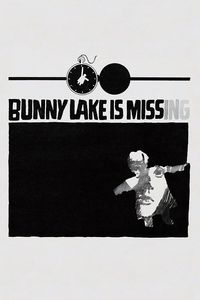
  • Bunny Lake Is Missing (1965)

    Bunny Lake Is Missing (1965)

    (On Cable TV, January 2021) You could count on director Otto Preminger for upsetting sensibilities in film after film, and while Bunny Lake is Missing doesn’t have some of the more overt provocation found in his other films, it’s still an unnerving watch. Adapting The Lady Vanishes to feature a four-year-old, it has us questioning the sanity of a young woman claiming that her four-year-old daughter has been abducted despite there being no proof of the child’s existence. Lying or deluded? Have no fear: an inspector (played by Alec Guinness) is on the case, even though he proves an accessory to the protagonist finding out the truth on her own. Shot in detailed black-and-white cinematography and set in London, the film does give a passably unpleasant impression of unhelpful bystanders and dingy locations, everyone aligned against the protagonist. (Although shades of the Swingin’ Sixties occasionally make an appearance, such as unusual rock music from The Zombies as played on background television.) Carol Lynley is fine as the protagonist, but Keir Dullea and Noël Coward and Guinness arguably make more of an impression in easier roles. While the film does feel repetitive at the time, there’s some good tension in the proceedings, and a finale that veers into outright bizarre childhood games. Still, Preminger being Preminger, Bunny Lake is Missing is distinctive enough.

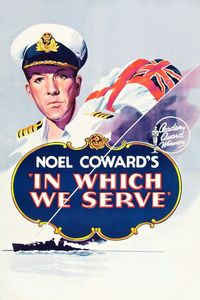
  • In Which We Serve (1942)

    In Which We Serve (1942)

    (On Cable TV, May 2020) If ever you’re tired of American WW2 propaganda movies, why not try a British WW2 propaganda movie? In Which We Serve has the distinction of being largely shaped by well-known playwright Noel Coward, his fingerprints being present on the entire film considering that he served as writer, co-director (handing the baton to David Lean in his first feature film credit as such), producer, star (as the captain of the ship it follows), and co-composer. Whew. The plot here is didactic in its intention to follow the life of a ship from the initial riveting to a gripping battle sequence that eventually leads to the sinking of the ship. The episodic plot alternates between life aboard the ship and home life for the characters. Thanks to playwright Coward being in control, the dialogue is much better than usual for a war film. While clearly propagandist in the British still-upper-lip style, In Which We Serve is generally interesting and has a great shipboard atmosphere. (Your assignment: compare and contrast with American WW2 propaganda films.)

  • Cavalcade (1933)

    Cavalcade (1933)

    (YouTube Streaming, December 2019) Not all Oscar winners age gracefully, and Cavalcade often does feel more dated than many of its contemporaries. This may have been inevitable given the subject matter: the life of a few English characters from 1900 to 1933, through the tumultuous first decades of the twentieth century. It’s not exactly a cheery topic—thanks to wars, bar-fights and shipwrecks, several characters die along the way. Adapted from a Noel Coward play, the film came with impeccable Hollywood pedigree which probably explained its critical and box-office success. But from a contemporary perspective, Cavalcade has a few issues. Putting aside our knowledge of how the first thirty-three years of the twentieth century were merely an appetizer for far worse eras, Cavalcade is saddled with a tepid rhythm, episodic structure, flurries of short subplots, and early-cinema clichés. While some sequences work well (the montage that accompanies much of WW1, for instance), other moments land with a thud—the April 14, 1912 Ocean Liner sequence is utterly predictable and almost plays as comedy as the doomed characters maintain an extended bout of happy patter before the camera reveals that they are on (dum-dum-DUM!) the TITANIC. Oh well; clichés must come from somewhere, right? There’s an annoying stop-and-go quality to the plotting that’s also bothersome: Almost half of the period’s duration from 1918 to 1933 is skipped over through a very moralistic montage, illustrating the perils of tying plot to world events rather than take a more organic approach. There’s also something to be said for the character’s stoic approach to tragedies—as part of the whole British Stiff Upper Lip tradition even if it may mute some of the emotions. Sets and costumes are quite good in a theatrical fashion. I still liked parts of Cavalcade—it’s certainly fascinating in a time-capsule kind of way—but even limiting myself to 1933, I can think of more interesting and far more influential films who should have walked away with the biggest Academy Award. But if we’re going to start playing the “Who should have won the Oscar instead?” game, we’re going to be here all night.