Norma Shearer

  • The Student Prince in Old Heidelberg (1927)

    The Student Prince in Old Heidelberg (1927)

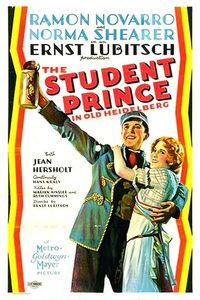
    (On Cable TV, December 2021) As much as I try to like silent films, sometimes it just doesn’t work. I was maybe expecting too much out of The Student Prince in Old Heidelberg: as a film by Ernest Lubitsch, I was looking forward to something much funnier than this melancholic tale of old-world royalty being denied true love. It’s not badly made by the standards of the time, but it takes a dedicated silent film fan to sit through the film’s rather long 105 minutes. Norma Shearer stars alongside Ramon Novarro, but don’t hope for many romantic pyrotechnics along the way, especially considering how the film is fated to end. Those looking for the Lubitsch touch may want to temper their expectations — The Student Prince in Old Heidelberg is professional but lacking his usual verve.

  • He Who Gets Slapped (1924)

    He Who Gets Slapped (1924)

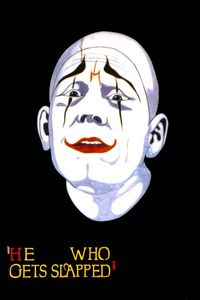
    (On Cable TV, August 2020) Tragedy and melodrama aren’t always that far apart, and He Who Gets Slapped’s biggest strength may be how it transforms ludicrous material into something of a psychological study in self-loathing and tragic repentance. The setup is so over-the-top as to become ridiculous, as our protagonist gets destroyed professionally, romantically and personally in one single slap – but reappears as a tragic clown years later in a performance where he recreates that single humiliating moment. The rest? Well, it involves a lion, another woman promised to the same rival, more slapping, and wholesale deaths by the time the curtains fall. And yet, and yet — Lon Chaney is very good in the leading role, bringing quite a bit of subtlety to a silent performance. Norma Shearer gets a pre-sound showcase role here. Finally, writer-director Victor Seastrom (adapting a Russian play) orchestrates something that transcends melodramatic material to become something far more interesting. Far-fetched and yet somehow universal, He Who Gets Slapped ranks among the finest of silent drama: not necessarily accessible to neophytes, but a powerful statement about the early days of cinema if you’re patient and willing to invest some work in watching the film.

  • Smilin’ Through (1932)

    Smilin’ Through (1932)

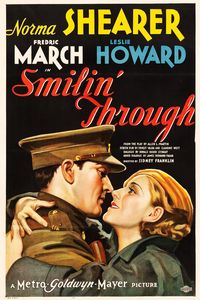
    (On Cable TV, March 2020) If there’s anything unusual about Smilin’ Through, it’s its use of the supernatural as a framing plot device, as both the beginning and end of the story doe depend on a ghostly presence to make sense. (Which was far from the norm at the time.) In-between, we get Norma Shearer and Fredric March plays pairs of characters separated by a generation, and the more usual melodrama of star-crossed lovers trying to get together and failing until the ghosts interfere. Smilin’ Through is fine for an early-sound-era romantic drama: there’s little new here aside from the ghosts, and the film is arguably more interesting when juxtaposed with its earlier 1922 silent film and the later 1941 version, whose details are updated from the first to the second World War. (Although that 1941 version does have Jeanette MacDonald, so you know there’s going to be some high-pitched singing.) Technical credentials are adequate for the time, and since both March and Shearer were top stars, there’s enough care invested in Smilin’ Through’s production to make it worthwhile if the premise appeals to you.

  • Her Cardboard Lover (1942)

    Her Cardboard Lover (1942)

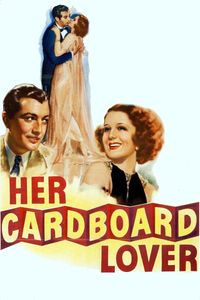
    (On Cable TV, January 2020) Once you’re deep into classic Hollywood movies, you start picking movies for their stars and directors rather than their plot or historical importance. That’s how I ended up watching Her Cardboard Lover, a somewhat forgotten George Cukor film that nonetheless features the ever-cute Norma Shearer playing off George Sanders (in a typically antagonistic role) to the rather likable Robert Taylor. The plot of the film isn’t much to talk about—it’s the old-fashioned formula of one woman using a man to make another jealous. But it’s handled with enough whimsy to make it fun despite the familiarity. Some surprisingly enjoyable dialogue and repartee, especially between Shearer and Taylor, do keep things entertaining during the entire film. The two male leads even get into a very funny fight scene, which is somewhat atypical for the reserved Sanders. We can quibble about the lead female character’s flightiness and her overall romantic suitability when she’s happy to pit two men against each other, but Her Cardboard Special remains a romantic comedy that wraps up nicely—nothing special, but highly enjoyable.

  • The Divorcee (1930)

    The Divorcee (1930)

    (On Cable TV, October 2019) Compared to 2019 romantic drama, there isn’t much to distinguish The Divorcee from countless other similar movies in which a married couple fight and we follow the woman as she deals with the aftermath. Good execution and a dash of style (including a rather good montage of her holding hands with suitors to show the passing of weeks) help a bit, but the story certainly isn’t exceptional now. But historical context is important, and The Divorcee becomes far more interesting once you focus on the fact that it comes straight from 1930. It’s a product of the early sound films era (so much so that the poster boasts “all talking!”), so don’t be surprised by the omnipresent hum of the audio nor the somewhat theatrical acting of the cast. But more significantly, it’s a novel adaptation from the pre-Code era, meaning that its sympathy and treatment of its protagonist (a quite good Norma Shearer), as she leaves her husband and navigates the shoals of her newfound freedom through multiple liaisons (without a moral consequence!), is considerably more sympathetic than anything we’d see until at least the 1960s. Consequence-free divorce was A Problem during the Hays era, and the film doesn’t consider it much of a moral stain as much as what you do when you can’t stay married. The ending gets unrealistically romantic, but there’s a happy ending for you. What’s more impressive is, well, the accessibility of the film for such an early talkie: it can be seen today as “just another story” set in the 1930s, which is considerably more than we can say from other films of the time. One curio: There’s a bit of French dialogue in the film, and it sounded to me like a cleaned up but authentic French-Canadian accent rather than the far more common European French accent. Alas, we may never correctly attribute it to anyone, as the credits for the film are typically short and the person speaking the dialogue is not fully seen.
  • The Barretts of Wimpole Street (1934)

    The Barretts of Wimpole Street (1934)

    (On Cable TV, April 2019) As far as early-sound era movie adaptations of theatrical material go, there’s a lot to like in The Barretts of Wimpole Street. It combines the best aspects of films at the time (actors, setting) with the traditional strengths of theatre (strong sustained drama, good dialogue) for a result that has held up rather well. Norma Shearer is fine as the film’s heroine, inspired from real events, but it’s Charles Laughton who steals the show as a reprehensibly overprotective father. Coming in right at the edge between Pre-Code filmmaking and the constraints of the Production Code, the necessity of bending the film to the censorship adds a layer of mystery to the film’s final moments that would have been blunted by a more direct approach, as we must wonder if the villain has really said that what we think he meant. (Spoiler: he totally did—Laughton even boasted about “the gleam in my eye.”)  I can find plenty of faults with The Barretts of Wimpole Street (such as the lack of interest in the eight [!] other kids and its detour into romance-upon-romance) but I can’t really argue with the final results. Amusingly enough, the film may have been nominated for a Best Picture Academy Award, but its enduring claim to fame was being one of the films that inspired the famous HICKS NIX STIX FLIX Variety headline.

  • Romeo and Juliet (1936)

    Romeo and Juliet (1936)

    (On Cable TV, March 2019) There are films that I watch out of obligation, and the 1936 version of Romeo and Juliet is one of them—It’s directed by notable filmmaker George Cukor, won a few Oscars, features a few name actors from the era and still ranks on extended best-of lists. The problem (and I’ve discussed this elsewhere) is that Shakespearian dialogue in English bores me beyond belief. So, I may have listened with half an ear—with some help from an adaptation that adapted, shortened and simplified some of the material. This being said, there’s enough in the film on a visual level to keep things interesting—great costumes, decent sets, and actors looking as if they’re really enjoying doing Shakespeare on-screen. (Oh, and Edna May Oliver as the nurse!) Cukor directs with a sure hand, while Leslie Howard does well as Romeo, John Barrymore distinguishes himself as Mercutio, and Norma Shearer makes a decent Juliet. Frankly, the whole thing still looks so good that you can be forgiven from not paying much attention to the dialogue. It’s interesting to compare and contrast it with later versions: Put against the (dull) 1968 Zeffirelli version and the (hyperactive) 1995 Luhrmann version, this Romeo and Juliet feels closer to what we would imagine a lavish theatrical production to look like.