Norman Jewison

  • The Cincinnati Kid (1965)

    The Cincinnati Kid (1965)

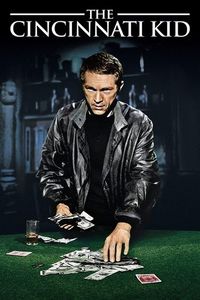
    (On Cable TV, October 2021) My disadvantage in watching poker movies is that (and hush, because this passes for a dishonourable secret), I don’t really understand poker. Not being a gambler nor having any poker-playing friends to entertain, I get the basics of the game and some of the better hands, but don’t ask me to explain the finer details of the game. And yet, the paradox is that I generally like poker movies: you don’t have to know exact odds to be fascinated by bluffs and high stakes. It helps that The Cincinnati Kid has plenty to offer even to non-poker players: Steve MacQueen in fine roguish form as a hotshot player about to rub shoulders with the best; Ann-Margret as a seducer; Edward G. Robinson in a great late-career performance as a notorious card shark; a rather convincing portrayal of New Orleans’ atmosphere. The period detail is interesting as well, but it quickly fades into the background once the cards are dealt and we’re back with the timeless high stakes of romance, cheating, deception and showmanship. Classic Hollywood legend Joan Blondell shows up in a small but memorable role, while director Norman Jewison marks this film as the one that broke him out of light comedies into the unpredictable blend of genres that marked the rest of his career. The similarities with the near-contemporary The Hustler are numerous, but despite knowing a lot more about pool than poker, I like The Cincinnati Kid best: the colourful cinematography is more appealing, MacQueen outdoes Newman in this specific case, and the ending seems gutsier and more meaningful as well. While not as compelling or steadily entertaining as other similar films, The Cincinnati Kid has nonetheless aged rather well, and remains accessible even to those who can’t quite distinguish their flushes from their suits.
  • Jesus Christ Superstar (1973)

    Jesus Christ Superstar (1973)

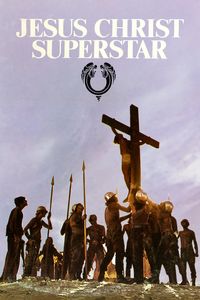
    (On TV, March 2021) I was frankly surprised to like Jesus Christ Superstar as much as I did. For one thing, I’ve never been a good Sunday School student — I attended Catholic Schools because those were the only game in small Francophone Eastern-Ontario towns where I grew up, but my knowledge of the bible remains more one of rote memorization. For another thing, perhaps more importantly, I usually despise 1970s musicals: it’s a lost decade filled with depressing productions with bad music, dispiriting sequences and very little of the charm that you could find in even the most average examples of the genre in previous decades. But if Jesus Christ Superstar has a secret weapon, it’s Andrew Lloyd Weber’s rock opera music. There are some really catchy numbers here (my favourite being “What’s the Buzz?”) and this rocking take on Jesus’ last day isn’t sacrilegious as much as it’s exhilarating. I note with some amusement that religious authorities were not amused when the film was released… but fast-forward to 2021 and you’ve got a specialized religious channel playing this as an Easter week special… and padding a 106-minute film to a 180-minute time slot by cramming advertisements between every single musical number. It’s easy to see, however, why the film would be warmly accepted: it’s clearly an attempt to bring religion to the youthful audiences of the 1970s; it portrays Jesus in an uncommonly humane way; and even in its fizzy presentation, it remains reasonably faithful to the Bible. Non-religious audiences will also find more conventional cinematographic qualities to the result:  Thanks to chameleonic director Norman Jewison, its stylish presentation remains a draw even now. The framing device is a delight, Carl Anderson is quite good as Judas (to the point of sometimes challenging who’s the protagonist of the film), Yvonne Elliman is a striking beauty as Mary Magdalene and the pacing of the film is significantly more dynamic than expected, especially if your closest equivalents are films such as King of Kings or The Last Temptation of Christ — after all, even Catholic School renegades such as myself can tell you the story from A(rrest) to Z(urrection) even if Jesus Christ Superstar stops well before the truly unpleasant parts. A pleasant surprise, then — and one of the strongest musicals of the decade as far as I’m concerned.

  • The Thrill of It All (1963)

    The Thrill of It All (1963)

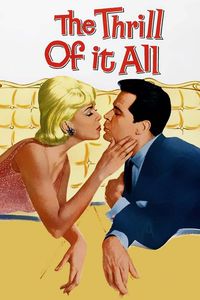
    (On Cable TV, February 2021) The life of a cinephile can be unpredictable: A few weeks ago, I was surprised to learn that no less serious filmmaker as director Norman Jewison had, early in his career, directed a romantic comedy like Send Me No Flowers. But it wasn’t the only Jewison romcom! Now here we are, taking in its immediate predecessor, the Doris Day/James Garner romantic comedy The Thrill of It All. Curiously enough, it’s a film with some clear social relevance today, as the satirical script (by Carl Reiner) is focused on a housewife who comes to be offered a lucrative contract lending her authenticity to a series of advertisements for a national brand… much to the dismay of her husband. There’s only one small step from there to the influencer lifestyle of today, with tensions within couples where the influencer suddenly becomes more famous than the other partner. While Day and Garner are terrific and often very funny in their roles, the film’s worst moments have to do with the male character demonstrating a mile-wide raw streak of fragile masculinity in the face of a more successful partner, intentionally putting her down in a twisted-logic kind of attention-seeking. This behaviour does make the third quarter of the film more difficult to get through than expected — if you want to skip from the car plunging into the pool to another car getting stuck in traffic, that may be best to avoid the whole unpleasantness. Still, it’s hard to resist Garner’s early-1960s squared-jawed charm, and Day is, as usual, the leading partner when it comes to comic timing. The film’s best satirical material is in wrestling with the nature of television advertisements, while Day proves game to do just about any indignity asked of her. For Jewison, The Thrill of It all is yet another example of his incredible variety as a director in a career that spanned five decades. The result is not entirely likable, but it’s well worth a look.

  • Only You (1994)

    Only You (1994)

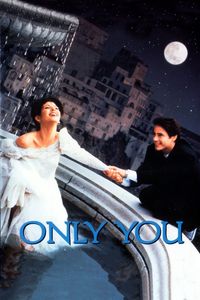
    (In French, On TV, February 2021) Capsule reviews are often about finding interesting things to say about a film, and there are a few hooks through which you can discuss Only You. As a bubbly romantic comedy set in Italy, it brings to mind both the wave of comfortable romcoms of the 1990s and the pedigree of Italian-set romances from Hollywood history. As directed by Norman Jewison, it’s another shining example of how versatile the Canadian-born filmmaker could be. Featuring a surprisingly featureless Marisa Tomei and a pre-downfall Robert Downey Jr. (plus a remarkable supporting turn from Bonnie Hunt), it’s a romantic comedy that knows that it has to be anchored by likable leads. With a narrative that initially straddles the line between romantic fantasy and magical realism, it plays a little bit with expectations before delivering exactly what is expected from it (including a finale at an airport). The Italian setting is pleasant enough — so much so that the film does lose steam once it gets back to the United States for its conclusion. But what does it amount to? More or less the romantic comedy that is advertised in the blurb, albeit with a few eccentricities to make it spiky and slightly more interesting along the way. Only You is not a great movie, but it’s charming enough to be what it aims to be.

  • Send Me No Flowers (1964)

    Send Me No Flowers (1964)

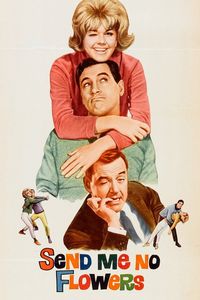
    (On TV, January 2021) I did not know that Norman Jewison had directed a fluffy Doris Day/Rock Hudson romantic comedy (their last), but considering the breadth and diversity of his filmography, I’m not really surprised. Send Me No Flowers feels very much in-tune with other Day/Hudson films—it’s colourfully shot, amusingly plotted and lightly played. Hudson plays a hypochondriac that, thanks to only-in-movies contrivances, thinks he’s got a few weeks left to live and thus sets out to find a suitable replacement husband for his wife. Much of the fun of the film is seeing a husband act in highly unusual ways in trying to set up his wife with another man but never telling her what he’s up to, because of idiot plotting. Still, the film is amusing fluff, perhaps not as memorable as other Day/Hudson vehicles (my favourite still being Pillow Talk) but entertaining enough in its own right. Hudson has the right square jaw for the job, while Day is also up to her usual standards. The conclusion is perhaps a bit rushed, but Send Me No Flowers itself is an agreeable watch, and a definite curio in a filmography from a filmmaker far better known for more serious later fare.

  • The Russians Are Coming the Russians Are Coming (1966)

    The Russians Are Coming the Russians Are Coming (1966)

    (On TV, February 2020) I’m always baffled when acclaimed films fail to meet their own hype, and I really would not have expected a broad humanist comedy to be so… dull? But the case of The Russians Are Coming the Russians Are Coming may be unique as well—a comedy directed by Norman Jewison, it was an attempt to find common humanity with the then-fearsome Soviets. Half a century and the end of the Cold War later, it’s not quite as striking or relevant. What played like gangbusters and won critics over in 1966 feels either obvious or hopelessly dated by 2020. Oh, it’s still amusing (the premise of a Soviet sub running aground in New England and its crew “invading” a small village remains high-concept), but I’m not sure I cracked a single laugh during the entire film. Since a lot of the jokes revolve around the same idea, the film quickly becomes repetitive. Some elements still work just right: Alan Arkin (in his big-screen debut) has plenty of his youthful energy as a Russian, while notables such as Carl Reiner, Eva Marie Saint and Brian Keith are featured ensemble players. I don’t usually have trouble putting myself into the mindset of a specific era, but that proved more difficult than usual in The Russians Are Coming the Russians Are Coming—absent the era’s specific quirks, it feels hollow and underwhelming.

  • Rollerball (1975)

    Rollerball (1975)

    (Criterion Streaming, January 2020) For viewers like me, raised on the notion that Rollerball was just this dumb dystopian movie about some fantasy sports, actually watching the film is in order. Not the remake: The original one, with James Caan somehow playing an elite world-famous athlete. Because there’s a lot more in the margins of the film than you’d ever expect: Darkly funny, perceptive stuff that adds so much depth to it that you’ll regret ever thinking it was a silly film. (But that’s OK: You can blame the remake.) With chameleonic director Norman Jewison at the helm, how could it be silly? Jewison has done many movies, and if some of them weren’t as good as others, none were stupid. So it is that Rollerball, beyond the brutal roller-skate sport, quickly starts sketching the bread-and-game nature of the event in a society dedicated to social control. The film draws a merciless portrait of the rich (down to them burning down a tree for fun) and of information control—one of the best throwaway lines has an entire century having been accidentally deleted from the computer memory banks now holding all knowledge. Now, I wouldn’t necessarily want to portray Rollerball as this underrated classic—it’s got more depth than you may expect from the marketing, but it’s no masterpiece of dystopia. Even the more generous commentators won’t be too sure whether the added material is just fluff around the Rollerball raison d’être of the movie, or if the Rollerball is the hook to talk about the then-fashionable idea of a dystopian future. But I was surprised—I wasn’t expecting much, and got something somewhat better than expected. The final tally is a Science Fiction film of the mid-1970s that’s not quite as depressing or childish as many of its contemporaries. That’s already not too bad—see it with Soylent Green for a change of pace.

    (Second viewing, Criterion Streaming, June 2020) I’m not sure why I returned to Rollerball after only a few months, but here we are, and the film does hold up to a fresh revisit. Much of it isn’t as satirical as it must have been intended at the time: corporate anthems and violent manufactured sports are a thing of reality, and it’s enough to make anyone wonder why we’re not seeing as many science fiction films actually attempting to anticipate a future (either as satire or realism) these days. What is worth a look is the film’s pre-Star Wars approach to SF in a 1970s context: The OCR computer font is a dead giveaway, but so are the social issues tackled here. It’s also not shy at all about its social themes—they’re explicitly discussed in the film by the characters themselves, and reinforced by the decadent aristocracy changing the rules on whims advantaging them. The blend of such commentary with action sequences is the film’s notable trait (and Jewison’s direction certainly changes during the rollerball scenes), although it may weaken the film is other ways, the flash outshining the substance. Rollerball could have been better, but it’s still surprisingly good.

  • A Soldier’s Story (1984)

    A Soldier’s Story (1984)

    (On Cable TV, September 2019) From the ever-dependable director Norman Jewison (Canadian!), here comes A Soldier’s Story, a canny examination of racism in the 1944 US Army. The story begins as an officer, a black man, is sent to investigate a murder on a southern military base. Structured as an old-fashioned whodunit, A Soldier’s Story does have the propulsive plot element of a murder mystery, but in doing so does manage to touch upon an impressive number of themes revolving around the black experience. Here we have characters with profound differences of opinions pushed to their limits, in a setting not exactly renowned for its embrace of diversity. A Soldier’s Story remains interesting both as a genre thriller and as a social commentary (echoing Jewison’s earlier epochal In The Heat of the Night), making it a solid film recommendation. Nominated for the Best Picture Oscar, it has aged quite well. While Denzel Washington has one of his earliest roles here, much of the film’s attention deservedly goes to Howard E. Rollins Jr. as the protagonist investigator and Adolph Caesar as the victim seen in flashbacks. The theatrical origins of the story don’t restrict the film from being feeling free to go where it pleases, keeping the quality of the dialogues intact. Often forgotten in favour of more spectacular fare from the era, A Soldier’s Story remains a solid criminal thriller and a good entertaining time with additional social value.

  • The Thomas Crown Affair (1968)

    The Thomas Crown Affair (1968)

    (On Cable TV, June 2019) Even at more than fifty years of age, The Thomas Crown Affair remains the epitome of cool for several good reasons. The incredible pairing of Steve MacQueen and Faye Dunaway is reason alone to be interested, but there’s more. The film is extremely stylized, which is not something we necessarily expect from chameleon director Norman Jewison. This stylistic approach (all the way to a split-screen heist and a great soundtrack with odd choices that eventually make sense) more than compensate for some very light plotting, which seems more determined to bring the protagonists together and then drive them apart than making any kind of sense. The insurance investigator doesn’t deduce very much, as the plot manipulates her through hunches that happen to be right and the film’s ending interrupts what could have been interesting had it gone longer. But The Thomas Crown Affair is a film that revels in details, set-pieces and characters more than sustained plotting—the chess sequence is still impressive, and the sand buggy driving is made even more interesting by knowing that MacQueen did those stunts himself. The main character is emblematic of the film’s flaws and strengths, incredibly cool yet deeply flawed in interesting ways: As a highly successful businessman who turns into a criminal mastermind for thrills, he’s not exactly believable or approachable, but he is a grander-than-life archetype fit for MacQueen. The Thomas Crowne Affair is a film that could only have been made in the late 1960s (even the 1990s remake was a more controlled but less exciting take)—crammed with style and excitement, but not always so shiny under scrutiny. Still, it shows the burst of energy coursing through Hollywood at a time without falling into the excesses of New Hollywood, and that remains a good thing.

  • Agnes of God (1985)

    Agnes of God (1985)

    (On Cable TV, March 2019) There are films that you hear about, forget and rediscover later. The title “Agnes of God” did remind me of something, but didn’t know what exactly. I still recorded it without knowing why. It’s while watching it that I realized that I had completely forgotten the film’s strong Montréal connections: helmed by Canadian-born directing chameleon Norman Jewison, the film is not only set in Montréal with recognizable French-Canadian accents everywhere in the background, but it’s clearly, visibly shot in Montréal with its mid-1980s city logos and cars and slushy winters. Meg Tilly is quite good here in the title role, especially considering that we never see anything but her face and hands. Elsewhere in the cast, both Anne Bancroft (as a mother superior) and Jane Fonda (as a hard-driven psychiatrist) get great roles. All the Anglophone actors can be easily spotted by the fact that their French is phonetically pronounced mush. Narratively, the ambiguous ending is a forgone conclusion the moment the film sets up its characters—we know it’s going to end up with a could-it-be-rational-or-could-it-be-not, in order to make everyone happy (it’s the default conclusion of any religious-or-reality movie). Still, the journey is interesting, and it’s worth noting that the three lead performances in the film are all from women—the men are supporting characters at best. Despite a muddy yet predictable conclusion and a somewhat esoteric and difficult subject matter, Agnes of God is frequently interesting—for the acting, for the setting, sometimes for the drama itself. I’m not sure I’m going to forget it again.

  • In the Heat of the Night (1967)

    In the Heat of the Night (1967)

    (On Cable TV, November 2017) Whenever I tackle an older film, I usually curse my lack of knowledge of the era and my imperfect understanding of the context surrounding the film. But in the case of In the Heat of the Night, I’m actually proud and thankful that I don’t have a deep understanding of the pervasive and violent southern racism that the film portrays. Built around a murder mystery in small-town Mississippi, In the Heat of the Night is really an issues drama, as a competent police officer from Philadelphia is semi-voluntarily asked to help with the investigation. The legendary Sidney Poitier stars as “They call me Mister Tibbs,” a gifted cop whose skills are dismissed by the locals due to his skin colour, and who gets into increasingly violent confrontations with those who wish he’d go away. The murder mystery is perfunctory, but it definitely takes a back seat to the social issues illustrated throughout the plot. Thankfully, there is some good character work along the way that helps make the film more than simply a moral lesson—The protagonist has significant flaws (pride, mostly) that are pointed out by other characters, and the lead sheriff’s (Rod Steiger) evolution from stone-cold racism to honest admiration is handled organically. Colourful minor characters help establish the torrid atmosphere of a southern town in the middle of a heat wave. Competent filmmaking, headed by director Norman Jewison (a Canadian, one notes), make much of the film look and feel just as compelling as it was back then. From a contemporary perspective, much of the movie, and the locals’ reaction to the protagonist, defies comprehension and almost approaches caricature—I’m glad to live in a world where that stuff isn’t as acceptable any more. In the Heat of the Night is a Best Picture Oscar winner and it’s easy to see why—even today, it blends genre entertainment with a strong social conscience, through compelling performances and good production savviness.

  • …and justice for all. (1979)

    …and justice for all. (1979)

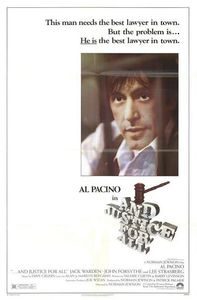
    (On Cable TV, July 2017) For a movie that’s nearly forty years old, And Justice for All still works remarkably well. It’s recognizably from the late seventies, but it tackles evergreen notions of idealism versus cynicism, as exemplified by an impetuous lawyer (Al Pacino, in a career-establishing performance) stuck between his ideals and the realities of the judicial system. It’s very darkly humorous (call it a courtroom drama with a body count) but it doesn’t make the mistake of being nihilistic: throughout, we can cheer for our protagonist as obstacles pop up. Pacino is terrific, director Norman Jewison keeps everything at a slow boil, old-school veteran John Forsythe makes for a loathsome villain, Christine Lahti is good in her big-screen debut and Jeffrey Tambor also pops up as an unhinged lawyer. (Almost all of the characters are unhinged in their own way, but that’s the film.) While the script is riddled with contrivances and satirical moments, it’s that bigger-than-life quality that gives And Justice For All it peculiar charm and timeless appeal.

  • The Hurricane (1999)

    The Hurricane (1999)

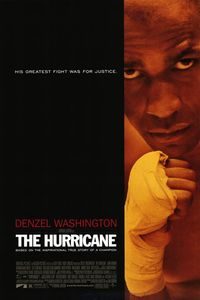
    (In French, On TV, June 2015) What annoys me the most about earnest, well-made, socially-conscious films is the lousy feeling I get when I’m less than entirely positive about them.  There’s little actually wrong about The Hurricane, the story of a black boxer, Rubin Carter, imprisoned for a triple murder he is said not to have committed.  (The historical record, outside the film, is considerably less affirmative.)  That story picks up decades later when a young black man decides to take up the cause of the imprisoned Carter, eventually becoming a lawyer and freeing him.  It’s a technically accomplished film, with veteran Canadian director Norman Jewison at the helm (it’s a bit of a nationalistic thrill seeing the Toronto waterfront being presented as-is) and it couldn’t wish for a better performance from Denzel Washington as Carter.  And yet, as I watched the film, I just couldn’t get into it –the emotional beats seemed not only blatant, but overused; the do-gooders a bit too saintly; the narrative a bit too neat and predictable.  It’s also interminable, especially if you don’t entirely commit to the subject matter.  I’m not dismissing the film –I’m simply reporting on my reaction.  The Hurricane is successful at what it attempts, but as far as I’m concerned it falls flat.  I hope your own reaction differs.