Olivia de Havilland

  • Government Girl (1943)

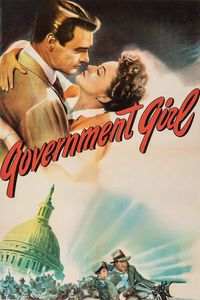
    Government Girl (1943)

    (On Cable TV, March 2021) One of the facets of Hollywood cinema in the early 1940s that goes underappreciated to modern viewers is how an entire industry shifted almost overnight to become the wartime propaganda arm of the American government, churning out a stream of well-produced movies, each glorifying a separate unit of the armed forces. As Government Girl shows, this even extended to the Washington, DC-based civilian efforts to produce weapons. Of course, such a setting doesn’t necessarily require action and suspense, so Government Girl takes the form of a romantic comedy, as a young woman discovers that the rude man she met the day before is not only her boss, but an engineer put in charge of supervising bomber manufacturing efforts. From the opening moments of the film, acutely concerned with the shortage of housing in DC in the early years of WW2, this is a homefront film with a smile — Many of the romantic comedy conventions are strictly upheld, with our heroine (a slightly-too-bland Olivia de Havilland, gamely following the script’s comic cues but not really showing any specific skills as a comedienne) getting into a romantic triangle that meshes with a lightweight spying subplot and another featuring a congressional investigation into our protagonist’s decisions. There’s even a comic chase sequence filmed outdoors (but apparently not in DC). The film is not perfect: male lead Sonny Tufts is so bland as to appear almost irrelevant, but then again the title of the film is Government Girl, not Government Guy. Other comic touches are overdone to the point of ridiculousness, such as the sequence in which our heroine and her friend sip a glass of champagne and act as if they were under the influence of hard drugs; or the ludicrous ending in which a simple testimony is enough to clear up an entire senate hearing in an instant. Still, I do have some affection for the result, for the charming look at government work during wartime, and how even a silly romantic comedy plays against this very serious backdrop — there’s a nice contrasting irony there, and the film’s shortcomings are not bad enough to erase the chuckles I had while watching the film. Yes, it could have benefited from a rewrite and a lead actress more comfortable with comedy and a leading man who wasn’t such a wooden fixture. But you like what you like — and I note that from a historical perspective, Government Girl was a significant factor in de Havilland filing suit against Warner Brothers for their treatment of her under contract (she really did not enjoy being forced to make the film), which eventually led to the “de Havilland law” limiting studio contracts to seven years, weakening the studio system permanently.
  • The Private Lives of Elizabeth & Essex (1939)

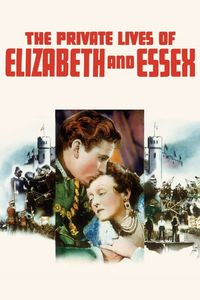
    The Private Lives of Elizabeth & Essex (1939)

    (On Cable TV, February 2020) Historical costume dramas aren’t to everyone’s taste, but there’s something to be said in the case of The Private Lives of Elizabeth & Essex for an engaging cast. Bette Davis as Elizabeth I? Solid. Having her surrounded by Errol Flynn, Olivia de Havilland, and Vincent Price? Now that’s interesting. Directed by Michael Curtiz, the film becomes more compelling than most equivalents in large part due to Davis’s steely performance and some deliberate choices to make the story more dramatic and accessible. Technical credentials are quite good, considering that this was a Technicolor production and Warner Brothers was willing to go all-out on the spectacle. It’s not so much about Elizabethan England than about 1930s Hollywood studio conventions, and that’s perhaps for the best. The Private Lives of Elizabeth & Essex remains a costume drama, but a click one, and more interesting than most.

  • Hold back the Dawn (1941)

    Hold back the Dawn (1941)

    (On Cable TV, February 2020) I’m a good sport for anything written by Billy Wilder, but even I remain underwhelmed by Hold Back the Dawn. Wilder’s biography tells us that it was largely inspired by his own life—as an immigrant from Europe, Wilder had to spend some time waiting at the Mexican/American border for his right to enter the country. Of course, Wilder’s stay was uneventful—the story here is quite different. Charles Boyer stars as a European gigolo trying to gain entry to the US and resorting to what he does best—seduction. Taking aim at a visiting American schoolteacher, he inevitably develops feelings for his mark, and much of the film follows the consequences of trying to square everything away. We know from the framing device that he will make his way to Hollywood, but there’s more than him to care about. Olivia de Havilland plays the romantic interest, adding a further bit of star-power to the result—although Paulette Goddard is more interesting as a vengeful flame. Hold back the Dawn is unapologetically a grand Hollywood romantic drama. It seldom holds back in terms of melodrama, and toys with audience expectations in its very dramatic third act. While it does end well (at least for most characters), there are plenty of dramatic complications along the way, and chances for the actors to deliver sob-inducing speeches. I liked it well enough as an example of that kind of film, although I can’t say that I have any particular affection for it over similar examples.

  • They Died with Their Boots On (1941)

    They Died with Their Boots On (1941)

    (On Cable TV, November 2019) It doesn’t take much for me to admit that as a boring straight white male, watching classic Hollywood movie is made easier by inherent privilege—those movies were (largely) made by straight white males, featured straight white males and incorporate the unconscious biases of straight white males. No disagreement there. I may twitch and make a note when films are unusually sexist, racist or outdated, and mention how terrible the French dialogue sounds, but in between my privilege and ready acknowledgement that “the past was another country,” I’m rarely scandalized out of my suspension of disbelief. But then comes a movie like They Died With Their Boots On to remind me that, no, I do have my limits. The problem is not that it’s an old-school western glorifying the Caucasian invasion of the West while showing them heroically battling anonymous hordes of Native Americans—there are plenty of those, and even the best come with an implicit warning for westerns: “You must accept this terrible viewpoint if you are to enjoy the film.” What puts this film over the top is that it is a (mostly inaccurate) depiction of George Armstrong Custer as a heroic, likable fellow before he died at Little Bighorn. That’s when my inner fuses blew up. Look: Custer was a terrible person—self-promoting as a symbol of crushing American Imperialism, but little more than the gun at the end of the American Government’s policy of betraying alliances and waging total war against Natives. He was a documented racist, rapist and executioner of noncombatants—and his own folly led to a well-deserved death. To see, even eighty years later, that a major studio like Warner Brothers sunk considerable expense, slick directing (from veteran Raoul Walsh) and marquee stars such as Errol Flynn and Olivia de Havilland in this kind of project is still revolting. Worse yet—three people died in the expansive action sequences that mark the film. (But apparently no horses, a consequence of reforms following many animal deaths on the set of Curtiz’s previous The Charge of the Light Brigade.) We’re well past the point of an unjustifiable movie here. I’m a good sport for many surprising excesses, but They Died with Their Boots On is intolerable.

  • The Snake Pit (1948)

    The Snake Pit (1948)

    (On Cable TV, May 2019) Let’s face it—the 1940s aren’t known as a decade that promoted humane psychiatric treatments in institutional settings, and yet here we have The Snake Pit (adapted from a 1946 autobiographical novel) being an early attempt as a social-issues film decrying the extreme treatments practised at the time. Much of the film focuses on a young schizophrenic woman (Olivia de Havilland in a courageous performance, looking unglamorous and distressed) who finds herself in an insane asylum with no memory of how she got there. The depiction of the conditions at the psychiatric institute for women and the treatment she gets at the institution is far more realistic than you’d expect from a film from the Classic Hollywood era, making the film feel more like a product of the 1960s. Many directing flourishes from Anatole Litvak help unmoor the film from objective reality, taking cues from film noir and impressionistic cinema to portray the detached mind of its protagonist, elements of the environment (such as the titular snake pit, where patients are essentially abandoned without care) and treatments such as electroshock therapy. It’s recognizable as an early social-issues film, arguing for humane treatment. As a time capsule, it’s still compelling—helped along by a sympathetic attitude in portraying, with a certain accuracy, the lengthy and gradual healing process for mental illness rather than an irremediable condition. The Snake Pit’s production history teaches us that great care and research went into the making of the film, and while the result is rarely fun to watch, it does make for absorbing viewing and a product that, thanks to its humanity, stands the test of time.

  • The Heiress (1949)

    The Heiress (1949)

    (On Cable TV, April 2019) For all the flack that golden-age Hollywood often gets for its happy endings and predictable plots, it could throw us a curveball occasionally, and The Heiress is certainly proof of it. Olivia de Havilland is somehow cast as a plain girl, albeit one with a rich father and an unusually persistent suitor. There are plenty of questions to ask about his motives and you may think you know where it’s going, or at least hope you do—but the film’s conclusion is merciless in summing up the film’s plot threads. This is a romantic drama with an emphasis on the second word. Montgomery Clift makes the most of his image as a romantic lead, while de Havilland tones down her own sex-appeal to pass (not so successfully) as plain. The Heiress does feel a bit long at times, stretching out moments that would be handled much faster nowadays. Still, there is a classic Hollywood glamour quality to the images, and heft to the entire film (weighted down by the ending) that other lighter stories may not have—no wonder it was nominated for a Best Picture Academy Award and won four Oscars. It’s easy to watch despite the heavy tone. The conclusion may not make romantic fans happy, but it’s still, in its own way, a small triumph over adversity.

  • Anthony Adverse (1936)

    Anthony Adverse (1936)

    (On Cable TV, March 2019) While Hollywood literary adaptations have been a constant in cinema’s history, there is a definite flavour to 1930s movies based on famous works of popular English literature: By then, Hollywood had sound technology and enough experience to fully realize costume dramas without breaking a sweat, and such films were the next best thing to a sure commercial bet given that novels were the only other popular entertainment game in town before the explosion of new media. (Even radio wasn’t all that common coast-to-coast.) There are some great movies in that subgenre, and then there are films such as Anthony Adverse. Adapted from a monumental 550,000+ words novel (five times the length of an average novel) by now-forgotten Hervey Allen, this film is equally lengthy at 141 minutes and it feels like it. Telling us about the adventures of one young man living through Napoleonian Europe, bouncing between continents as the unusually melodramatic events of his life make things even harder for him. (Napoleon himself appears, with La Marseillaise hilariously used as an ominous leitmotif.) It’s a big multi-decade historical drama, complete with multiple title cards throughout to explain even more of what couldn’t fit in the film. And yet, despite the length and the often-unbelievable accumulation of plot turns, Anthony Adverse itself feels badly paced, rushing through some things and languishing on others. It takes a long time for the film to even show its main stars Fredric March and Olivia de Havilland: Director Mervyn LeRoy did much better before and after, but trying to compress too much in even a generous two-plus-hours running time is asking for trouble—in modern days, this would become a miniseries. The number of plot points that come up by sheer coincidence is your biggest indicator of the film’s extreme melodrama. I won’t be too harsh on the result—after all, Anthony Adverse does have its charms if you do like melodramatic Victorian-era plot devices and/or the glamour of 1930s Hollywood trying to deliver a period drama. But be prepared for a long, sometimes frustrating sit.

  • A Midsummer Night’s Dream (1935)

    A Midsummer Night’s Dream (1935)

    (On Cable TV, February 2019) I’m done apologizing for the way I can’t process Shakespearian dialogue. Fortunately, there’s enough in the 1930s version of A Midsummer Night’s Dream to get us into a surprisingly detailed early example of a fantasy film. As my attention wandered from the dialogue and plot, I was left to admire nearly everything else: The great sets and costumes, as well as the vivid imagination on display. Remove Shakespeare’s name from the credits, and there’s still enough here to make this a modest masterpiece of early fantasy filmmaking. Clearly, the filmmakers saw in Shakespeare the license to go wild (comparatively speaking) in terms of fantastic creatures, wondrous realism and other tropes of the genre what would be developed decades later. If tracing the evolution of fantasy moviemaking isn’t your thing, then maybe you’d be interested in a very early role for Mickey Rooney, or seeing Olivia de Havilland and James Cagney once more. Still, I’m more appreciative of the fantasy filmmaking aspect: there weren’t that many big-budget fantasy movies at that time, and this one fills an early slot in the development of the subgenre.

  • Captain Blood (1935)

    Captain Blood (1935)

    (On Cable TV, May 2018) High-sea swashbuckling is the name of the game in Captain Blood, and the film certainly delivers. A thematic prequel to the better-known The Adventures of Robin Hood, it also features Errol Flynn, Olivia de Havilland and plenty of sword-fighting derring-do. The plot is serviceable, as a good but capable man finds himself in charge of a pirate crew. This leads to the expected hallmarks of a pirate pictures (governor’s daughter and perfidious enemies included). From a contemporary perspective, the ship battles still have quite a kick to them, which adds to the film’s overall impact. 1934 was still early in Hollywood’s blockbuster history, but you can already see most of the elements firmly in place, with the result that Captain Blood is still surprisingly accessible to modern audiences, especially those who really liked the Pirates of the Caribbean series and want something in the same genre.

  • The Adventures of Robin Hood (1938)

    The Adventures of Robin Hood (1938)

    (On Cable TV, April 2018) Perhaps the best thing about 1938’s The Adventures of Robin Hood is how it doesn’t feel like a 1938 film at all. You can credit the colour for that: One of the first big movies shot in Technicolor with decent image detail, it’s visually distinct from other movies of the time and would remain so for nearly two decades as colour took until the early sixties to truly become the standard. As a result, the film does feel as if it’s from the 1950s, something that director Michael Curtiz’s fast narrative pace helps support. The fantastic Errol Flynn plays the lead part with bravado and wit—the sequence in which he first confronts the enemy in their castle could be transposed with few modifications a modern superhero movie. Olivia de Havilland is nearly as striking as Maid Marian, but let’s be honest—this is Flynn’s film. The other reason why The Adventures of Robin Hood still feels so modern is that it has been endlessly re-used in other modern movies. Nearly every take on Robin Hood (notably the 1973 Disney version, 1991 Kevin Costner vehicle and 1993 Mel Brooks parody) has been inspired by this one, often to the point of re-creating scenes. It does make for a film that can be readily re-watched today with a considerable amount of fun, especially for audiences (kids, for instance) where black-and-white could be an obstacle.