Pam Grier

  • Bones (2001)

    (In French, On Cable TV, October 2021) Good or bad, what you will remember about Bones is this: Snoopy Dogg, playing a pimp who comes back from the dead and reunites with his wife as played by Pam Grier. Doesn’t this sound like something worth watching despite the quality of the result? Clearly hailing from the early 2000s with its terrible cinematography, Bones does have slightly more ambition than most low-budget films in taking place both in the present, and in a yellow-tinged 1970s filled with afro hairstyles and period clothes. Dogg is killed and buried in the basement of a strange skull-shaped building, but the fun begins thirty years later as blood sacrifices resurrect him and he goes on a rampage of revenge. Some decent practical special effects are undone by a misguided directing style that puts clumsy digital effects where they have no business. The attraction here is Dogg trying an acting role, clearly enjoying the pimp aesthetics of his pre-mortem character and then the vengeful aspect of his resurrection. Besides him, Grier is never less than splendid. The rest of the film, unfortunately, pales in comparison: the young people supposed to be the protagonists are rather dull compared to Dogg and Grier, while the narrative can’t quite do justice to the other ambitions of the film. As a low-budget horror film, Bones is better than most, but not good enough to be considered a success beyond its novelty value. It’s worth a look if you’re partial to Dogg or Grier, otherwise not so much. As a side note, I was amused to hear the French dubbed version try to replicate Dogg’s distinctive soft-spoken vocal cadence: it’s no replacement for the original, but it’s certainly evocative of it.
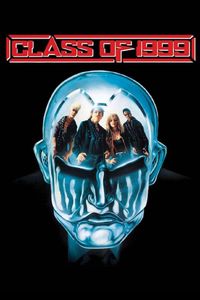
  • Class of 1999 (1990)

    Class of 1999 (1990)

    (In French, On Cable TV, June 2021) Younger readers may want to note that by 1990, American society had experienced nearly four decades of an uninterrupted rise in violent crimes. There are many explanations for this (the best being the neurological poisoning brought about by lead poisoning — yes, really) that neatly dovetail with the crest seen in 1990, followed by a gradual and real decrease in crime that continues to this day. But my point is: if 1990 filmmakers now sound unbelievably paranoid and grim about society falling apart, they had their reasons. With a touch of exaggeration, those fuelled films like Class of 1999, in which violent crime permeates every facet of American society, including its high schools. Taking the madness of Class of 1984 (only tangentially related by having both been directed by Mark L. Lester) one step further, this near-future nightmare presents schools as warzones controlled by gangs who must be cleaned by any means necessary. So, naturally the next logical step is to send three military robots disguised as teachers inside the school and start disciplining the rebellious youngsters. Given that one of the robots is played by the ever-beautiful Pam Grier, I’m not complaining at all. Although I do have, oh, huge issues with the rest of the film. Clearly meant as semi-trash exploitation, Class of 1999 is never meant to be taken seriously, especially not when the climax consists in having students escape, trap and destroy killer robots hunting them down throughout the school. (I rarely quote Wikipedia plot summaries, but this is wonderful: “While they look for Christie and the teachers, they soon learn of the real situation with the teachers. Ms. Connors’ arm becomes a flame thrower. Bryles’ arm becomes a missile launcher.”)  There’s some ironic fun in watching a film with concerned scientists watching a classroom altercation through 1990 “high-tech” displays, but let’s not confuse this film with anything traditionally successful. Class of 1999 belongs far more to the 1980s than the next decade, and should probably be approached more as a semi-effective B-grade picture than anything particularly worthwhile.

  • Foxy Brown (1974)

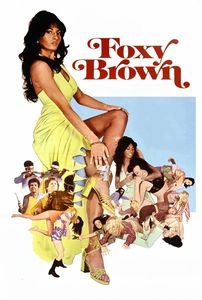
    Foxy Brown (1974)

    (On Cable TV, March 2021) For a screen legend such as Pam Grier, it’s surprising to realize that her famous early starring period was quite short — half-a-dozen films with American Pictures International from 1973 to 1975, after which the blaxploitation movement lost steam and so did her career. I’m sad to report that, in seeing Foxy Brown, I’m now left with one less of her films to discover. That sadness is somewhat offset by how, even though Foxy Brown is widely acknowledged as one of her better-known roles, it’s a bit of a step down from her slightly-more polished turn in Friday Foster. Here, she’s a grieving woman seeking revenge on drug dealers for shooting down her boyfriend. Her character also gets treated much rougher here than in other films: Disrobed, captured, drugged, raped and manipulated by the script in order to set up the revenge fantasy of the film’s final minutes, it’s far more clearly an exploitation film than Friday Foster was. Foxy Brown does represent that darker side of blaxploitation: while it features black characters proudly presenting themselves as part of black culture, it’s also rife in gory violence, sexual abuse and a lack of higher moral aspirations than revenge. The film can’t escape the gawking aspect of white filmmakers presenting black culture, and has aged a bit more poorly due to how Grier’s character is treated throughout. (Both Coffy and Friday Foster do better in that regard.)  Still, well, it is a film featuring Pam Grier from beginning to end, and she is, in the words of one character, “a whole lotta woman” — great period outfits, impeccable attitude and unarguable physical attributes make her a treat to watch (except when she’s being thrown in the deep end of the film’s exploitation pool of horrors). There are better Pam Grier films, but there aren’t a lot of them, so Foxy Brown still ends up as mandatory viewing for fans of the actress… even if they may regret it at times.

  • Friday Foster (1975)

    Friday Foster (1975)

    (On Cable TV, February 2021) Pam Grier is worth a watch even in the most terrible of movies, but Friday Foster greatly exceeded my expectations. A proud product of the blaxploitation era, this is a film that doesn’t even try to hide what it’s built for — Pam Grier in a shower, showing ample side nudity before being attacked by a knife-wielding hitman? Check. A random fashion show showcasing beautiful black women? Check. An activist plot dealing with the en masse assassination of black politicians by white agitators? Check. Friday Foster knows what it’s about, and it’s not afraid to show it. The steady forward pacing feels suitably modern, even as the mid-1970s atmosphere can’t be denied, and the great cast (Yaphet Kotto, Carl Weathers, Scatman Crothers, even Eartha Kitt in a too-small role) is a lot of fun. Still, the film’s single best asset is Grier in a role almost tailored to her strengths as an action heroine. For all of her reputation as an icon, Grier didn’t star in that many movies during the 1970s and Friday Foster was the last of the “classics” she did for American Picture International. It’s also a role that gives her a little bit more to do than running and shooting: she gets to play mom, photographer, investigator, seducer and sex symbol. It’s not exactly what we’d consider a well-rounded leading role these days, but it was still a noticeable step up for black female actors establishing a viable popular cinema for black audiences. What’s more, the thematic concerns of the film run a bit deeper than many of its contemporaries, notably in postulating a deliberate attack against black political leadership. I’m not going to pretend that Friday Foster is a great movie, but as a late-blaxploitation film, it’s fun and almost impossible to stop watching once it gets going. Grier still gets most of the credit, but the rest of the film almost meets her at level.

  • The Big Doll House (1971)

    The Big Doll House (1971)

    (On Cable TV, February 2021) if there’s a women-in-prison exploitation cliché that The Big Doll House doesn’t use, it’s going to take someone very familiar with the subgenre to point it out. Some have made the argument that this is the film that codified these tropes, which explain both why it almost feels like a comedy today, and also why you need a good healthy dose of male gaze tolerance to make it to the end. The plot isn’t as much a sustained narrative as a collection of incidents and clichés loosely arranged in succession. There’s lesbianism, abusive guards, escape attempts, a sadistic warden, girl-on-girl fighting, shower nudity, weak attempts at criticism of the patriarchy, and plenty of violence when the jailbreak inevitably occurs. If you’re not watching for historical purposes, probably the only real reason why The Big Doll House is still worth a look is for the debut performance of Pam Grier, who proves to be, even at this early juncture, as ferocious and striking as her exploitation persona suggests. She’s by far the film’s highlight, because otherwise you may be bored by the way it earnestly runs through the catalogue of clichés. Otherwise, I suppose there’s always the ironic potential of watching a bad film.

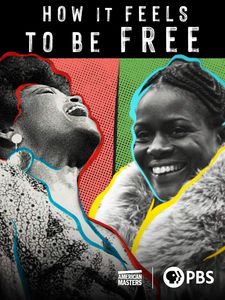
  • How it Feels to be Free (2021)

    How it Feels to be Free (2021)

    (On TV, January 2021) One of the unexpected benefits of a deep dive in Hollywood history is knowing what people are talking about when they bring up half-forgotten, underappreciated or ill-served artists of the past. When How it Feels to be Free set out to shine a spotlight on six black female entertainers of previous generations, I was on semi-solid ground: I don’t need to be told about Lena Horne, Nina Simone and Pam Grier’s greatness, and I was at least able to nod in recognition at the praise for Abbey Lincoln, Diahann Carroll and Cicely Tyson. Six homages in two hours is a lot, but director Yoruba Richen manages to be both specific and sweeping, talking directly about each one of its six entertainers and still using them as a group to make larger points about discrimination, representation and inspiration. Historical footage is blended with contemporary interviews with a decent roster of stars (Halle Berry, Lena Waithe, Samuel L. Jackson, Lena Waithe, co-producer Alicia Keys, etc.) and heirs. Part of the reason to watch the film is getting a reminder about why these women were so fantastic, part of it is digging deeper into some biographies and discovering equally great people (including getting a crash course in Lincoln’s activism, Carroll’s groundbreaking work in TV and Tyson’s own brand of race-aware role selection). The film works itself up to a powerful argument in favour of diversity on the production side of the entertainment world, pointing out that some stories will never be told accurately if they don’t come from those different perspectives. I enjoyed the result quite a bit, and not just in the scope of the film itself: In between watching How it Feels to be Free and writing this review, Cicely Tyson died and the loss hit me harder than merely being told that she was the star of Sounder. It was important to capture why she was remarkable that before it was too late.

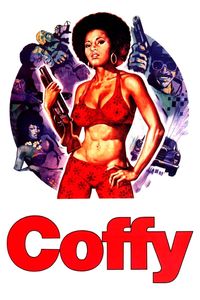
  • Coffy (1973)

    Coffy (1973)

    (On Cable TV, May 2020) While Coffy wasn’t Pam Grier’s first starring role, it was the one that established the tough-woman screen persona that would make her an icon. Under a perfect afro of many dangerous secrets, she delivers a character that’s both an avenging angel, capable and sexy, but also one with moments of weakness and vulnerability unlike other female-avenger roles. This film is close to the Blaxploitation ideal for several reasons—the early-1970s style, the over-the-top nature of its sequences, the go-for-broke sadistic villainy of the antagonist (dragging someone behind a speeding car—yes, there’s a strong racial component to that), the dramatic-bordering-on-exploitative way the film is built, and so on. It’s not quite perfect: in keeping with Blaxploitation tone and genre, it’s often surprisingly violent and the nudity in catfights gets to be intrusive after a while. But, throughout the film, we keep going back to Grier, perfect in a role that matches sexiness and toughness, with agency and credible fight scenes despite the awkwardness of early-1970s low-budget staging. Various elements, like the anti-drug message, a female protagonist and Grier herself, have made Coffy age much better than many of its contemporaries. There’s something wonderful in how Grier is, through retrospectives of the films of her first heyday, now seducing entirely new legions of fans and is likely to keep doing so well into the future.

  • The Allnighter (1987)

    The Allnighter (1987)

    (On TV, January 2020) I’m about this close to declaring a critical forfeit about The Allnighter, my reasoning being that this is really a movie produced for someone else entirely—female twentysomethings of the mid-1980s… and what do I really know about that? I ogled them at the time, and I suppose that I can still appreciate the big curly hair today. There have been silly movies for teens for decades and there will still be many of them in other decades as well—this just happens to be time-stamped 1987. As such, The Allnighter is a curiously tame “sex comedy” from the point of view of college girls as they go out to have the best night of their lives. There are a few references for celebrity trivia fans: Bangles singer Susanna Hoffs stars in a film directed by her mother, with a young Joan Cusack as a co-lead, and Pam Grier as a police officer in the inglorious phase of her career. It’s all more amiable than funny, and I think that this is one of those films enhanced by time rather than damaged by it: It’s a bubble-headed comedy, but it now has the atmosphere, colour and fashions of the 1980s going for it. The Allnighter is not essential viewing by any means, but not that objectionable either.

  • Above the Law (1988)

    Above the Law (1988)

    (In French, On TV, January 2020) Notable for being Steven Seagal’s movie debut, Above the Law is a bit of an odd duck in retrospect—Seagal is still his usual I-can’t-believe-he-was-an-action-star slimy self, but at least he’s younger and not yet calcified in his increasingly tedious screen persona. At times, we get sequences that would be very much out of character later on. It’s clearly a Seagal film that doesn’t know that it’s a Seagal film yet, so the formula’s not quite there. Alas, this means that the film is a somewhat bland 1980s action movie instead: the film built around Seagal’s star-making manoeuvre (let us be reminded that Seagal was, at the time, a protégé of super-powerful agent Michael Ovitz) is a generic vehicle representative of the era—slick and polished, like the middle-grade Hollywood movies of the time, with a plot that blends a cop protagonist with an overstuffed plot made of drugs, weapons dealing, CIA shenanigans, Catholic imagery and even a Vietnam flashback to round things up. At least things are better when it comes to supporting actresses, with an early turn for Sharon Stone and Pam Grier with such a presence that even the film itself seems awed by her. There are, eventually, a few decent-for-the-time action sequences once the narrative throat clearing is over, and even Seagal skeptics may find themselves intrigued by his turn here—before his ego took over and led to the career he had. Still, this isn’t much of a film—and so we come to the curious conclusion that if it wasn’t for Seagal, Above the Law would be better but utterly unmemorable.

  • Fort Apache the Bronx (1981)

    Fort Apache the Bronx (1981)

    (In French, On Cable TV, March 2019) In a fit of perverse humour, I decided to watch Fort Apache the Bronx right after the original Fort Apache it references. The comparisons are not kind to the 1981 film in more ways than one. Obviously, it’s not as much of a classic as the original—the titular reference is an ironic nod at the state of New York City’s Bronx by the late 1970s—with entire city blocks destroyed as urban blight, and a police force under siege by so-called barbarian forces. But the episodic police drama does miss one of the earlier film’s most interesting point—that “the other side” opposing the policemen actually had valid grievances for going to war and was portrayed in something of a sympathetic fashion. There’s not much of that here—Paul Newman plays a young cop assigned to the worst precinct in the city, and coming to grip (or not) with its casual lawlessness, drug use, unpunished crimes and code of silence regarding abuses by police officers. Fort Apache the Bronx is a grim movie, and it exemplifies the prevailing attitude that “drop dead” NYC was then considered unsalvageable. The rubble-strewn post-apocalyptic atmosphere is worth a watch by itself but remains hard to shake, and it’s good to have such anchor points as Newman, Rachel Ticotin as a likable nurse, Danny Aiello or Pam Grier as no less than a cop-killing prostitute. The unusual plotting, mean to unsettle viewers used to tidy endings, feels very New Hollywood with its unabashed grittiness and refusal to comfort audiences. Still, it’s not that dour of a film despite the setting: the burnt-out cynicism of the police characters, used to “holding the fort” against the criminal hordes, manifests itself through biting black humour. In keeping with the nihilistic 1970s (and in opposition to the reactionary 1980s), Fort Apache the Bronx is at ease with the idea that peace in a neighbourhood can depend on police leniency—things start turning truly sour when a new inflexible police chief comes in and demands stricter crackdowns. The slice-of-life plotting doesn’t have much of a main plot and features a number of clichés along the way, but forty years later it feels like an anthropological expedition in an alien land. I ended up liking quite a bit better than I thought at first.

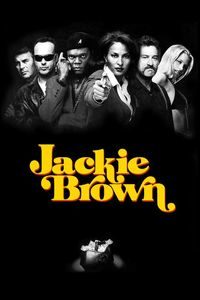
  • Jackie Brown (1997)

    Jackie Brown (1997)

    (On VHS, September 2000) Considered without preconceptions, this is a standard crime film with some interesting moments. Disappointment set in as soon as we’re reminded that it’s “Directed by Quentin Tarantino” during the end credits. This isn’t the fantastic piece of cinema that could be expected from the wunderkind auteur of Pulp Fiction and Reservoir Dogs. At best, it let itself be watched with interest despite its lengthy duration. At worst, it’s a regrettably boring adaptation of a lousy book. Few cinematic pyrotechnics, and the main event (a caper told from three perspectives) seems more gratuitous than organically useful. Robert de Niro’s character is nearly superfluous. Samuel L. Jackson is good, but routine, a description that might be applied to the film as a whole; unspectacular, but competent. Rather long, though.

    (Second Viewing, On Cable TV, October 2018) I don’t often “catch movies on cable” (my tool of choice for mass movie consumption is the DVR), but when I happened to see Jackie Brown playing while I was doing other things around the living room, I left it on … and became increasingly mesmerized by the film. When I first saw it in 2000, it simply didn’t click for me: It felt dull and anticlimactic from Quentin Tarantino after the more explosive Pulp Fiction, and there wasn’t much in the film to remind us that this was from the same whiz-kid auteur. Nearly twenty years later, I’m far more sympathetic to the film: It’s a solid crime drama, well told in a more grounded way than what would be called the “Tarantino style”. Pam Grier is spectacular as the middle-aged protagonist of the story, using and manipulating three separate parties to get what she wants. Robert Forster is almost as remarkable as a grizzled bailsman, with good supporting performances from actors such as Robert de Niro (playing a second fiddle, refreshingly enough), Bridget Fonda, Michael Keaton and Samuel L. Jackson in his inimitable persona. Tarantino keeps things moving, keeps his own excesses to a minimum and the result still stands, twenty years later, as his most grown-up piece of cinema. As for myself, I’m far more receptive to older characters, to solid crime drama (now that those are far less prevalent now than in 1997) and to the idea of damaged character somehow trying to make the best out of what they’ve been given in life so far. Disregard my first take on the film—I’m much better now.