Patrick Stewart

  • The Wilde Wedding (2017)

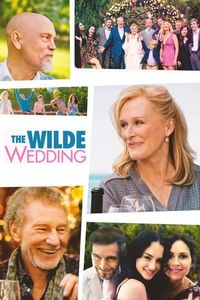
    The Wilde Wedding (2017)

    (In French, On TV, August 2021) I rarely talk about the quality of a French dub, let alone lead a review by its mention. There are a few good reasons for that: Not only are French dub assessments of no interest to Anglophone readers of these reviews, the French dubbing industry has grown remarkably competent during the decades of American filmmaking hegemony. It’s not rare to find some clever turns of phrase in the translations, and the actors specialized in dubbing are good at what they do — films with less-than-average actors are often improved by the dubbing process. (Madonna and Kirsten Stewart, for instance, are far better in French than in English — their dull line readings are improved by more capable actresses.)  In other words — most of the time, it doesn’t make that much of a difference if you see a film in original English or in dubbed French. But we Francophones have grown complacent regarding the quality of dubs, and it takes one striking counterexample to highlight how good we’ve got it, and that example is the French dub of The Wilde Wedding (“Mariage chez les Wilde”), which is by far the worst dub I’ve experienced in years. There’s a basic disconnect between the voices and the actors, and the dub direction is atrocious to the point of wondering who allowed it to be released. The worst performers are, alas, the most important two: The male lead (played by John Malkovich in English, and a wheezing amateur in French) and—ack—the narrator of the film dubbed with an almost-complete lack of affect that makes you wonder if it wasn’t a voice synthesizer at work. I’m not blaming the dubbing actors as much as the dub director here, because it’s that’s terrible. Worse: this terrible dub is overlaid on top of a film that would be disappointing even in an original 4K 3D stereo widescreen presentation: Taking on the old trope of a wedding bringing together friends, family and exes in a posh remote location, it starts out breathlessly presenting more than a dozen characters, only a handful of which will prove to be actually important in the ensuing chaos. There are so many sex scenes shown or implied that it probably would have been better as a pornographic film. Worse yet: The Wilde Wedding leads to a place so trite that you can see it coming well in advance, and can’t muster any sympathy for the characters. (If you were expecting anything close to the wit of Oscar Wilde, as I was… you’re not going to have a good time.)  The result is all the more disappointing that it features actors that I either really like (Minnie Driver, Patrick Stewart — albeit that last one near unrecognizable with some curly hair) or respect. (Glenn Close, Malkovich, bringing back memories of Dangerous Liaisons that aren’t to this film’s advantage.) They don’t have a lot to play with, even with sex hijinks and family strife (and sometimes sexy family hijinks). Even the plotting feels doubly dubious toward the end: Much of the third act is a detonation caused by a character sleeping with… the only dark-skinned character of note, whose exoticism in the middle of so many WASPs is highlighted by her bisexuality and her dancing at the drop of, er, anything. Hey, I get it — Paula Singer is lovely. But she’s stuck with a really problematic character in the middle of a damaged film. Even the extensive use of electro swing, a favourite genre of mine, simply sticks out incongruously. Writer-director Damian Harris clearly fumbles the ball here, and his multi-decade career means that he doesn’t have the excuse of youth or inexperience. But the result is a disappointment no matter the reason, as they layer on top of each other. At least watching it in the original English will remove the constant irritation of the French dubbing.
  • Lifeforce (1985)

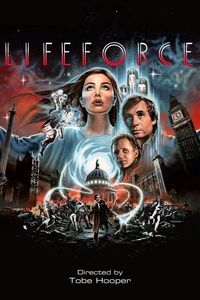
    Lifeforce (1985)

    (On Cable TV, March 2020) There’s a surprising mixture of elements at play in Lifeforce, an erotic apocalyptic horror-SF hybrid featuring alien shape-shifters laying waste to Earth. It starts in somewhat convincing science fictional mode, as an expedition discovers an alien ship and brings back a suspiciously well-preserved (and naked) “human” woman. Then it shifts into laboratory horror as the alien wakes up on Earth and starts sucking off the life-force of its human victims, often doing do in the nude. Much of the middle portion of the film is about scientists racing to find answers, discovering that aliens have originated the vampire mythos, and unsuccessfully trying to prevent an epidemic-like contagion of vampires-created zombies. The third act, remarkably enough, presents a portrait of London devastated by the turning of much of its population and gets back to the SF-horror hybrid in its climax. It’s all pleasantly watchable and perhaps the last unimpeachable film from director Tobe Hooper. A young Patrick Stewart has a supporting role, the special effects are pretty good for their time, and the echoes of Quatermass and the Pit are not unpleasant. While not a great film, nor a flawless B-movie, Lifeforce is nonetheless a big thrill ride with enough unusual twists and turns to warrant a look.

  • Star Trek: First Contact (1996)

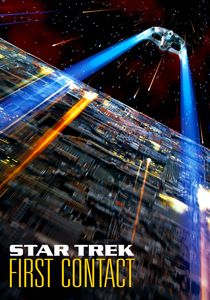
    Star Trek: First Contact (1996)

    (Second Viewing, On Blu-ray, December 2019) I first saw Star Trek: First Contact in theatres on opening night, in melodramatic circumstances sitting next to a girl I liked and a guy who I thought liked the girl I liked. (She, on the other hand, didn’t like either of us, which is pretty much all you need to know.)  I thought the movie was quite good, and it’s a relief to revisit the same film decades later under far less trying emotional circumstance to find out that it has held up decently well in the interim. Generally regarded as the best TNG Trek movie and deservedly so despite the underwhelming competition, First Contact plays on two of Trek’s biggest power chords, bringing together the Borg and time travel for an adventure that takes us back to First Contact between humans and Vulcans, and the Borg taking over the Enterprise. There’s a nice blend between hard-core body horror and comic relief in the result, with separate plotlines striking a surprisingly complementary tone throughout. The film is more action-packed than previous instalments, and even gives us a large-scale Federation-versus Borg space battle to begin with. Patrick Stewart has a plum role as a Jean-Luc Picard almost going mad with revenge, and he shows off his muscles in the film’s action climax. Most of the characters are used effectively (including Marina Sirtis and Gates McFadden), and First Contact is a good big-screen take on the Enterprise-D/E crew. While I still have several issues with the details of the plot or the sad situation of post-WW3 Earth at the time, the overall result is worth a look and ends up being the last Trek movie (and even-numbered one) worth watching between 1996 and the 2009 reboot.

  • Star Trek: Generations (1994)

    Star Trek: Generations (1994)

    (Second Viewing, On Blu-ray, December 2019) My memories of Star Trek: Generations were not good, but it took a while for me to remember why. The first hour-or-so of Generations is not bad, especially if you’re watching it shortly after the previous instalments. After a decent prologue that sees Kirk sacrifice himself once again, the focus of the series switches to the second series, the entire cinematography of the Trek series gets a visual upgrade and we’re back in the comfy aesthetics of The Next Generation. Plus, there’s Gates McFadden and Marina Sirtis to look at. From a movie perspective, the series also gets an upgrade from 1980s to 1990s techniques, with much-improved special effects, better camera movements and a less stage-bound style. There’s even a good (if repetitive) space battle midway through. The early signs of the film’s problems are in the lacklustre script—Finally giving Data his emotion chip leads to scenes that go for cheap humour over wittiness, and as the plot of the film snaps into focus, it’s obvious that this is the least of the film’s Big Ideas that are wasted away. By the time Generations is over, Kirk is dead, the Enterprise-D is destroyed and Data has emotion … except that the scales are so small that it’s hard to reconcile the majesty of those ideas and the way they’re tossed off. The entire thing climaxes on … a metal platform in the middle of a desert—not exciting! The passing of the torch between both iconic crews, years in the making, ends up being a disappointment. With twenty-five years’ perspective, the Enterprise has been destroyed roughly five times in thirteen Trek movies—to the point when it’s now feeling like a cheap trick more than a momentous occasion. In fact, if we’re going to reflect on Generations in retrospective, it’s hard to avoid thinking that the TNG crew has only had one good movie in four attempts—while I’m upgrading Generations slightly in my mind, it’s still well under First Contact, and quite above the abysmal Insurrection and Nemesis. There were, of course, a few other factors harming the TNG movies—Paramount was almost paralyzed in fear of doing anything too crazy in the movie series with DS9 and Voyager running in parallel, and that may explain the timid and self-defeating lack of panache in those instalments. Generation at best manages a draw between good and bad, mostly because whatever is good (and let’s not deny the fun of having William Shatner and Patrick Stewart teaming up) is in service of a throwaway plot. It’s half-successes like Generations that lead otherwise well-meaning people to fanfiction.

  • A Christmas Carol (1999)

    A Christmas Carol (1999)

    (In French, On Cable TV, December 2018) I’ve been sampling and watching A Christmas Carol adaptations all December long, and I think that this 1999 BBC production is my favourite straightforward version of the Dickens story. (My favourite of them all is 1988’s Scrooged, but I’m counting it as a comic variant, not the foundational material.) It certainly helps to have Patrick Stewart as Scrooge—the production is meaningless if you don’t have a strong actor in the lead role, and Stewart can play cranky or beatific better than anyone else, with the gravitas required to pull it off. It also helps that 1999-era special effects were iffy but just good enough to pull the ghostly segments of the story, and that there had been enough productions prior to this one to identify the best elements to highlight. Production values are high (especially for a late-1990s TV movie) and the film does not overstay its welcome. In the end, 1999’s A Christmas Carol is a familiar story well told without the excesses of later version (that 2009 CGI one, ugh) or the shortcomings of the many earlier takes.

  • Green Room (2015)

    Green Room (2015)

    (Netflix Streaming, November 2016) While Green Room suffers from a slight case of over-hype, it’s not a fatal one. I’d been waiting a while, like many others, for a follow-up to writer/director Jeremy Saulnier’s acclaimed Blue Ruin, and Green Room does have a lot of what made the first film so interesting: sharply observed details, a respectful look at the lower rungs of society and an often-upsetting use of realistic violence. As a punk band gets embroiled in the dirty dealings of a neo-Nazi club in the middle of nowhere, the stakes quickly get deadly as they are locked in the green room and their opponents plan what to do with them. As a genre exercise, Green Room is well accomplished: our heroes are inside, the enemies are outside and there’s no help around. Violent episodes punctuate the film, resulting in a dwindling cast and ever-more inventive story beats. It ends satisfactorily enough, even though the film doesn’t revolutionize anything. Anton Yelchin stars as the headliner of the punk band. Against him, Patrick Stewart is simply chilling as a neo-Nazi leader. Meanwhile, it’s always interesting to see Alia Shawkat have a good role for herself. Still, the star remains Saulnier, who moves his chessboard pieces with cleverness and cranks up a decent amount of suspense when it counts. Now that he has created even more anticipation for himself, what will his next movie bring?

  • The Captains (2011)

    The Captains (2011)

    (On-demand Video, March 2012) As far as premises go, this documentary keeps it simple: William Shatner goes around interviewing the five other people who have played a captain (as lead) in a Star Trek universe.  While there’s a little bit of footage of Shatner being himself at a Star Trek convention, much of The Captains is a series of one-on-one conversations between very different actors.  Shatner seems to be enjoying himself (he wrote and directed the film), as he adds another piece to his very public voyage of self-awareness regarding his most iconic role –you’d think that after a few books, and many self-referential appearances in Trek-related works, there would be nothing left to say, but there is thanks to his interviewees.  Patrick Stewart is grace incarnate as a top-level actor who has accepted his place in Trek history, but it’s his regrets at the toll the acting life has taken on his personal relationship that ends up being his moment in this film, much as Kate Mulgrew’s extraordinary description of the rigors of a TV series lead over a single mom’s life that ends up being the film’s emotional highlight.  Otherwise, well, Avery Brooks is one weird/cool cat as he riffs off jazz music and somber themes.  There’s no denying that The Captains is for trekkers: While it’s kind of entertaining to see Shatner arm-wrestle with Chris Pine, the film remains a definite vanity project meant to develop the kind of meta-Shatneresque personae that Shatner has been enjoying for the past two decades.  Even so, it’s remarkably entertaining for those who know a bit about the Star Trek universe: discussions between fellow professionals often are.