Paul Douglas

  • Angels in the Outfield (1951)

    Angels in the Outfield (1951)

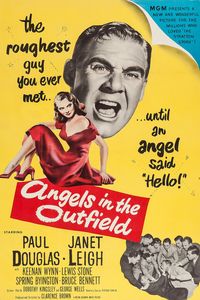
    (On Cable TV, March 2021) Anyone seriously thinking about how baseball is often presented as America’s religion has to watch Angels in the Outfield at least once, if only to experience the delightfully earnest lunacy of a film that explicitly links the two. The story of an abusive baseball team manager who comes to hear angels speak, the film eventually shifts gears when an 8-year-old girl begins seeing the angels on the field helping out the team. Heavenly intervention eventually leads to (what else?) winning the pennant, raising all sorts of thorny issues about divine morality and vulgar sports fandom. The contrast between the sublime and the ridiculous would have been witty, but there’s little ironic detachment exhibited here — Angels in the Outfield clearly and obviously equates godly intervention with the right team winning, and while this was probably heartwarming to the film’s target audience (it was reportedly Eisenhower’s favourite film), it feels like a mash-up of absurdities to anyone who’s not already living within the insanity of America’s twin obsessions. Thematic weirdness aside, the film does have a few moments of charm — the overweight, middle-aged protagonist is played by Paul Douglas in an earnest performance, with the film playing audio tricks around his dialogue so that no swearing could be heard during the actual swearing. Janet Leigh plays a journalist who brings the little girl’s visions to the masses, and Bing Crosby shows up briefly as a co-owner of the Pittsburgh Pirates (which was true at the time). The tone of Angels in the Outfield is very much in line with the reverential treatment that other later baseball movies have adopted as default (Field of Dreams, The Natural), lending a supernatural aspect to the game. As said — it probably works for some… and will feel utterly baffling to anyone outside America’s borders.
  • Clash by Night (1952)

    Clash by Night (1952)

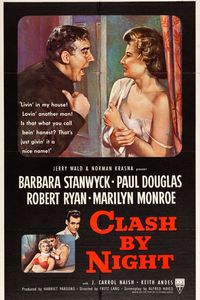
    (On Cable TV, February 2021) On paper, Clash by Night feels like a must-see film: An intense small-town drama directed by Fritz Lang, featuring a late-career performance from Barbara Stanwyck and one of the first featured turns from Marilyn Monroe? Who can resist that? Alas, the film itself is not quite as gripping. While the drama’s bubbling into melodrama can be momentarily intense, the film feels poorly paced, with numerous lulls, overdone moments and an unsatisfying conclusion. The relatively small stakes (in a small coastal town setting) don’t add much more, and you can almost feel Lang itching to take the film firmly into noir crime thriller territory, while being held back by the material stemming from a realistic Broadway play. In other words, Clash by Night feels far from being even the sum of its parts — not a particular highlight for its time, and a minor entry in everyone’s filmography.

    (Second viewing, On Cable TV, August 2021) It’s not so easy to assess films that competently do something that you just happen to not like very much. So it is that Clash by Night does have a clear intention in mind, as it follows a woman coming back to a small town after years living in the big city. The film is clearly split in two acts, and the melodrama inherent in the premise means that no one will be all that happy with the ending. It’s a story about picking between a dangerous but exciting man and a safe but dull one, set against a small fishing community. As the lead, Barbara Stanwyck here clearly demonstrates why she’s widely considered one of the best actresses of Classical Hollywood, and then there’s a younger Marilyn Monroe doing well in a supporting role. Robert Ryan and Paul Douglas play the poles of masculinity that the lead gravitates to. The small-town atmosphere is effective and clearly weaved into the plotting. Fritz Lang’s direction is straightforward, and perhaps less beholden to the film noir style he was using in other movies at the time. That drama is strong (fittingly for a film adapted from a play) even if it frequently dips into what twenty-first century viewers will see as melodrama with a woman making poor choices and creating all sorts of problems for herself. Of course, that’s the point of the film: the lack of temporal unity is deliberate, as are the theatrical anguish, overdone antagonist and manipulative elements of the conclusion. All of which may explain why I end up appreciative but generally cool to the results – Clash by Night is a fine melodrama with good performances, but I’m having a hard time mustering any enthusiasm about it.