Paul Gross

  • Beeba Boys (2015)

    Beeba Boys (2015)

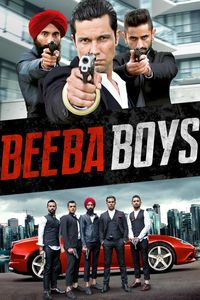
    (On Cable TV, February 2021) Comparisons between Beeba Boys and the mob movies of Martin Scorsese are not entirely delusional — at least in terms of presentation. For one thing, Indo-Canadian writer-director Deepa Mehta is a seasoned professional who clearly knows what she wants to see on screen, and her work here shares quite a few of the power chords of crime dramas: An exploration of crime in ethnic communities, great use of montage music (the Indian pop soundtrack is next-level terrific), an ensemble cast, copious narration and a script that turns from a darkly funny opening to an increasingly sombre conclusion, twists and turns involving double agents and remorseful criminal protagonists… it’s the same playbook even if we can forever quibble about the execution. Beeba Boys takes us to the suburbs of Vancouver, where Indo-Canadian gangsters live in the classic trappings of the gangster lifestyle (although, Vancouver being Vancouver, their multimillion-dollar houses are simple suburban single-family dwellings). The script gets to balance a few plates at once, whether it’s the group dynamics between the protagonist and his criminal entourage, his feud with an established mobster, his family life with a son increasingly unable to tell right from wrong, and the efforts of an infiltrator with divided loyalties. The first half-hour is a pleasantly dizzying trip through unrepentant criminal behaviour—the film even scores an amusing hit in pointing out how Canadian white jurors are reluctant to look racist in convicting an Indo-Canadian of murder. But as it usually goes with those films, the flash is eventually replaced by darker material as everything falls apart. Canadian cinema Patron Saint Paul Gross even shows up for a small but pivotal role as a Caucasian gangster. Randeep Hooda is quite good in the lead role, considering that it asks for a tricky mixture of charm and ruthlessness; the other highlight is Waris Ahluwalia, although this may have to do with a distinctive, very likable role that has him as the designated jokester of the ensemble. Still, there are false notes — an early exposition dump through a TV show is inelegant and ludicrous; later on, I had trouble figuring out the motivation behind a romance between the protagonist and a Caucasian woman; finally, the ending seems weak compared to what comes before it, although I’ll note that weak endings are not unknown in the genre that Beeba Boys adheres to. There are inherent traps in the kind of criminal epic that Mehta chose here: a basic difficulty in reconciling the allure of crime with its deadly consequences and even Scorsese can have trouble making sense of it. Still, most of Beeba Boys operates at a high-energy tempo, and the good moments outshine the worst ones. I’m oddly glad to have seen it, and it’s my favourite Mehta film since Bollywood/Hollywood — even if such low-brow populist opinions are what gets me thrown out of all of the movie critics’ best parties.

  • Hyena Road (2015)

    Hyena Road (2015)

    (On Cable TV, July 2016) The Canadian film industry is so cash-strapped and the country so reluctant to military intervention that the idea of a Canadian war epic seems almost impossible. But considering the near-mythology that has sprung from the Canadian intervention in Afghanistan and the zeal with which writer/director/actor Paul Gross has pursued Canadian myth-making throughout his career, it was inevitable that the two would meet. The result in Hyena Road, an attempt to portray the Canadian Afghanistan war experience on the big screen à la Hollywood. Much of the film is by-the-numbers war-movie stuff: the band of heroes, the heroic sacrifices, the forbidden romance, the shootouts… Unfortunately, Gross can’t help but reach for a tragic ending in an attempt to heighten the impact of his story. Too bad we can see it coming from far away, along with the double-crosses, tangled allegiances and “what are we even doing here?” musings. On a certain level, it’s a wholly average film even in the way it frustrates its audience and really wants them to cry at the end. On another level, it’s hard to be Canadian and not feel at least a frisson of national pride at the result. Consider: the Big Mission of the film is building the eponymous Hyena Road. That’s right: infrastructure building as a national priority in foreign intervention! Still, much of the film actually works just well enough: screenwriter/director Gross leaves the young-sniper hero role to Rossif Sutherland, keeping for himself the far more interesting character of an intelligence officer trying to navigate the dangerous Afghan politics and history, while being the voice of cold hard experience for his protégé. The action sequences are well handled and the production values are convincing (especially on the film’s modest budget). As much Hyena Road’s ending smacks of melodrama, it is remarkably far, far less self-important as Gross’s previous Passchendale. That may take away some of the mythic grandeur of the previous film, but it makes the result more palatable. As Canada reflects upon its afghan experience in the coming decades, I expect more war dramas to make it to the big screen—but as a first attempt, Hyena Road is a modest success.

  • Gunless (2010)

    Gunless (2010)

    (In theatres, May 2010) Canadians being politely nationalistic, we won’t help but feel a bit protective about this latest homage to the land of maple-flavoured beavers. Gunless is, conceptually, an attempt to upend the traditional US-based western: A lone American (played by Paul Gross) comes to town and looks for a fight. Unfortunately, he has wandered over the frontier in a quaintly Albertan village where everyone is polite, mild-mannered and unarmed. Through thin plot mechanics, he gets to woo a local widow, defend the village against even worse Americans and learn a few lessons about the value of peace, order and good government. It’s pure catnip for Telefilm Canada, but it’s not exactly the most satisfying film to ever earn government grants: The nationalistic winking gets old real quickly, and Gross seems to believe that enough square-jawed smiles will be enough to make us ignore that Canadian archetypes are often unstoryable. The traditional American western is a show of dominance, of guns as equalizers –serving storytelling needs by making up a difference between numerous evildoers and lonesome do-gooders. Making a movie that satirizes this plot structure is tricky, because it asks audiences to run against their best instincts. There’s seldom a way to bring this off to a satisfying conclusion without being hypocritical and Gunless is certainly no exception: Despite the film’s celebration of Canadian gunlessness, we know that a gunfight is coming: after all, it’s a western! When it comes, we also know that its consequences will be dramatically unsurprising: after all, it’s a comedy! The result is more interesting in how it confirms Gross’ reputation as one of Canada’s fiercest cultural nationalist (also see: Men with Brooms, H20, Passchendaele) than for its limp take on American-style westerns. In many ways, Gunless feels like a bit of cultural content made “because it’s good for you”: Expect to see it re-run often on Canadian TV stations as a cheap and unobjectionable bit of Canadian Content. The problem is not that we’ve seen better; it’s that it’s really easy to see better movies. Many of them were even made by Americans.