Peter Lorre

  • All Through the Night (1942)

    (On DVD, November 2021) Now here’s a curio — a Humphrey Bogart comedy in which he plays a Manhattan gambler with mob connections who goes up against Nazi infiltrators plotting a strike against the United States. I got wind of All Through the Night during a TCM documentary on Bogart’s pre-stardom days, and it’s clearly a film from the period during which Warner Brothers knew he was a charismatic leading man, but before he became The Bogart of legend. As a result, his character is incredibly confident (his establishing moment is in ordering his favourite cheesecake and having restaurant staff panic when they don’t have it on hand) but the film doesn’t bow to him like latter ones would. The result is a strange but pleasant mixture of spying thrills, gangster suspense and lighthearted comedy. It’s not strictly comic, but some sequences come close to it: the gobbledygook sequence in which they try bluffing their way through a saboteur meeting is somewhat amusing, but the scene in which they end up realizing they’re in a Nazi stronghold is clearly not completely at ease with comedy. (A more comic director would have made the reveal stronger and built up the characters’ reaction.)  Not every aspect of All Through the Night works just as well, nor is as harmonious: the film’s production history confirms that some comic sequences were added after the start of shooting to take advantage of studio players and the film’s overall leaning toward comedy. Still, even imperfect results can be fun to watch, and Bogart is at ease as a Big-Man-on-Broadway, lending some credibility to a film otherwise not grounded in realism. A young and slim Peter Lorre shows up as a supporting antagonist (one taken out of the film too swiftly). The dialogue is better than average and the flavour of the time is interesting—the film was shot before Pearl Harbor, but released after the United States entered the war. Despite its shortcomings, I liked All Through the Night quite a bit: it’s fun and unassuming, and even its plotting shortcuts are part of the charm.
  • You’ll Find Out (1940)

    You’ll Find Out (1940)

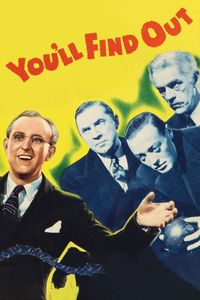
    (On Cable TV, June 2021) I’ve written before about the brief and unlikely stardom of Kay Kyser, band leader and radio personality (as the host of “Kay Kyser’s Kollege of Musical Knowledge”) who, in the early 1940s, got to star as himself in a series of rather charming vehicles before retiring and living to have a long and rewarding pastoral life. Most of his movies rely on his very curious personal charm as a slight, soft-spoken, bespectacled presence in contexts where you’d expect a traditional Hollywood leading man. (Swing Fever is the film that got me wondering, “how is this guy presented as a leading man?”)  Even in a short but outlandish filmography, You’ll Find Out is in the running as one of the weirdest — here, Kyser plays himself as he and his band are invited to an heiress manor to help celebrate her birthday party, and end up discovering a plot against her. While that doesn’t sound too bad, consider that this is a film with supporting roles for Peter Lorre, Boris Karloff and Bela Lugosi — the only time those three legends would share the screen. The film soon takes a turn for the haunted-house occult (how could it be otherwise with that cast?) but don’t worry: it’s all a comedy with a few musical interludes provided by Kyser’s band. One musical number, “I’d Know You Anywhere,” eventually got nominated for an Academy Award. It’s rather fun to watch, and a must-see if you’re a Kyser fan. (If I can become one, I’m sure there are dozens—dozens—of us.)

  • They Met in Bombay (1941)

    They Met in Bombay (1941)

    (On Cable TV, June 2021) There’s a wild genre shift midway through They Met in Bombay, as a jewel-theft caper turns into a military adventure in the early days of WW2’s Asian front. Clark Gable and Rosalind Russel initially play two thieves working independently to steal a well-known diamond from a rich heiress — him pretending to be a detective, her playing an aristocrat. The theft of the diamond only takes a few minutes, after which the double-crosses, escapes and even more dangerous situations start. Both Gable and Russell are very likable—but then again, the film doesn’t have merely a caper in mind. Soon enough, the war catches up to them and they’re forced into even more dangerous deceptions just to stay alive. Peter Lorre inexplicably shows up in overdone makeup as a Chinese ship captain, and then the film is off to a roaring war adventure with accidental heroism being a major driving force. It’s noteworthy that since the United States had not entered the war at the time of the film’s conception, production and release, Gable plays a Canadian who assumes a British officer’s identity, joining up with the Winnipeg Grenadiers (a real-life unit that was destroyed while fighting later in 1941) along the way. The zigs and zags of the plot are surprising if you’re going cold into the film, and they do transform the film into something quite different from what it had been. Considering the highly moralistic nature of the film’s conclusion (in which duty to country in the face of wartime adversity is far more important than the illicit acquisition of material baubles), you can interpret They Met in Bombay as a specific example of a larger-scale transformation of Hollywood films around 1941 or 1942, away from the Depression-escapism capers of the 1930s and into the wartime propaganda of the next few years.

  • The Conspirators (1944)

    The Conspirators (1944)

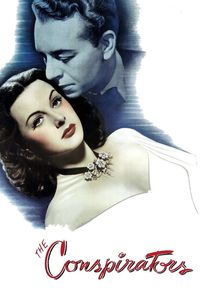
    (On Cable TV, March 2021) I’m not sure why it took me so long to discover this, but Warner Brothers turned out a slew of Casablanca-light movies in the mid-1940s. Most of them took place in Europe, dealt with a combination of often-fictionalized European politics and romance, often featured Nazis as villains, and Casablanca performers as players. The Peter Lorre/Sydney Greenstreet duo alone is a good way to identify the half-dozen films in that sub-sub-sub-genre, and here they are indeed in The Conspirators, a film that sticks far closer to Casablanca than the other films in the same vein. Here, the Lorre/Greenstreet pairing is supplemented by Paul Heinreid and the beautiful Hedy Lamarr as members of a Portuguese anti-Nazi resistance group trying to root out a traitor among them. It’s all fairly familiar stuff, but the cast knows what it’s doing, and so does the Warner Brothers apparatus surrounding them. Lamarr is close to her most glamorous here, and the Greenstreet/Lorre combo is a known quantity as well. Churned out quickly to take advantage of topical events and the American public’s appetite for anti-Nazi material, The Conspirators is, in some ways, an ordinary wartime thriller, but the combination of some above-average elements does make the result more interesting even when it’s clearly trying to repeat a much-better film.

  • The Mask of Dimitrios (1944)

    The Mask of Dimitrios (1944)

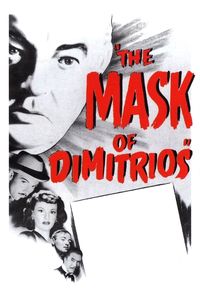
    (On Cable TV, March 2021) An interesting blend of noir aesthetics, mystery and international geopolitics circa late-1930s, The Mask of Dimitrios features Peter Lorre as a novelist tracking down the life of a mysterious man of intrigue (the titular Dimitrios), through a cross-European journey that eventually gets him close to another mystery man (played by Sydney Greenstreet) with a grudge against the deceased. If the deceased is indeed deceased, which becomes increasingly unlikely as the narrative advances. Much of the action takes place in southeastern Europe, where the geopolitics of time are subordinated to the requirements of an exciting plot. At times, it does feel like a Casablanca spinoff — the Lorre/Greenstreet pairing is evocative enough, the Warner Brothers sensibilities are similar and using Europe as a playground for thrills is in the same neighbourhood, although it does lack a strong heroic protagonist and/or a romance to be anywhere near its more illustrious equivalent. Accordingly, expectations should be modulated in approaching The Mask of Dimitrios: it’s closer to an average film with its own distinctive atmosphere. There’s a curious non-emphasis on the rising Nazi threat, but the film is more concerned about its own thriller elements than making a stab as real-world relevance — and there’s probably an argument to be made that by 1944, no one needed another reminder about the Nazis. Reasonably entertaining and featuring a sufficiently different protagonist as played by Lorre, The Mask of Dimitrios makes for a decent watch as long as you don’t expect too much.

  • Muscle Beach Party (1964)

    Muscle Beach Party (1964)

    (On Cable TV, October 2020) What may be insufferable juvenilia to a generation may be a cultural artifact half a century later, and if contemporary reviews for Muscle Beach Party weren’t kind, I suspect that more modern takes on the film will revel in the mid-1960s California beach atmosphere. The second of the “Beach Party” series with Anette Funicello and Frankie Avalon, this sequel brings together the burgeoning surfer and bodybuilding cultures together in a comic setting, with an added dash of romantic spice as an Italian countess distracts Avalon from Funicello’s affections. Add some bouncy music (by the Beach Boys, the Del Tones and an insanely young Stevie Wonder), a late-movie cameo by Peter Lorre (with the film having the decency to literally stop in mid-frame as he makes an entrance) and you’ve got enough here for any sixties pop-culture enthusiast. Don Rickles and Buddy Hackett provide additional comedy. It’s all set against the then-newish concept of the “the teenager,” with California showing the way to the rest of the nation. Muscle Beach Party is really not sophisticated entertainment, but it is sunny fun and it’s now almost perfect as a time capsule of its time.

  • Beat the Devil (1953)

    Beat the Devil (1953)

    (On TV, September 2020) I’m a bit surprised at how Beat the Devil doesn’t work as well as I was expecting. On paper, it looks like a slam-dunk: a comic adventure starring Humphrey Bogart (plus Jennifer Jones, Gina Lollobrigida and Peter Lorre!), directed by John Huston and co-written by Truman Capote, all taking place in exotic British East Africa. It’s explicitly made as a parody of earlier films, and concerns swindlers trying to claim uranium-rich lands. I mean, how can this fail to deliver? But it does—the herky-jerky script struggles with consistent tone (a likely artifact from having been reportedly rewritten on a daily basis), the comedy is weighted down by bland direction and the visual flourish of the film is nothing worth reporting on. Some of the film’s production history suggests that it was almost treated as a vacation by Huston, Bogart and others, and this lack of discipline clearly shows—it’s also unclear if Huston had a sense for comedy, as demonstrated by what Beat the Devil tries to pass off as funny. This being said, I’m putting an asterisk (*) here to revisit this film in a while, just to see if I either understand more about what it’s reputedly trying to parody, or if I’m in a potentially better mood to accept what’s going on here.

    (Second Viewing, On TV, December 2021) This is my second go-around on Beat the Devil, and I’m still as dumbfounded (or disappointed) as during the first. At another glance, this still feels like a can’t-miss film: A group of shady characters; striking actors such a Humphrey Bogart, Peter Lorre, Gina Lollobrigida and Jennifer Jones; directing by John Huston; and a script by Truman Capote. Better yet – the film is often presented as comedy, spoofing the kind of character-based adventure films that Hollywood was churning out at the time. The problem is that none of these things quite add up. It’s clearly not serious, but it’s not all that funny either, and the florid dialogue doesn’t add up to a compelling storyline. Some of this weirdness can be explained by taking a look at Beat the Devil’s production history – with the director ripping up the script on the first day of shooting and Capote churning out material as the shoot went on. The disjointed aspect of the film isn’t helped by actors goofing off when the goofing off doesn’t have a point. I gave the film a second look hoping that it would make more sense a second time around, but merely found my interest wandering again for what I feel are the same reasons. Oh, the occasional bon mot perked up my interest from time to time, but it’s not enough, not sustained into a coherent narrative nor a coherent comic tone. Maybe I’ll give it a third try. Maybe I’ll just ignore Beat the Devil as something that simply doesn’t work on me.

  • The Story of Mankind (1957)

    The Story of Mankind (1957)

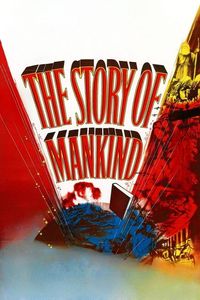
    (On Cable TV, August 2020) Oh, what a mess. Any movie that punches so hard through my suspension of disbelief that I start asking why it exists has already lost. In the case of The Story of Mankind, here we have a science-fictional “alien judgment” framing device looking at the history of humanity as an excuse to have small historical sketches conveniently casting as many known actors as possible. It’s hard to resist a film that had Hedy Lamarr, three of the Marx brothers, Vincent Price, Peter Lorre, Dennis Hopper (!) and Cesar Romero, but just wait until it begins and you’re served sketches that are neither funny nor profound, skipping ahead history to serve the usual bromides, with stunt casting that doesn’t really use the actors to their fullest extent – even the Marx Brothers appear in different scenes, and don’t play to their strengths. (I was waiting for the Groucho scene… I should have skipped it.) The film being directed by Irwin Allen, I half-suspect that the idea was for a grandiose statement with state-of-the-art special effects. Instead, we get sketches comparable to a high-school production, and a constant back-and-forth between trying to make a statement and trying to make jokes. The Story of Mankind is almost fascinating in its hideousness, but I really can’t recommend it as anything but a curio.

  • 20,000 Leagues Under the Sea (1954)

    20,000 Leagues Under the Sea (1954)

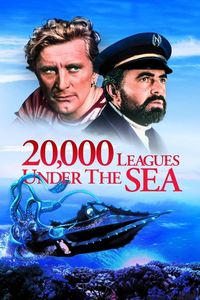
    (Google Play Streaming, July 2020) We can complain at length about Hollywood blockbusters, but when they’re well made, they endure. So it is that you can still watch Disney’s adaptation of Jules Verne’s 20,000 Leagues Under the Sea today and still have fun, even as the film is in the middle of its sixth decade. There’s a lot going on here—great underwater footage, good adventure sequences, and a lavish visual design that clearly anticipates steampunk or inspired it. There’s also the cast—a dashing Kirk Douglas in the lead role, mellifluously voiced (and bearded) James Mason as Captain Nemo, and a stocky close-cropped Peter Lorre as comic relief. Of all the film’s special-effects showcases, the squid sequence remains a highlight and quite convincing still. It all comes together in a good package where its dated nature is now part of the appeal.

  • Silk Stockings (1957)

    Silk Stockings (1957)

    (On Cable TV, March 2019) Sadly, I’m counting down the last few Freed-unit MGM musicals on my list—I can see why they were hailed as the best in the business, and there aren’t that many left for me to watch. I would expect a downward quality trend in getting to the less famous movies, but Silk Stockings is a strong entry in the musical corpus. It’s a decent musical adaptation of 1939’s Ninotchka, with Cyd Charisse stepping into the Garbo role in a movie at the measure of her legs—her solo number “Satin and Silk” is both funny and sexy, within a role that takes advantage of both her dancing abilities as well as her ice-queen acting range. The film has Fred Astaire as a movie executive trying to put together a project in Paris, which requires convincing Russian artists to work for the capitalistic west. Charisse plays a humourless Soviet operative gradually seduced by the leading man and Paris’s considerable attractions. The West-versus-East element of the original 1939 film plays far better in the middle of the Cold War, and this mid-1950s film also captures other obsessions of the era—most notably the decade’s obsession in distinguishing movies from TV through colour cinematography, widescreen framing and “Stereophonic Sound.” (It’s, by far, my favourite number of the film despite a dodgy cadence.)  Another highlight is “Red Blues,” as the gentle poking at Soviet rigidity finally makes its way over the Iron Curtain. There’s plenty to like in the acting, as long as you accept Astaire once again being in Paris with a much younger partner (as in the same year’s Funny Face)—if it helps stomach the 22-year age difference between them, keep in mind that few actresses, no matter their age, could keep up with Astaire’s dancing. This being said, Astaire is up to his usual very high standards (he keeps the best for last with an iconic final “The Ritz Roll and Rock”), but Charisse has the tougher role as the rigid accented Nina, slowly transforming over the course of the film. Their duet is quite good as well, perhaps echoing their comfort together after working on The Band Wagon four years earlier. Peter Lorre also has a funny small role. While Hollywood history is rife with disastrous musical remakes of earlier works, this certainly isn’t the case with Silk Stockings. Much like the quasi-contemporary High Society, it takes a good film and delivers something equally good in a slightly different way. It’s one of the essential musicals of the 1950s.

  • Arsenic and Old Lace (1944)

    Arsenic and Old Lace (1944)

    (Youtube Streaming, November 2018) It’s easy to like Arsenic and Old Lace if you already like Cary Grant—after all, the film is his showcase, as he goes from being a suave newlywed man of letters to becoming increasingly frantic as he discovers that his aunts and then his brother are all proficient serial killers in their own ways. It’s not a good thing to discover on one’s honeymoon, and things get crazier as he also tries to manage an insane uncle, friendly policemen and fights to stay alive given the presence of a psychopath or two. The black comedy of Arsenic and Old Lace is a bit surprising in a post-Code mid-1940s comedy, but the film did have a strong theatrical pedigree, being an adaptation of a long-running Broadway play. Frank Capra directs what is essentially a stage play with some flair (a bit of a departure from his usual fare), but much of the work is done by the actors. If you want to see a face-off between Cary Grant and Peter Lorre, well, this is your movie. Grant does play the role very broadly, but his facial expressions are terrific—the sequence in which he’s tied up and gagged has some hilarious comedy moments simply because of the way he uses his face and eyes. Grant hasn’t often played a character as out-of-control as in Arsenic and Old Lace, but it works largely because his usual persona is the one we see at the beginning of the film—what if such a person got in as bad a scrap as in here? There’s even a metafictional moment in which his character comments on the stupidity of stage characters … while making the exact same mistakes. The beginning of the film is a bit laborious, but like most farces it converges in time for a high-spirited last act in which everything collides. Some of the acting and staging choices will seem a bit on-the-nose, but Arsenic and Old Lace is still funny and still well-worth seeing today.

  • The Man Who Knew Too Much (1934)

    The Man Who Knew Too Much (1934)

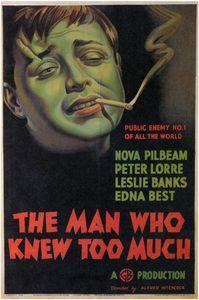
    (On Cable TV, October 2018) Before Alfred Hitchcock immigrated to the United States, before he cast James Steward and Doris Day in the 1956 version of The Man Who Knew Too Much, there was a black-and-white version of the same story, also directed by Hitchcock in 1934. Now, don’t expect a faithful remake: while both versions share a common premise and significant similarities in their plotting and characters, both films have significant differences as well, which makes it interesting to watch the earlier version even knowing what happened with the later one. Hitchcock famously described the difference between the two versions as “Let’s say the first version is the work of a talented amateur and the second was made by a professional” and that describes it rather well—the remake is the one to watch if you only have time for one, but there’s a lot to like in the first one too: Having Peter Lorre as a villain is always fun, and the film doesn’t hold back in featuring a big police shootout as part of its conclusion. There’s some sun-worshipping weirdness in the plot, but much of the film is solid thriller filmmaking, as competent now as it was back then—along with The 39 Steps, it clearly shows Hitchcock working at a high level even at that time in his career.

  • M (1931)

    M (1931)

    (On Cable TV, January 2018) It’s easy to dismiss early cinema as somehow less than what is now possible. I suspect that much of this easy dismissal comes from the examples set during the Hays Code, which stunted the emotional development of American cinema for decades. But there are plenty of examples of movies (either pre-Code or non-American production) that show that even early cinema could be as hard-hitting, mature and disturbing as anything else since then. A good case in point would be Fritz Lang’s M, an upsetting crime drama set in Berlin during which a serial killer of children is hunted by both the police and organized crime. Peter Lorre plays the killer, in a performance that is instantly repellent, then pitiful as he finds himself targeted for summary execution by crime syndicates none too happy about his actions and the ensuing police crackdown. A true noir film in which the black-and-white images belie the gray morality of its characters, M remains a captivating piece of work even today. Deftly using primal fears to move its audience (up to a fourth-wall-breaking final shot), M is a well-controlled achievement that certainly gets reactions. The use of sound, not even five years after the introduction of the technology, is quite effective — “In the Halls of the Mountain Kings” is used as a meaningful leitmotif, and even in German, the film does quite a lot with the voices of its actors. It is a bit long, perhaps slightly inefficient in the ways it moves its characters in the middle third, but the overall dreadful atmosphere of the film is striking, and the nightmarish quality of the last sequence makes up for most shortcomings. There is an added dimension to the film for modern audiences knowing that the society depicted here was already in fully Nazification. All of that, and more, combine to make M essential viewing today, not just as a piece of movie history.