Peter O’Toole

  • My Favorite Year (1982)

    My Favorite Year (1982)

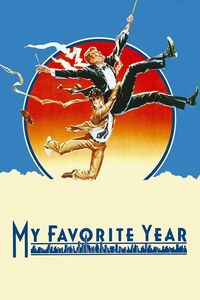
    (On Cable TV, March 2020) Sometimes, I wish we had a slightly more extended film genre vocabulary to discuss grades of comedy. There’s a difference between a comedy that aims to get laughs, and a comedy that’s merely content to be pleasant. My Favourite Year may be mistaken for the first, but I found it more effective as the second. The story of a young TV writer asked to babysit (geezersit?) an older star with a propensity for excessive drinking, this is an affectionate look at the mid-1950s through the lens of 1980s filmmakers, more nostalgic than comic. Mark Linn-Baker stars as a young comedy show writer supposed to be a blend of Mel Brooks and Woody Allen, who gets saddled with ensuring that an older swashbuckling hero actor (played by Peter O’Toole in a role meant to be semi-autobiographical) makes it to broadcast in sober state. When gangsters and long-lasting romantic pursuits are thrown into the mix, the comedy increases, although the result never gets above a slow boil when it comes to outright laughter. But My Favorite Year does work better as a gentle look back in time, with the opening moments of the film exulting the wonders of 1954 and the plotting never getting overly serious at any time—well, except for the climactic motivation speech from the younger to the older man, and fixing whatever challenges they both face. It probably sounds as if I’m harsher on the film than I intend to be: After all, there are a few good lines (“I’m not an actor, I’m a movie star!”) and I always enjoy the way Hollywood looks back at itself. In the right mood, the amiable tone of My Favorite Year is satisfying in the same way that some Neil Simon stories can be. Just go in tempering your expectations as to how much of gut-buster it wants to be.
  • The Lion in Winter (1968)

    The Lion in Winter (1968)

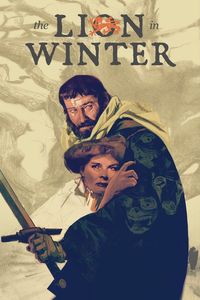
    (On Cable TV, February 2020) Film historians and Katharine Hepburn fans can agree on one thing: She became a much better actress as she aged—from a cute funny ingenue in the 1930s, she switched to a matronly appearance throughout the 1940s and became increasingly adept at dramatic roles throughout the 1950s. The Lion in Winter is, in many ways, the apogee of her acting talents. (Significantly, she won her third Best Actress Academy Award for this film.) The film itself seems designed to let actors display how capable they could be—it’s a complex story of court politics and family intrigue set against the Henry II era (1183) and the kind of film that actors and the Academy both love. Casting-wise, there are highlights from several generations here—Hepburn, obviously, but also Peter O’Toole as Henry II, and much more modern notables as Anthony Hopkins (in his first big movie role) and Timothy Dalton. (This is one handy movie in any Six Degrees of Kevin Bacon game, as you can use it to skip from the 2020s to the 1930s quite easily.) As for its impact, well, it’s all quite more interesting than its Dark Ages setting would suggest—I suspect that anyone who was fascinated by Game of Thrones’ exploration of the perils of hereditary succession will also enjoy this one. It has aged, though: in filmmaking techniques, the 1960s feel increasingly artificial, and some of the values of the time have been imposed on the 1183 setting in not-so-elegant fashion. But that does add a layer of interest that wasn’t in the film when it was first released. At least Hepburn is timeless.

  • Goodbye, Mr. Chips (1969)

    Goodbye, Mr. Chips (1969)

    (On Cable TV, February 2019) If anyone wonders what caused the movie musical to go bust in the late 1960s and 1970s, you can point at the changing nature of New Hollywood and at many wrong-headed examples of the form. Perhaps the most egregious of them was the run of musical adaptations of downbeat stories, often remaking perfectly good movies that had no business being remade at all, let alone as semi-musicals. Case in Point: Goodbye, Mr. Chips, the infamous tear-jerking boarding school story tracing the path not of students, but a teacher at the school through love and heartbreak from his first year at the school to retirement. The story itself is solid (if merciless at making its protagonist suffer), but transforming a beloved 1939 movie in a 1969 colour musical was not the way to go. The beginning of the film is particularly trying, what with a pompous teacher as a lead. He learns to be humbler, but it’s a rough start to a film that does itself no favour through musical elements that are not particularly enjoyable, needed or well integrated. The film eventually fights its way back into the audience’s good graces, but it’s a long slog in more ways than one, with musical numbers interrupting the story more than illustrating it. It doesn’t help that director Herbert Ross makes everything feel dreary and dull, with the final tear-jerking sequences being more trying than satisfying. Neither Peter O’Toole nor Petula Clark bring much to the film. While I do like Goodbye, Mr. Chips for taking a slightly different tack from most boarding school stories (namely, following a teacher through decades rather than students through a few months/years), it’s still a bit too downbeat, and overcooked as a musical. [July 2020: Seeing the original film further sinks the remake for me—the original feels as if all the pieces are better balanced, and the tone far more appropriate to the story it’s telling, tragic death included.]