Philippe Noiret

  • Les ripoux (1984)

    Les ripoux (1984)

    (On TV, October 2021) There’s something perverse and reprehensible in the idea of making a good-natured film like Les Ripoux in which we’re asked to side with corrupt policemen—and not the kind of “I kill suspects for justice” corrupt American policemen, but the kind of penny-ante bribes-and-shakedown from neighbourhood hoods and shopkeepers, all speciously justified by a theory that everything’s illegal anyway. It’s even worse in that much of the film is about corrupting the righteous, as a young idealistic policeman with a bright future is gradually weakened by his mentor in crime, then goes on to outdo his teacher. But a few things ensure that we still have a good time. For one thing, the film stars two of the most effortlessly watchable actors of French cinema—Philippe Noiret as the elder statesman of graft, and Thierry Lhermite as the ever-eager scholar. Some swift and efficient characterization works wonders in aligning us with them, even as their behaviour is completely reprehensible. The tone is resolutely aligned with dark comedy, and the bigger villains of the film are drug dealers who had it coming anyway. Sure, there’s a long essay to write about how movies such as Les Ripoux normalize bad policing, corrode confidence in law enforcement, gum the efficient working of the free market and certainly end up making victims along the way. You’d expect such a storyline to be more appropriate for a poorer country where corruption is rampant… but it’s more shocking and funnier when set in Paris. A solid script, pungently telling details and an ultra-cynical look at police work still make this film a distinctive pick even in the hallmarks of dark crime comedy. Les Ripoux works almost against all odds.

  • Il postino [The Postman] (1994)

    Il postino [The Postman] (1994)

    (YouTube Streaming, February 2021) As I’m slowly making my way through the list of movies nominated for the Best Picture Academy Award, I can usually understand why they were nominated —The Academy is often predictable, and watching the films is usually enough to see how they correspond to the broad categories most likely to earn a nomination. But there’s a meta-game at play as well, and watching Il Postino is a good reminder that there are often external factors to consider. On its own, it doesn’t seem like such a strong film. As a story about a poor fisherman’s son who befriends famed poet Pablo Neruda, it clearly plays on familiar themes — poor versus famous, self-discovery through art, bucolic boosterism and so on. Philippe Noiret is quite good as Neruda (even if his voice is dubbed in Italian — Noiret without his own specific voice is a disappointment), while Massimo Troisi makes for a likable protagonist as an uneducated man gathering an appreciation for art, romance and the world through bringing Neruda’s mail. But that doesn’t seem as if it’s enough: Il Postino plays with arthouse themes but doesn’t feel like the kind of film that the Academy goes nuts over. Then you look at the film’s production history and its American releasing studio and it all starts making sense. For one thing, it turns out that writer/star Troisi was gravely ill during shooting, even pushing back heart surgery in order to complete the film… and he died the day after principal shooting wrapped. Now that’s the kind of dying-for-your-art story that the Academy loves to nominate. But the final piece of the puzzle is simple: Miramax. At the time Il Postino went to the Academy Awards, Miramax was known as an unusually skilled movie awards campaigner: now-disgraced studio owner Harvey Weinstein was a legend in pushing his slate of movies “for consideration” to Academy voters, and the 1990s are littered with curious Academy Award nominations (and wins!) that all share Miramax as their American distributor. To be clear: Il Postino is not a bad movie, and I suppose that anyone stumbling upon it would be at least halfway charmed by its take on the postman and the poet. But if you come at it, as I did, with an eye on completing your list of 1990s Academy Award nominees, you may feel something missing: the meta-narrative surrounding the film at the time of the awards.

  • Nuovo Cinema Paradiso (1988)

    Nuovo Cinema Paradiso (1988)

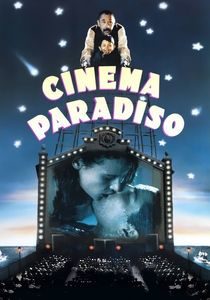
    (In French, On TV, August 2017) Cinema often congratulates itself, and Nuovo Cinema Paradiso is an endearing example of the form, as a grown man attending a funeral is reminded of his early experiences at the local cinema and its memorable owner. There isn’t much to the film, but it’s well made and affectionate in this idyllic small-town portrait that is often so popular in nostalgia-fuelled fiction. Much of the expected elements are there—the surrogate father-figure to compensate for a single-mom family; the hated unreasonable clerical authority figure cutting out all the kissing scenes from movies shown at the theatre; the girl; and a hero with big dreams. It helps a lot that Philippe Noiret is very good as the cinema owner who gets to parent our hero. Otherwise, Nuovo Cinema Paradiso is handled with grace and style, just enough to wrap the film in fuzzy feel-good feelings. Not revolutionary, but handled well enough to be pleasant viewing … especially for confirmed cinephiles.