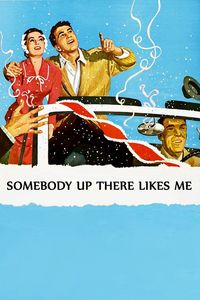
Somebody Up There Likes Me (1956)
(On Cable TV, April 2021) I don’t generally like boxing movies, but there are plenty of exceptions, and Somebody Up There Likes Me is one of them. Based on the life of middleweight legend Rocky Graziano, it’s a film that greatly benefits from early Paul Newman’s streak for rebellious yet somehow likable characters. It’s also a film that, while clearly boxing-centric, has most of its dramatic action take place outside the ring, offering a well-rounded portrait of the lead character. Newman plays Graziano (in a star-making turn) with uneducated roughness but a great deal of charm even if his early life is one of teenage delinquency, troubles within the army and defiant attitude. Things start turning around for him when he discovers an aptitude for boxing and meets his future wife (a good turn from Pier Angeli). Newman is surprisingly good at the physical part of the role — he convincingly plays the boxer and channels the rebelliousness into physical aggression. But more than that is the film’s balancing of personal life and professional life (that is, boxing), all the way to a surprisingly dramatic third act that doesn’t solely depend on the outcome of a big match. In other words, there’s more than boxing in Somebody Up There Likes Me to keep even non-boxing fans happy.
