Quatermass series

  • Quatermass 2 (1957)

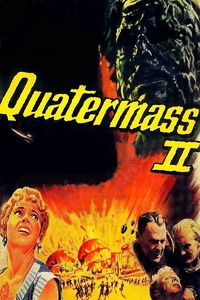
    Quatermass 2 (1957)

    (In French, On Cable TV, March 2021) You wouldn’t necessarily expect a 1950s British movie based on a TV show to be still interesting, but the Quatermass series remains remarkable for how it reaches for a more intellectual kind of filmed Science Fiction than its contemporaries, creating a more credible backdrop for adventures that played off familiar tropes in better-than-average fashion. So it is that Quatermass 2 contemplates a somewhat typical alien invasion (and possession) story, but one that’s handled with more dexterity and subtlety than many of its contemporaries or, indeed, later examples of the form. It’s executed in stereotypically British fashion, all the way to the stoic attitude, political details and mild-mannered details, and that’s what makes it fun even today. Production values are adequate, although (as one may expect) the black-and-white cinematography and middle-grade special effects ensure some distance. Still, I was more pleasantly surprised than disappointed by the results. Quatermass 2 is the second Quatermass film I’ve seen (I seem to be going backwards in seeing them) and I’m starting to understand why the series is so appreciated in some circles. In fact, now I’m beginning to wonder why there hasn’t been a more modern take on it.

  • The Quatermass Xperiment (1955)

    The Quatermass Xperiment (1955)

    (On Cable TV, July 2020) The Quatermass brand is, unusually enough for a series of the 1950s, about cerebral science fiction as applied to familiar premises, and The Quatermass Xperiment, the first film of the series (adapted from a TV show broadcast two years earlier), certainly leaves a good first impression. Sure, England is invaded by an alien life-form, but the focus here is on slightly-gruff scientist Bernard Quatermass in understanding, then fighting the extraterrestrial threat. American Brian Donlevy plays the lead in this very British film in interesting ways, all brash and unrepentant and arrogant (and yet somehow likable). The horror undertones of the story grow louder and louder as the story advances. While this film adaptation is reportedly more action-packed than the TV show, it’s also significantly less action-filled than comparable alien-menace movies from the United States. It’s quite watchable, though, and its influence is undeniable: 1986’s Lifeforce seems to take a lot from this film, for instance.

  • Quatermass and the Pit aka Five Million Years to Earth (1967)

    Quatermass and the Pit aka Five Million Years to Earth (1967)

    (On Cable TV, June 2020) One of the best Science Fiction films of the late 1960s, Quatermass and the Pit stakes out a very different kind of Science Fiction than many of its Hollywood contemporaries. Third Hammer film to feature the character of Professor Bernard Quatermass, it begins under 1960s London as an archaeological discovery ignites an investigation that, in turn, becomes science fictional and horrific. The distinctive late-1960s London flavour, presented in muted colour cinematography, adds quite a lot to the atmosphere. Compared to other monster movies, this one spends far more time on the quasi-procedural investigation to understand the creature than the expected sequences of death and destruction. It helps that the characters are smarter than the usual bears—or rather the usual SF protagonists of any era. The low budget and limited production means do damage the impact of the film, but the better-than-average quality of the script makes up for it. The impact it had on the later Lifeforce is undeniable, but Quatermass and the Pit is more than worth a look by itself.

    (Second Viewing, On Cable TV, February 2021) I thought a second look at Quatermass and the Pit would be dull, but it’s actually making me enjoy its blend of procedural detail and apocalyptic narrative even more. I still tremendously enjoy the hook, as a dig beneath London for an Underground extension reveals fossilized evidence of aliens invading the Earth and modifying the ape species to become human. There’s an intellectual cleverness to the way Quatermass and his team approach the problem and try to figure it all out with honest science. Then the film shifts in second gear as the historical curiosity becomes a present-day threat, with London eventually succumbing to a paranoid mind-control ray. While the budget of the film can’t quite accommodate the shift to apocalyptic spectacle, the film does try its damnedest to make us believe and does deliver a halfway-credible climax. Frankly, I’d like to see more movies along the same line, with a little bit more control over special effects and pacing. It’s quite a fun film, and a second viewing goes down more smoothly than I expected.