Queen Latifah

  • Brown Sugar (2002)

    Brown Sugar (2002)

    (On TV, January 2021) I’m fond of saying that an interesting setting can make even a formula romantic comedy seem far more interesting, and this is exactly what happens in Brown Sugar… at least when it remembers what its setting actually is. Set in Manhattan at the turn of the century, Brown Sugar begins with a succession of cameos from hip-hop stars telling us about the moment they fell in love with the genre. A flurry of genre references firmly establishes the film as being about hip-hop, seen through our lead character’s own love for music. The very likable Sanaa Lathan plays a music magazine editor who ends up falling for her long-time best friend (the equally likable Taye Diggs) at the very moment when he’s getting married and she’s getting into a serious relationship. Blending music with romance, Brown Sugar is at its best when writer-director Rick Famuyiwa focuses on the music—which is admittedly less and less so as the film progresses. Lathan and Diggs are great leads for a romantic comedy, but hip-hop fans may be more impressed by supporting turns from Mos Def and Queen Latifah alongside the dozen artists seen in the opening segment. In terms of story, Brown Sugar doesn’t offer much that’s new, although its willingness to portray its central romantic relationship as adultery (albeit on a partner intent on cheating) does remain unusual. It’s not a bad time, though, even if the deviations from reality get more and more noticeable as it goes on—find me a radio station that operates the way “Hot 97” does and I’ll be very surprised. Still, like the characters themselves say, the music is the most important thing—even more than romance, in Brown Sugar’s case.

  • Juice (1992)

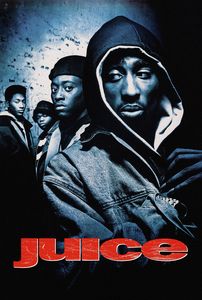
    Juice (1992)

    (On TV, August 2020) The early 1990s were a great period for black crime dramas featuring teenagers stuck in proto-criminal lifestyles, and Juice is another fine example of the form. Set in New York City rather than the more common Los Angeles, it follows four young men as their lives become more dangerous than they expected. Petty shoplifting eventually leads to death, and it takes a lot to break out of the cycle. What sets Juice apart, at least for me, is the quality of the turntablism rap soundtrack. The other highlight is the cast – one of Tupac Shakur’s only roles is here, as well as early supporting turns for Queen Latifah and Samuel L. Jackson. Otherwise, the film does feel like many of its similar contemporaries – which is not a bad thing considering that I rather like the genre, but it might have been a good idea to space out its viewing a little bit farther away from previous similar movies.

  • Girls Trip (2017)

    Girls Trip (2017)

    (On Cable TV, April 2018) The R-rated women-behaving-badly subgenre is now well defined: It may have started its latest streak with Bridesmaids, but there’s been one or two of them per year since then (Bachelorette, Bad Moms, Rough Night, etc.) and the sub-genre is becoming less and less remarkable with every new example. And yet, properly handled, they can allow female comedians to show what they can do once they’re unleashed. So it is that the single best reason to watch Girls Trip is Tiffany Haddish, taking a big character and making her feel even bigger. (Documentary accounts of Haddish’s personality suggest that she was a perfect fit for the role.)  Compared to her, even seasoned performers such as Regina Hall, Queen Latifah and Jada Pinkett Smith feel ordinary. Still, Girls Trip is decently entertaining—while it’s easy to quibble about its most outrageous moments, its wall-to-wall bad language, its occasionally repellent attitude, it does feel free to try anything and everything, getting a few chuckles along the way. It’s also difficult to appreciate, from my privileged white-guy perspective, how vital such a film must feel to a particular audience. It’s interesting to note a few moments here that would not attempted had the movie featured a cast of a different ethnicity—I’m specifically thinking about a prayer scene that feels organic even to the outrageous characters. So carry on, Girls Trip, for bringing something less frequently seen to the big screen, becoming a surprise box office hit and making Haddish an Oscar-presenting comedy superstar along the way. When everybody gets their own big-screen wish-fulfillment comedy, everybody wins.

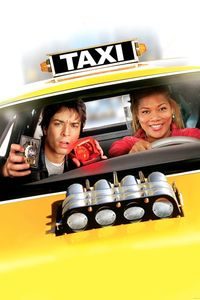
  • Taxi (2004)

    Taxi (2004)

    (In theaters, October 2004) I’m not going to attempt a spirited defence of Luc Besson’s original Taxi because, frankly, it just wasn’t all that good to begin with: But as a French action movie, it wasn’t completely bad, and it had enough action and laughter to make it an amusing diversion. This widely-predicted American remake, on the other hand, is tedious in entirely familiar ways, from flashy nonsensical casting to by-the-number plotting to rampant incoherences. It doesn’t take three minutes for the filmmakers to show their open contempt for the audience by revealing a svelte and athletic bike courier as… waddling hippo Queen Latifah. (OK, on second thoughts that visual simile is going way, way too far — especially considering that I find Latifah attractive.  But she’s not a rail-thin model-shaped bike courier.) It gets better once she’s behind the wheel of her taxi (at least we can believe that she can sit there all day), but as a gravity-defying cyclist, it doesn’t work. But she isn’t the worst casting decision of the film by far; that would be the insufferable Jimmy Fallon, here hired to personify pure annoyance. His character should be a sympathetic doofus, but he plays it as an idiot without any redeemable quality. Oh, the film gets point for some amazing chase cinematography (which doesn’t last very long, unfortunately), and for miscasting sex kitten Jennifer Esposito as a police lieutenant. But it’s a fight every step of the way to enjoy anything in which Fallon doesn’t die a horrible death. You would have thought that a thin excuse for car chases transplanted in New York City would be amazing action movie material, but the sad truth is that, neutered by the American action/comedy film process, Taxi ends up being a pale shadow of even a lacklustre original.