Randolph Scott

  • My Favorite Wife (1940)

    My Favorite Wife (1940)

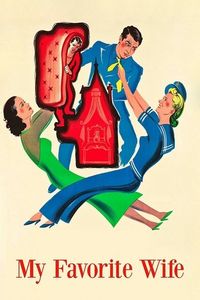
    (On DVD, November 2021) At this point, I’ve seen most of Cary Grant’s post-stardom filmography, and that’s no cause for celebration: it just means that there are fewer and fewer of his films left to appreciate his screen presence and comic timing. Due to some strange rights issues, My Favorite Wife often features on the TCM American schedule but not the Canadian one — as a result, it was one of the last well-known Grant vehicles that I hadn’t seen, and it took some grey-market ingenuity to import an American DVD edition. I’m happy I did — while it’s not a first-tier Grant vehicle, it contains enough good laughs and able demonstrations of Grant’s comic timing to make anyone happy. Its comedy all stems from a simple but ridiculous situation: what if, after getting his missing wife legally declared dead so he can marry another woman, a lawyer saw his first wife walk in perfectly healthy? (Played by Irene Dunne, no less.) It’s the kind of thing that classic Hollywood comedies could easily milk for 90 minutes, and that’s indeed where My Favourite Wife takes us, from misunderstandings and feeble attempts to hide the truth to more heartfelt reunions and a wild second courtroom sequence where no one will blame the judge from being confused. There’s a notable lull toward the end, where (in a fashion typical of many comedies of remarriage) the high energy takes a back seat to a much slower-paced bedroom reconciliation, but that’s not enough to harm the film. Tangentially: My Favorite Wife is often used by queer-cinema commentators to illustrate the matter of the Cary Grant / Randolph Scott relationship (roommates, or more?) and there’s a sequence in there that appears hilarious in bite-sized gifs (read this — all of it)—but it’s even funnier in context given that it’s meant to illustrate Grant’s character taking in Scott’s character as a formidable romantic rival for his first wife’s affections. It adds just a bit more interest in the film for Grant fans and those who read his latest biography.
  • Canadian Pacific (1949)

    (On Cable TV, July 2021) The nice thing about the cultural appropriation debate is that unless you’re a white male Los Angeles-based filmmaker (and even then…), I can guarantee you that there’s at least one movie out there that takes your culture and gets it wrong. Even Canadians, so undistinguishable from Hollywood types as to silently invade their ranks, can point to a rather remarkable body of work from major studios treating Canadian history in weird and inappropriate ways. The Rose-Marie films (especially the first one) remain among the worst of those Hollywood-takes-on-Canada films, but Canadian Pacific does have a loopiness of its own. Never an attempt to create a Canadian western, it’s more like the screenwriter got hold of a children’s Canadian history book and thought it would make a different first act to an otherwise unremarkable western. Never mind the history of the Canadian Pacific Railway — an entire set of Canadian values are quickly thrown overboard as our hero (Randolph Scott) shoots down trappers, “Indians” (no relation with First Nations; all relations to Hollywood racist clichés) and fur monopolists and you’ve got the usual Western tropes playing out north of the border. The lower-cost colour cinematography (in Cinecolor, whose investigation will take you down a rabbit hole of alternative colour systems) does better justice to authentic Canadian landscapes than a black-and-white version would have. Alas, by the time the film gets down to business once it’s done explaining how Canadians are so different from Americans, it quickly becomes a very ordinary western, whose lack of qualities makes cultural appropriation even worse. Canadian Pacific may be worth a few laughs, but those laughs quickly stop once it starts portraying First Nations people as cruel and childish — get that out of here. I do believe that there’s a great movie to be made about how Canada united itself through two contiguous steel tracks — but it’s going to be made in Canada, and it will reflect the values of this nation rather than the dubious ones of another.

  • Ride the High Country (1962)

    Ride the High Country (1962)

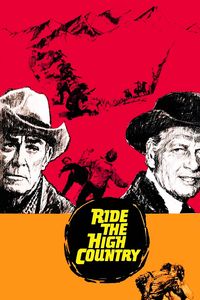
    (On Cable TV, October 2020) If you start watching Ride the High Country and see Sam Peckinpah’s name as a director, you may end up making a few unfortunate presumptions as to how the film is going to go. But seven years before The Wild Bunch made him define his own brand of ultraviolence, Peckinpah was still developing his skills as a filmmaker when he put together Ride the High Country, and while the result does show many of Peckinpah’s later trademarks, it’s also something much closer to traditional westerns. The plot has to do with two aging gunslingers taking on an assignment to transport gold from a miner’s camp back to the bank. But things get more complicated when they encounter a man with a daughter, and trouble follows them all the way to the miner’s camp. If you watch the film based on Peckinpah’s reputation, you will be surprised at some of the over-comedic touches of the film’s first half (complete with amusing musical cues), yet dreading the inevitable descent into violence that is sure to come. But while I’m no big fan of westerns, this one does things slightly differently enough, and well enough, that I found myself gradually taken by the result. By the time a rather dour finale rolls by, the film is actually quite remarkable, and we can understand those who call it Peckinpah’s first success. Former Golden-age Hollywood leading men Joel McCrea and Randolph Scott both get one last role here, with Peckinpah getting an early chance to showcase one of his predominant themes—the end of the wild west. Ride the High Country is both a representative western and an unusual one as well—the result is good enough to be worth a look even for those who don’t regard westerns with any particular affection.

  • Roberta (1935)

    Roberta (1935)

    (On Cable TV, April 2020) In assessing Roberta, it’s useful to be reminded that even if this was the third Fred Astaire and Ginger Rogers film, the pair wasn’t nearly as famous as they’d become the next year with the success of Top Hat. Their roles in the film are important but not dominant: There’s also Randolph Scott and Irene Dunn having nearly as much screentime as the busy plot tries to have two romances going at once. The disappointment continues with the relatively few musical numbers and their impact: While Roberta is professionally produced, the songs aren’t that memorable (although I do like “I won’t dance”) and neither is the choreography. While Astaire and Hermes Pan were getting up to speed, we’re still far away (well, aside from the hand-piano bit) from the high-concept sequences of Astaire films to come. If you’re a fan of those later movies, Roberta feels familiar—not terribly special, but comforting nonetheless. The plot itself is a bit dull, and is largely led by Scott and Dunne—something about an American ex-football player (Scott) inheriting a fashion house in Paris while his friend (Astaire) plays in a band. There are a few good barbs, but the plot gets shoved away quickly when Astaire and Ginger get their dancing shoes and start tap-dancing away: they’re always fun even when Roberta is determined not to give them too much time. But that would quickly change in the following months, and give us the film that ensured their long-lived popularity.