Regina Hall

  • Tijuana Jackson: Purpose Over Prison (2018)

    Tijuana Jackson: Purpose Over Prison (2018)

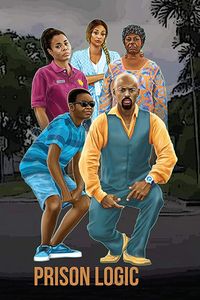
    (On Cable TV, February 2021) I’m perplexed by Tijuana Jackson: Purpose Over Prison, but I suspect that I’m missing a huge chunk of the context that would make the film as funny as it’s intended to be. Nominally the story of an ex-con trying his best to become a life coach, the film seems to be relying on something else as its entry point to the character — there’s apparently a whole series of sketches about the character that I haven’t seen, so that may explain it. But there’s also a social component to the film that I can’t grasp — the film’s portrayal of an ex-con’s attempt to go straight leads to a number of jokes that escaped me, or simply weren’t all that funny in the first place. I wasn’t particularly fond of the found-footage conceit either — it feels old and dated without offering much in terms of payoff, even though Shannon Dang is not bad as the student whose short film becomes more complex by the day. Romany Malco is likable enough in the title role, while Regina Hall does her usual good job as his ex-girlfriend/current parole officer. After a while, the film becomes significantly better — the early throat-clearing is completed, and the film can be free to explore its themes of rehabilitation and life-coach satire, and develop its lived-in atmosphere of how many Americans live near the poverty line with the odds stacked against them. Fortunately, this is a comedy and the ending does wrap things up well enough. Still, I can’t say what I enjoyed Tijuana Jackson a lot — it ends up being watchable, but the nagging feeling of missing about half the context remains annoying throughout.

  • Shaft (2019)

    Shaft (2019)

    (On Cable TV, February 2020) Having seen the original 1970s Shaft not too long ago and the 2000 sequel/remake in theatres, my expectations for this newest instalment were calibrated just right. As much as it may irk some, the best thing about the original movie remains the title song—nearly everything else has been handled much better in other blaxploitation films. The 2000 film was an uninteresting follow up, so how much worse could another reboot be? As it turns out, this latest instalment feels like the most entertaining film of the trilogy. By explicitly setting itself up as a third film in an ongoing once-a-generation series and having both Richard Roundtree and Samuel L. Jackson play older versions of their own characters, this Shaft opens itself up to a new audience while paying a more respectful homage to the previous generations. The film clearly draws upon 2010s scripting techniques by blending comedy with action, adopting a fast pace thanks to director Tim Story and relying a bit too much on established stereotypes even as it decries doing so. Much of the story has to do with the newest, youngest Shaft (played by Jessie T. Usher), son and grandson of previous ones. He’s a data analyst with the FBI, who dislikes guns (while still being pretty good at them, as shown in one of the film’s best scenes) but is forced to team up with his elders in order to resolve the murder of a friend. The story isn’t as important as seeing a twenty-first century Shaft argue about approaches and techniques with his rougher elders, each coming from a slightly different era of blaxploitation. Jackson is particularly funny as a man out of time, but everyone has their chance to shine along the way. Alexandra Shipp makes for a rather lovely companion to the younger Shaft, while Regina Hall also makes an impression as an ex-flame of Jackson’s Shaft. Some of the humour is predictably directed at younger generation clichés, but it all reaches a polished climax high atop a villain’s lair. I liked Shaft quite a bit more than I expected, even though I suspect that it may not age particularly well… but then again neither has its predecessors. Not as much as you’d like to think.

  • Little (2019)

    Little (2019)

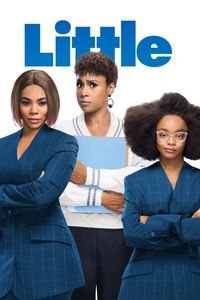
    (On Cable TV, November 2019) Not every movie has to be great to be successful, but it certainly helps if it’s consistent. Little does have quite a few good moments, but almost as many bad ones, accompanied with a side order of several disconnected self-indulgent sequences that don’t do much but let the actors mess around and pad the running time of this comedy to nearly two hours. A somewhat clever take on the body-swap premise, it features a hard-driving tech business executive magically transformed into her own 13-year-old body, and being forced back into school as nobody quite knows how to deal with the sudden appearance of a kid in her own apartment and job. Practically nothing is explained about the transformation except for narrative logic in how to ensure the protagonist’s redemption arc. Unfortunately, there’s a difference between not explaining the premise and cheating reality along the way—Little can be savvy and cutting in one scene, then lazy and cheap in the next. Of course, it’s no use wondering about the outcome of the film—that’s baked in from the start and the best thing to do along the way is to appreciate the performances. Here, at least, we’re on more familiar territory: Regina Hall makes a brief bookend impression as the adult protagonist, while Marsai Martin is a bit of a revelation in a role begging to be described as precocious, embodying the actions and dialogue of an older woman. Meanwhile, Issa Rae also does well in expanding the limits of the traditional “beleaguered personal assistant” role. The performances do much to compensate from some weak plot choices along the way, as the emotional growth of the lead character is wobbly and doesn’t quite reach the satisfaction level that could be expected.

  • Girls Trip (2017)

    Girls Trip (2017)

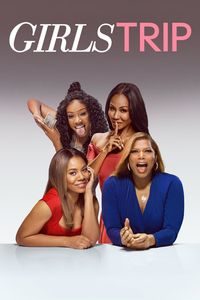
    (On Cable TV, April 2018) The R-rated women-behaving-badly subgenre is now well defined: It may have started its latest streak with Bridesmaids, but there’s been one or two of them per year since then (Bachelorette, Bad Moms, Rough Night, etc.) and the sub-genre is becoming less and less remarkable with every new example. And yet, properly handled, they can allow female comedians to show what they can do once they’re unleashed. So it is that the single best reason to watch Girls Trip is Tiffany Haddish, taking a big character and making her feel even bigger. (Documentary accounts of Haddish’s personality suggest that she was a perfect fit for the role.)  Compared to her, even seasoned performers such as Regina Hall, Queen Latifah and Jada Pinkett Smith feel ordinary. Still, Girls Trip is decently entertaining—while it’s easy to quibble about its most outrageous moments, its wall-to-wall bad language, its occasionally repellent attitude, it does feel free to try anything and everything, getting a few chuckles along the way. It’s also difficult to appreciate, from my privileged white-guy perspective, how vital such a film must feel to a particular audience. It’s interesting to note a few moments here that would not attempted had the movie featured a cast of a different ethnicity—I’m specifically thinking about a prayer scene that feels organic even to the outrageous characters. So carry on, Girls Trip, for bringing something less frequently seen to the big screen, becoming a surprise box office hit and making Haddish an Oscar-presenting comedy superstar along the way. When everybody gets their own big-screen wish-fulfillment comedy, everybody wins.

  • Barbershop: The Next Cut (2016)

    Barbershop: The Next Cut (2016)

    (Video on Demand, July 2016) It’s not that much of a surprise nor a contradiction if Barbershop: The Next Cut, fourth movie in the Barbershop universe, ends up tackling issues of community and gang violence. While the series’ best moments have almost always been the comic banter between the characters, its most satisfying entries (I’m not looking at you, Beauty Shop) have also highlighted the central place of the barber shop as a community hub, a forum to air out and resolve differences peacefully and a voluntary haven distinct from the outside world. To see this fourth film tackle gang violence in South Chicago and the choice between taking a stand or walking away feels appropriate. More entertainingly, the integrated barbershop is a step forward for the series, showing and profiting from the male and female perspective. Even the belated nature of this instalment, coming ten years after its predecessor, works to its advantage as things have or have not changed in the interim for both the characters and their world. Writer/star Ice Cube knows how to blend the inconsequential with the meaningful, and Barbershop: The Next Cut is as good as any pop-culture indicator of the state of the black community at the end of the Obama administration. (Guess who shows up after the credits roll?) As far as acting is concerned, there is a lot to like here: Ice Cube, Cedric the Entertainer and Regina Hall are up to their usual standards, while Eve, Common and Nicki Minaj both impress with natural performances. The result is an enjoyable blend of comedy, drama and social criticism, carefully calculated to balance each other. Sometimes, the most interesting commentary doesn’t come from loudspeakers, and Barbershop: The Next Cut is able to deliver some good material while looking as if it’s talking about nothing particularly important.

  • About Last Night (2014)

    About Last Night (2014)

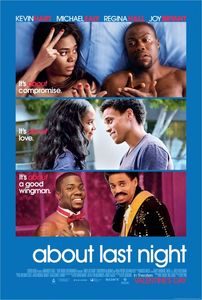
    (On Cable TV, March 2015)  I wasn’t expecting much from this low-profile romantic comedy (a remake of a 1986 film based on a 1974 David Mamet play), but I should have suspected otherwise given that it stars the enormously likable Kevin Hart, Regina Hall, Michael Ealy and Joy Bryant.  Set in downtown Los Angeles, About Last Time details a year in the life of four young people, during which they meet, fall in love, break up, reconcile and change careers.  Almost immediately charming, it’s a film built on dialogues and performances, and all four main actors truly knock it out of the park, with particular mentions for Hart and Hall, both of whom play the uninhibited comic relief couple to the more conventional Ealy and Bryant.  (Elsewhere in the film, Paula Patton has another great but too-short turn as a romantic antagonist.)  While About Last Night isn’t particularly original, it’s slickly-made, modern, almost constantly funny and features intensely likable actors.  It’s hard to ask for much more from a romantic comedy

  • Scary Movie 4 (2006)

    Scary Movie 4 (2006)

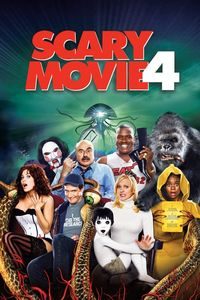
    (In theaters, April 2006) Roughly similar in tone to the previous Scary Movie 3, this one is a comedy grab-bag that chiefly goes after (in decreasing order of importance) War Of The Worlds, The Grudge and The Village, with other assorted pokes and tweaks at other films (Saw, Million Dollar Baby and Brokeback Mountain) and pop-culture icons. Scary Movie 4‘s biggest problem is that it’s quite happy to pastiche other films, but seldom goes for the jugular: Movie critics had funnier jabs at War Of The Worlds during the summer of 2005 than the parody ever manages to put together. (The constantly-screaming little girl shtick isn’t even mocked.) Scary Movie 4, alas, is almost completely bloodless in its parodies: it recreates the original with some goofiness but seldom more. (This being said, the production values are often impressive, especially considering the short shooting schedule) Even the rare political gags only make us wish for much more. It’s no surprise, then, if some of the film’s cleverest moments stand completely apart from previous films. As for the actors, well Anna Faris is still cute in an increasingly irritating clueless shtick, while Craig Bierko does well with the thankless task of parodying Tom Cruise. Still, it’s Regina Hall who steals the show as the insatiable Brenda: her arrival in the movie kicks it up another notch (plus, doesn’t she look unbelievably gorgeous in founder’s-era clothing?) Yes, Scary Movie 4 will make you laugh. Dumb, cheap, easy laughs but still; consider it your reward for slogging through endless mainstream horror films.

    (Second Viewing, On Cable TV, October 2021) One of the side-benefits of my Scary Movie series marathon is a renewed appreciation of how the series is broken down into three distinct phases, and how closely related are the films of those phases. Phase one is the Wayans Brothers phase—closely following genre protocols, often very funny but just as frequently too gross or too dumb for any laughs. Phase Two, the Zucker phase, is more controlled in tone but deliberately chaotic in plot, with fewer gross-out gags but far more comic violence that quickly gets old. Scary Movie 4 is very much of a piece with its predecessor, blending together the plots of very different films in order to create a clothesline on which to hang smaller film-specific parodies. There’s an effort to go beyond simple re-creation to create a more comic tone, and the number of known names in the cast is proof enough of the budget that went into the thing. Anna Faris makes a final appearance in the series (Phase Three of the series is the Faris-less one, which doesn’t help anything) and once again bears the brunt of much of the gags, but Regina Hall sharply improves the film once she joins in mid-plot. (She does look real nice playing a nymphomaniac in 18th century garb.)  Craig Bierko does well in a role asking him to spoof Tom Cruise, while various smaller roles are held by Leslie Nielsen, Bill Pullman, a pre-stardom Kevin Hart and many others —alas, Chris Elliot is once again a laugh-inhibitor whenever he shows up on-screen. In the end, Scary Movie 4 is not a great spoof comedy, but it’s better than many others (including Scary Movie 2) and works reasonably well when the filmmakers can keep their worst tendencies in check (their fondness for hitting women and children aside, at least they don’t include an excruciatingly long door unlocking/opening sequence). It’s more or less the end of the series, though—Scary Movie 5 is a different, almost unrelated beast, and another other sharp turn lower for a series that doesn’t have a lot of room to spare before hitting the bottom of the barrel.

  • Scary Movie 3 (2003)

    Scary Movie 3 (2003)

    (In theaters, October 2003) The good news are that most of the the overly gross moments of the first two films of the series have been removed; what remains may not be too tasteful (decapitations, paedophilia and dismemberment are featured here and there) but at least it’s more palatable than before. Veteran spoof director David Zucker overuses slapstick over more amusing silliness (witness the “seven days” exchange), but Scary Movie 3 still feels a lot more respectable for it. Alas, the bad news are that the comedic highlights of the first two films have also been filed off, with an overall result that is a lot more tepid than it should be. The film floats from one grin to another, with few belly-laughs in between. The visual and cinematographic re-creation of the parodies (Signs, The Ring, 8 Mile, etc) is irreproachable, but the film often does next to nothing with the material it’s given. Leslie Nielsen, continues to be obnoxious with his usual shtick, though I wonder how many will get the joke of his last appearance in the film. All in all, a rather mixed effort that feels somewhat lazy. Not the bottom of the barrel (and certainly a step up from the past five year’s worth of spoof comedies), but still far away from the genre’s best efforts. Catch it on TV late at night.

    (Second Viewing, On Cable TV, October 2021) No one in their right mind will call Scary Movie 3 a good movie, or even a particularly fine example of a spoof: It’s loose, frequently witless and overly fond of a specific repetitive form of physical violence comedy. But at least it’s a step up from the second film: funnier, cleverer and far more even as well. Much of this can probably be attributed to a change in writers and directors, going from the inconsistent Wayan Brothers to spoof comedy veteran David Zucker (of ZAZ fame). The pacing is slightly better, the jokes aren’t as milked dry, and the film’s comic instincts aren’t as dumbfounding as previous films in the series. On the other hand, the occasional grossness, frequent vulgarity and constant physical violence used a punchline quickly get tiresome. Still, the main plotline, lifting equally from Signs and The Ring (among other movies added for flavour), is more chaotic and interesting. Anna Faris is back in blonde, with some surprisingly big names in cameos from Charlie Sheen to Leslie Nielsen. Regina Hall disappears from the film too soon, but there are so many brief roles from various familiar faces (including an early role for Kevin Hart) that there is a lot to see anyway. Scary Movie 3 is not a great spoof, but it is watchable and doesn’t have the lengthy laugh-free, slightly repulsive moments of its predecessor. As I continue my Scary Movie five-night marathon, I’m reassured that the fourth film is (if I recall correctly) more or less of equal quality than the third one.

  • Scary Movie 2 (2001)

    Scary Movie 2 (2001)

    (On DVD, October 2002) The first Scary Movie film was a genuinely amusing satire marred by gratuitous gross-out gags. This one is a poor attempt at a comedy marred by even more gratuitous gross-out gags. It’s not that you’re not grinning (to be fair, the sequences referring to The Exorcist, Mission: Impossible 2 and Charlie’s Angels are worth a discount rental alone if you’re a fan of the original films), it’s that you feel quite guilty for doing so. And whereas the prequel’s gross-out gags had some amusing value, the ones in here are simply mystifying: did someone truly believe, at any moment during the production, that these would be funny? Particularly annoying is Chris Elliot’s character, whose antics are simply perplexing. The rest of the cast is so-so, with Anna Faris doing her best to be as bland as possible and Tim Curry shamelessly collecting a pay-check. (James Woods, however, is as good as usual in his quasi-cameo.) Big fans of satiric comedies might enjoy (“Let’s fight Mad Cow style! Moo! Mutherf…”), but I’d recommend Shriek If You Know What I Did Last Friday The 13th… well before this one. The DVD contains some forty-odd minutes of deleted and alternate scenes, and it’s telling that they are roughly of the same quality than the rest of the film.

    (Second Viewing, On Cable TV, October 2021) Of all the Scary Movie entries in my pre-Halloween series marathon, Scary Movie 2 was the one I was least looking forward to—I recalled it as a dumb, unfunny, laborious watch. The film’s rushed production history explains a lot: Spurred by the surprise success of the first film, Miramax set up its sequel to be in theatres exactly one year after the debut of its predecessor. In other words, the entire thing has to be written, produced, shot and post-produced in a matter of months—a risky pace even for skilled professionals, and a downright hopeless one for a spoof comedy with extensive writing and post-production work. The result, though, is not as bad as I feared—tasteless and humourless in spots, sure, but with more effective jokes than I remembered as well. It certainly helps to go in with low aspirations and a few alarm signals: Whenever I saw Chris Elliot’s character walk on screen, for instance, I knew that the next moments would be unbearable. I still like the premise of the story, but, of course, I’m a gigantic fan of any “people spend the night in a haunted house” plot. Perhaps the best comic moments occur whenever the film stops with the gross-outs, remembers that there’s more to a spoof than re-creation, and goes for the unexpected. The film’s biggest chuckles (calling them laughs would go too far) take place when the characters get the best out of their supernatural aggressors. It somewhat compensates for the ludicrous amount of physical violence directed at Anna Faris throughout the film. She’s game for everything, but I still prefer Regina Hall’s comic timing. (Perhaps the most timeless pieces of comedy in the first two Scary Movies come from the Wayan Brothers going for acerbic racial commentary which, regrettably, hasn’t dated all that much.)  Still, trying to find nice things to say about better-than-remembered Scary Movie 2 is tough: It doesn’t waste James Woods, but it mishandles Tim Curry, suffers from some terribly unfunny sequences, doesn’t manage to get any charm out of substandard special effects, and constantly demonstrates how it was rushed from conception to delivery. The result is better than expected, but still rather dismal—Ironically, the film would be much better if it was shorter: Get rid of Elliot, most of David Cross’ character, much of the overlong joke-milking (especially when it’s not funny to begin with) and you’d end up with a relatively funnier film, albeit one that wouldn’t qualify for feature-length status. Still, that could be interesting. At least new next few Scary Movie entries in my marathon represent, if I recall correctly, a step up.
  • Scary Movie (2000)

    Scary Movie (2000)

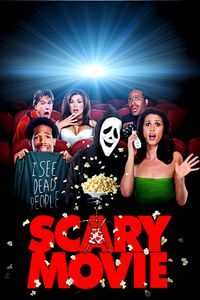
    (In theaters, July 2000) If ever there was a genre which deserved its satiric roasting, it’s the late-nineties “teen slasher horror” craze, which -for all its hip self-awareness- wasn’t all that much better than its early-eighties predecessors. Scary Movie takes up the task with gusto, and despite an annoying intrusion of gross-out comedy, the film is oodles better than most satiric comedies have been in years. The script is filled with genuinely funny material, and most parodies are on-target. I’d have cut about five minutes of unnecessary vulgar material (which gets old real quickly, and ends up annoying rather than amusing), but the rest works well. Wait for the TV network version.

    (Second Viewing, October 2021) After the past few years’ Friday the 13th and Halloween end-of-October horror marathons, I thought I’d do something lighter and have a second look at the five Scary Movie comedies back-to-back. Revisiting them twenty years later is bound to be strange—as parodies, they reference pieces of pop culture that are no longer particularly current—I may remember them, but ever-so-faintly. Blending Scream and I Know What You Did Last Summer (the first one is still a reference, the second one not so much), the script goes in full spoof mode with re-creations going into jokes, background gags (alas, not enough of them) and references that don’t always make sense. The lack of fluidity of the result is more apparent, as is the way some material is jammed in the film without grace. Written and directed by the Wayan Brothers, Scary Movie does not play in subtlety—while it occasionally remains funny, it lacks trust in the audience’s ability to grasp the jokes quickly. If you belong to the school of thought that comedy is surprise, nothing kills a gag faster than having it being so drawn out that you can see it coming. And while it may be strange to complain about the violence and sexual content in an R-rated spoof on R-rated horror films, there are definitely a few instances where the film is more gross than funny, the dial having been set just a bit too high for comfort. While never tasteful, some of the material (about gay or trans characters, in particular) now feels even more dubious. Still, compared to many later spoof comedies (and in particular the repellent Freidman/Seitzer “spoofs” of the 2000s, their credits here as writers heralding the worst) Scary Movie is actually not too bad—it has low but sufficient production values, a script that tells a story, and jokes that don’t stop at being mere recreations. I smiled a few times, maybe even chuckled more often than I expected going in. It’s interesting to see, twenty years later, what happened to the cast: Anna Faris (as a brunette?!?) did well for herself as a comedian, while Regina Hall achieved some dramatic respectability later on. Lochlyn Munroe never quite had the career anticipated for him, although he’s working steadily on lower-budget productions—which is more that can be said for much of the cast. While I had my doubts about the value of revisiting the Scary Movie series, I’m now set straight: It’s not a wise project, but will have its moments. Although I dread that Scary Movie 2 is up next—I recall it as being the worst of the bunch.