Rex Harrison

  • Midnight Lace (1960)

    Midnight Lace (1960)

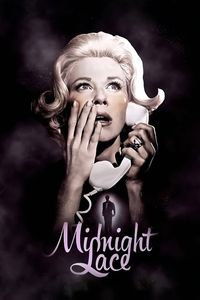
    (On Cable TV, March 2021) If you’re looking for the least Doris-Dayish film ever made by Doris Day, you probably don’t have to look much farther away than Midnight Lace. In some ways, it’s an incredibly familiar kind of movie: one where the beautiful lead actress is threatened by a mysterious man, and has to face both incredulity and betrayal in order to resolve the threat to herself. But here’s the thing: here, the damsel in distress is played by Doris Day, whose filmography does not include any other thriller of the kind. (Yes, she played in Hitchcock movies, but her role in The Man Who Knew Too Much really wasn’t in the same category.)  If you’re in a mood to hear Day screaming and whimpering in fear (a disturbing idea in its own right), this is the film for you, as her mysterious assailant employs everything in his power to frighten her beyond reason. The plot won’t be particularly original for anyone who’s seen more than two of those thrillers — the red herrings get a lot of work here to distract us from the fairly obvious conclusion. Still, it’s a change of pace: I doubt that the film would be nearly as remembered today if it had starred someone other than Day in the lead role — although seeing Rex Harrison as her husband and a secondary role for an elderly Myrna Loy aren’t to be discounted as bonus features. Day herself didn’t like the experience of shooting the film, in which she had a bit of an on-set breakdown — she never starred in another thriller again.
  • Blithe Spirit (1945)

    Blithe Spirit (1945)

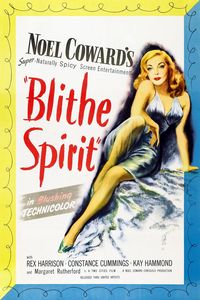
    (On Cable TV, February 2021) Surprisingly enough, the 1940s offer a substantial list of supernatural romantic comedies. Beyond the obvious picks of the Topper series, The Ghost and Mrs. Muir and I Married a Witch, here’s Blithe Spirit to show what happens when a séance brings back a man’s first wife from the dead and he has to explain her presence to his second wife. The pedigree of the film is impeccable: Directed by David Lean before he became an epic filmmaker, scripted from a play by producer Noël Coward and featuring a young Rex Harrison in the lead role, the film also showcases British filmmaking at the close of WW2 with decent colour cinematography and Academy Award-winning special effects. You can see the basic elements of an American 1930s screwball comedy filtered through wartime British sensibilities, and the combination does have its pleasant quirks. Good biting dialogue compensates for the somewhat ordinary direction, although one suspects that the requirements of the special effects may have had an impact on limiting camera movements when a ghost shows up on-screen. The film does suffer from a bit of a slow start, as it puts together its fantastical elements for an audience less used to supernatural devices, but the film becomes sharply more interesting once the undead make their appearance, and it builds to an impressively dark (but remarkably funny) ending. Those who like a specific, somewhat stereotypical strain of British comedy will appreciate the result even more — in its closing moments, Blithe Spirit anticipates the arrival of the Ealing Studios films such as The Ladykillers and Kind Hearts and Coronets in mixing dark topics and humour. It’s a fun watch even today, which is what happens when still-credible special effects are bolstered by great dialogue.

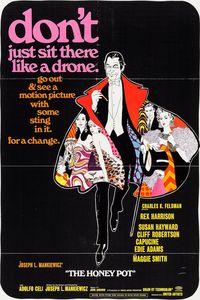
  • The Honey Pot (1967)

    The Honey Pot (1967)

    (On Cable TV, January 2021) I’m rarely disappointed by a Joseph L. Mankiewicz film, and The Honey Pot is no exception. It’s clearly a latter-day work by a filmmaker who understands the business inside and out, so deftly does it play with conventions and delivers something that escapes pure formula. It constantly (but smoothly) shifts tone and rhythm in ways that would seem doomed in theory, but works out well on-screen. It starts with a lengthy sequence during which an out-of-work actor is hired by a rich man for a special kind of acting job. Then things change as three past flames arrive, and murder interrupts everyone’s plans. Mankiewicz changes protagonist, plays with voice-overs (all the way to giving a voice to a dead character), messes with story structure and can’t help but include some really good quotable material in the middle of it all. If you think that you’ve got a handle on the story, you’ll keep changing your mind. Rex Harrison turns in a good performance as an aged playboy calling back his most significant past flames, while Cliff Robertson isn’t bad as the one we’re supposed to cheer for (well, maybe)—there’s a Jason Bateman-like quality to his performance that would almost justify a remake. If The Honey Pot has a flaw, it’s that it’s very obviously a film that relies on being different—the behaviour of the characters is clearly manipulated by the demands of the script, the overly cute references to other material or the artificial conventions of romantic comedies. The last few minutes of the film rely on a wrinkle of inheritance law that clearly belongs to legal fiction. But, somehow, it works. Even the damp dark depressing setting of overcast Venice (done 1970s-style in what looks like an un-restored print, which is even drearier than reality) can’t quite sap the narrative inventiveness of the result. I strongly suspect that The Honey Pot won’t sit well with viewers simply looking for something simple to watch. But it’s a bit of a gift to jaded audiences looking for someone intent on colouring outside the lines.

  • The Yellow Rolls-Royce (1964)

    The Yellow Rolls-Royce (1964)

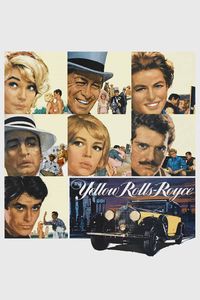
    (On Cable TV, September 2020) There are two ways of making a movie about an inanimate object, and The Yellow Rolls-Royce has picked the worst one. The best way is to depict the object as a character that has a beginning and an end, with several related trials along the way—it gets purchased, used, damaged, repaired, liked, lost, etc. The second way is far looser and consists in loosely stringing a few unconnected stories that all happen to feature the object. The Yellow Rolls-Royce would have been a lovely excuse for a multi-decade story about a car. Unfortunately, it ends up being the common thread between unconnected stories, taking us from the English aristocracy to a vacationing mobster and his moll, to revolutionaries in Nazi-occupied Yugoslavia. There is very little connective tissue nor progression between the three stories, which appears to be excuses to get as many stars in the film. To be fair, the cast is quite good: Rex Harrison and Jeanne Moreau get the ball rolling, as the Yellow Rolls-Royce is purchased by a pompous English aristocrat as a birthday gift for his wife. George C. Scott, Shirley MacLaine and Alain Delon push the ball even further in Venice, as romantic shenanigans complicate a summer holiday. Finally, the film hits its stride alongside Ingrid Bergman and Omar Sharif as she, a rich American widow, helps him, a resistance fighter, cross a national border and fight the Nazis. The Yellow Rolls-Royce can be worth a look if you’re a fan of these actors, or if you choose to focus on the third story and the very beginning of the first. Otherwise, it does feel like a disappointing mishandling of a potent premise. Too bad—I’m sure there’s still a heck of a movie to be told about the life of a car.

  • Doctor Dolittle (1967)

    Doctor Dolittle (1967)

    (On Cable TV, January 2019) The original 1967 Doctor Dolittle is a landmark in movie history for all the wrong reasons. It was a big expansive musical at a time when American cinema was shifting away from such films, it had a famously troubled production with a fuzzy script and a temperamental star; it was such a bomb that it nearly took down its producing studio 20th Century Fox; and its studio-bought nomination as Best Picture at the 1968 Academy Awards is risible considering that it ran against such acclaimed classics as In the Heat of the Night, Bonnie and Clyde, The Graduate and Guess Who’s Coming to Dinner. [May 2019: For more on the making of Doctor Dolittle and the way 1967 changed movies forever, I heartily recommend Mark Harris’s Pictures at a Revolution]. As a result, the film itself feels much smaller than its own reputation. It’s certainly not the awful movie that its troubled production history would suggest. A lighthearted adventure/comedy/musical featuring a protagonist with the ability to speak to animals and a fantastic menagerie of imaginary beasts, Doctor Dolittle can be watched without undue hardship. It benefits from an unflappable performance by Rex Harrison, imaginative creations, a large budget that shows up on-screen, a pleasant atmosphere and numerous side-gag one-liners. The scenery changes often (see: large budget) and the special effects aren’t as dated as one would expect. Animal-lovers will find it more amusing than most (I saw much of the movie with a cat on my lap). For all of the flak it took, the film left enough of an impression to be remade once (with a second one coming in early 2020) and gain a bit of a nostalgic following. Still, watching today, Doctor Dolittle remains disappointing. The imaginary animals aren’t all endearing, the tunes aren’t particularly catchy and the conclusion seems rushed after the uneven pacing of the rest of the film. There are clear signs that the film was harmed by its overly narrow focus on Harrison, and the entire thing feels underwhelming considering the production’s lavish means. “Better than expected” is no substitute for a film enjoyable on its own, and perhaps the best thing one can say about Doctor Dolittle is that it remains essential viewing for understanding why Hollywood had to change by the late 1960s—it exemplifies the worst of the old studio system, and the limits of what it could do at its best.

  • The Ghost and Mrs. Muir (1947)

    The Ghost and Mrs. Muir (1947)

    (On Cable TV, April 2018) I think that what I enjoy most out of my data-driven method to watching classic cinema is approaching movies completely blind other than knowing that “a lot of people have watched this.”  That’s how I end up watching films that may not sound interesting, but end up being surprisingly enjoyable. Hence The Ghost and Mrs. Muir, a film that sounds terrible from a simple premise (“Widower moves into a seaside house, ends up forming a relationship with the previous owner’s ghost”) but ends up being unexpectedly captivating, and even somewhat fresh even seventy years later. The magic of the film isn’t in its premise but in its execution, with the lovely Gene Tierney turning in an impeccable performance as a widower looking for a fresh life on her own, and especially Rex Harrison as a crusty sea captain having lost little of his lust for life even in death. The first unremarkable few minutes are competently made, but the film takes a life of its own as soon as the ghost makes his appearance. Harrison’s near-parodic take on a sea captain is charming, and the film seamlessly shifts gear from suspense drama to romantic comedy, complete with rather witty dialogue. Then there’s another shift as a live romantic interest shows up, setting up a dramatic triangle that provides much of the film’s third quarter. Then it’s off to another seamless shift into romantic drama, with a last act that takes surprising leaps forward in time, and completes with an incredibly satisfying conclusion. The Ghost and Mrs. Muir has too many rough edges to be considered an all-time classic (some of the dialogue is pandering, and many of the dramatic twists are implausible at best—the last act is particularly problematic), but it’s highly enjoyable and has more than a few pleasant surprises in store for modern viewers. Charming and surprising, it has aged admirably well and represents, even today, an exemplary example of 1940s Hollywood cinema.

  • My Fair Lady (1964)

    My Fair Lady (1964)

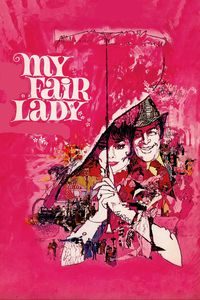
    (On Cable TV, December 2017) My issues with big Hollywood musicals (especially in their classic pre-seventies period) are simple. They feel interminable, often because (being frequently adapted from endless Broadway musicals) they take narrative breaks during their songs. The song starts and unless it’s a toe-tapper, it’s just as possible to go get a snack and come back in time for the conclusion of the song, at which point nothing will have changed. When the musical is good, it usually gets better toward the end as there is (finally!) some dramatic movement. So it is that much of My Fair Lady is underwhelming, especially at first. The Pygmalion plot being presented piece by piece, we frequently have to stop in order to let the characters have their say and present themselves. Audrey Hepburn is cuteness personified as a coarse commoner being groomed into becoming a passable member of London’s high society, while Rex Harrison is his own brand of fun as a highly self-confident phonetics professor. The film’s big insight that manners make the woman is cogently put, but it does take a while to get there. The film does get better midway through, as the comedy of manners training finally takes off and the female lead is tested in her introduction to high society. The subplot about her family does drag, and My Fair Lady becomes less interesting the more it remembers that it had to deliver a romance in addition to the class comedy. But ultimately, the charm of the lead actors eventually wins out on the way to a predictable conclusion. The film can be watched today and only feel slightly stuffy—the period setting does help a lot in breaking the film out of its production date. While I’m reasonably satisfied with the end result, I still wish it would have been shorter.