Richard Burton

  • Equus (1977)

    (On Cablet TV, August 2021) I’m a philistine when it comes to modern theatre, but even I was dimly aware of Equus’s reputation, largely because there seems to be a scandal whenever it’s revived, and that one of the last spats involved an attempt by Daniel Radcliffe to get away from his earlier teenage persona. If nothing else, the film adaptation would let me experience some of what the fuss was about, and help complete my filmography for both Sidney Lumet and Richard Burton. The opening is really quite good, as Burton sombrely frames the story in apocalyptic terms from the back of his darkened office. Then there’s an immediate narrative hook in how our psychologist protagonist (Burton, appropriately rumpled) is asked by an old friend to take on a most unusual case: a young man who abruptly blinded six horses. Getting to the heart of mystery will, obviously, take us deep in repressed perversion, Freudian symbolism and out-there psychological problems. The mystery is matched by the protagonist’s own descent into issues of his own. Like many theatrical adaptations, Equus is very talky and arguably too long for the film format. It also, crucially, literalizes many of the metaphors and stage tricks employed during theatrical productions that can’t bring real horses onstage. You can feel some of the symbolic power of the theatrical play leeched away by the realism of the film adaptation, but enough of it remains to get the point across. Burton got an Oscar nomination for the role, and so did Peter Firth for his intense performance as a troubled young man. There’s an interesting footnote in finding out that this very respectable film was a product of the infamous Tax Shelter years of Canadian cinema, in which many very bad movies (and a few surprisingly good ones) emerged from federal fiscal policy. As for Equus itself, it’s curiously respectable even after taking so many risks for a delicately evocative source material. It’s blunt in its psychological drama, but then again — it’s about a young man blinding horses in the throes of psychosexual trauma, so it has to go big.
  • The Spy Who Came in from the Cold (1965)

    The Spy Who Came in from the Cold (1965)

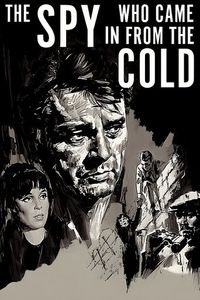
    (Criterion Streaming, August 2021) I used to dislike John Le Carré’s stories when I was younger, but I’m apparently somehow growing up because I have enjoyed his movie adaptations a lot more in the past decade or so, and The Spy Who Came in from the Cold goes join Tinker Tailor Soldier Spy and The Constant Gardener in the big list of great spy movies. Newcomers should know that Le Carré isn’t writing James Bond escapism — his perspective on the spy business (as a former practitioner) is jaded, wary, even exasperated. He often talks contemptuously about the “little grey men” of the secret service as bureaucrats with delusions of heroism in a sordid business that means far less than everyone thinks. This world-weariness is on full display in The Spy Who Came in from the Cold, a film adapted from his breakout novel that now plays as a brutish throwback to the Cold War era. Richard Burton is utterly convincing as a rumpled alcoholic asked to play double agent in “defecting” to the Soviets. That would be a fascinating enough premise, but it turns out that Le Carré has far more devious twists up his sleeves, and as the film quietly picks up momentum, it all builds to a great (if grim) conclusion. Call it spy fiction for adults, maybe: there’s not a single power fantasy in sight, except perhaps for the protagonist’s last remaining delusions. Martin Ritt directs with a matter-of-fact tone well-suited to the film, with sober black-and-white cinematography that’s quite appropriate to the subject matter. It’s for everyone — indeed, you have to remember that The Spy Who Came in from the Cold came out at the height of Bondmania, with four Bond films in four years to launch the series and plenty of imitators looking to cash in on the trend. This offered a welcome counter-argument, and it has aged remarkably well as a period piece. Burton even delivers, three-quarter into the film, a remarkable rant on “seedy squalid bastards” that still acts as a powerful warning against exactly the kind of spy fiction that we still see too often.

  • The Taming of the Shrew (1967)

    The Taming of the Shrew (1967)

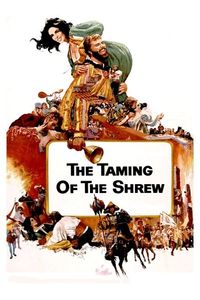
    (On Cable TV, August 2021) I’m reliably not the best audience for Shakespeare movie adaptations, and The Taming of the Shrew is an even rockier prospect given its theme of female subjugation (although the more you look, the less this stays true). But there are a few good times to be had in the 1968 Franco Zeffirelli adaptation of it, largely because it happens to feature Elizabeth Taylor and Richard Burton in the lead roles. At the time, both were the best-known couple on the planet: both exceptional actors, having begun their relationship in scandalous circumstances and often playing opposite each other in films. In here, Burton plays an uncultured lord who comes to town and sets off to tame the headstrong woman played by Taylor. Perhaps the best moments of the film are those early ones when we see the extent of her uncontrollable nature, furiously berating those around her and throwing things. Despite the doubly-dated nature of a Shakespearian play executed in mid-1960s style, there’s an unnerving contemporary quality to the loutish discourse among the male characters as they discuss their designs on the female characters. It builds up to a conclusion that plays ironically, with a speech on submissiveness undermined by a dramatic exit and a chase. Director Zeffirelli keeps things generally accessible for modern audiences, but it’s really Burton and Taylor (plus Michael York in a supporting role) who get our interest.

  • The Comedians (1967)

    The Comedians (1967)

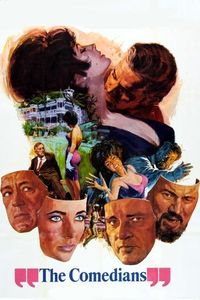
    (On Cable TV, August 2021) To answer an obvious question: No, The Comedians is not a comedy. It’s really at the other end of the scale, since it’s a brutally convincing portrayal of Haiti under the murderous Duvalier regime, with its unrestrained tonton macoutes enabling a reign of terror over the island. Like many French Canadians, I have an above-average awareness and affection for Haiti, and wasn’t expecting a 1960s American film to be so effective into portraying a regime of terror that endured well into the 1980s, overlapping with my childhood memories of then-current events. Much of the darkness of the film clearly comes from Graham Greene’s original novel, writing squarely in his usual “white man goes to a poorer country; terrible things happen” mode. This time, the white man is portrayed by Richard Burton, with then-wife Elizabeth Taylor playing his married mistress. The plot is a downbeat mixture of British operatives, American businessmen, Haitian oppressors, diplomatic personnel and homegrown resistance. It really, truly, definitely does not end well. Still, there’s quite a bit to like here: Burton plays world-weariness like few others and he shares a few good sequences with Taylor. Alec Guinness brings some dark comedy to the cast, with Peter Ustinov also contributing some flair to a supporting role. Some black American actors of the time, such as James Earl Jones and Cicely Tyson, also get supporting parts due to the setting of the film. Downbeat tone aside, The Comedians suffers most in its pacing — at a punishing 160 minutes, it’s too scattered, too leisurely and too inconsistent as well to be truly effective. Probably too faithfully to its source (Green adapted his own novel without concision), its lack of concision does its topic matter no favours. I still found it interesting, largely for Burton and the portrayal of Haiti (even if filmed in now-Benin), but I can think of several ways in which the result could have been better.

  • The V.I.P.s (1963)

    The V.I.P.s (1963)

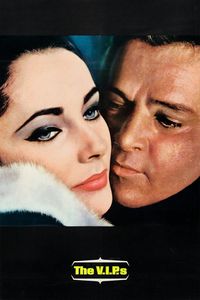
    (On Cable TV, May 2021) In the end, I expected too much from The V.I.P.s. Admittedly, it’s easy to be seduced by the all-star cast and the simple premise: As fog envelops London Airport and prevents departures, an ensemble cast of characters has a last chance to resolve their problems. How can you resist a cast headlined by Elizabeth Taylor, Richard Burton, Orson Welles, Maggie Smith, Rod Taylor, Louis Jourdan and many others? But in the execution, the film falls flat — the rhythm is not a match with the sense of urgency that the characters are supposed to feel, the subplots scatter, the drama doesn’t build up and the pieces don’t come together to make something more than a collection of subplots. (Had they added a mad bomber à la Airport, mayyybe we’d have something to pull the strings together.)  The characters aren’t the only ones stuck here — viewers may tap their feet often during the nearly two-hour running time. This being said, it’s not a complete waste of time either — the accumulation of familiar actors has something interesting, and there is at least a minimum of drama going on, even disguised under British restraint. It does, if nothing else, offer the chance to hang out in an elite airline boarding lounge in the early 1960s, which is not a bad privilege. But even that may outstay its welcome in the end.

  • The Sandpiper (1965)

    The Sandpiper (1965)

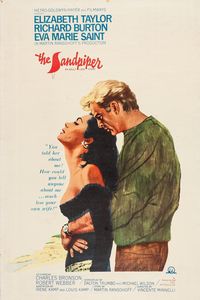
    (On Cable TV, April 2021) As far as I can determine, The Sandpiper is an average drama whose claim to fame comes from the on-screen romance between then-megastars Richard Burton and Elizabeth Taylor. As a drawing card, it’s not inconsiderable. They weren’t known as one of the most famous couples of the 1960s for no reason — both were sex symbols, box-office draws, and their union came from affairs leading to considerable tabloid gossip. They also co-starred in eleven films at various stages of their ten-plus-two years of marriage. The Sandpiper is the third of their pictures, the first one they shot as a married couple and very much focused on adultery — one can imagine how well that sold back then. Filmed in colour, largely on location in Big Sur, it features Burton as a strait-laced headmaster and Taylor as a free-spirited artist. You can guess where this is going, although the conclusion is suitably wistful. Decades later, and taking in the Taylor/Burton romance in its totality, there’s no denying that The Sandpiper has since lost much of the appeal it must have had at the time. We’re left with a well-executed romantic drama — nothing too exciting, but interesting in its own way for people who respond to such stories.

  • The Night of the Iguana (1964)

    The Night of the Iguana (1964)

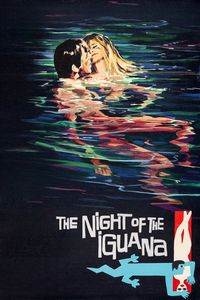
    (On Cable TV, April 2021) I wasn’t expecting much from The Night of the Iguana (what a dull title!)—but from the opening moments, in which a priest (Richard Burton) completely loses it in front of his congregation, the film gets more and more interesting. Once past the prologue, we find ourselves in Puerto Vallarta, alongside the disgraced priest now acting as a tour guide for a busload of tourists. The film kicks in high gear once our protagonist mechanically strands the bus near a small hotel run by an old acquaintance — and the tourists aren’t happy despite his manic explanation that this is simply the best vacation spot around. But the real reason to watch the film is obvious as soon as we enter the hotel — Ava Gardner looking her best with barely restrained curly black hair, a pleasant roundness to her face and some interesting wrinkles. But her appearance is nothing compared to the strength of her character—a reluctant tough-love saviour, perpetually amused by the protagonist’s mounting problems and capable of taking care of herself all the way to a beach frolic with two young men. When her character encounters the protagonist, sparks fly and do justice to the script based on the Tennessee Williams play. It’s combustible mixture, and I found myself increasingly invested in the film as it went on, as the complications pile up for our poor protagonist, as his face crumbles, as Gardner’s acting becomes better and better, and as the finale ekes out a bit of hope for everyone (well, except for that Miss Fellowes because she doesn’t deserve any). It’s a surprising film — most film historians have extensive notes about its shooting and how intricate psychosexual dramas played out between much of the cast and director John Huston. But what shows up on screen is really good, and it’s the film (more than The Barefoot Contessa) that really cements Gardner’s appeal for me. I still think that The Night of the Iguana is a bit of a weird title for the kind of supercharged theatrical drama that the film is, but go past the title: it starts out strong and keeps getting better.

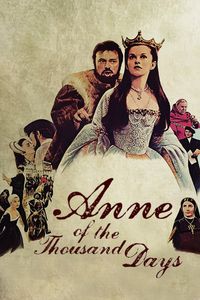
  • Anne of the Thousand Days (1969)

    Anne of the Thousand Days (1969)

    (On TV, October 2019) There are Oscar-nominated movies that age so poorly that it’s a wonder why they were ever nominated, and then there are those where it’s still obvious, decades later, why they were. Anne of the Thousand Days belongs to the second category, give how lavishly it portrays one of the high points of any High School history curriculum. Here we are, once again, in King Henry VIII’s court as he throws a hissy fit about his right to divorce whoever he wants. This being said, Richard Burton ably plays him, and he gets to face off with a very young and fiery Genevieve Bujold as the titular Anne (Elizabeth I’s mom, if you’re keeping track). It’s not just a costume drama: it’s one of the ultimate examples of the form. The colours and cinematography still impress fifty years later, with more camera movements than we could expect from a film of that period. Alas, my interest for such subject matter is near an all-time low (I blame High School), and I found myself more bored than intrigued by the result even if I can recognize that it’s a superior example of such. Even I ended up appreciating some of the touches of high drama, humour or romance in the middle of a very well-known story. It liked it quite a bit better than A Man for All Seasons, for instance. But at least I can now take it out of my list of Oscar nominees I still hadn’t seen.

  • The Longest Day (1962)

    The Longest Day (1962)

    (On Blu Ray, September 2018) I often complain about excessively long movies, but even at nearly three hours, I found The Longest Day riveting throughout. A meticulously detailed overview of the Allied landing in Normandy during World War II, this film takes a maximalist approach to the event: It features dozens of speaking roles in three languages, as it tries to explain what happened from the American, British, French and German perspective. Character development gets short thrift, but that doesn’t matter as much as you’d think if you consider the event as world-sweeping history featuring four nations. An all-star ensemble cast helps propel the story forward with some sympathy, as the personas of John Wayne, Richard Burton, Robert Mitchum, Sean Connery (in a very funny pre-Bond role), Sal Mineo and may others guide us through the war. The black-and-white cinematography is gorgeous, and hits anthology levels with a sweeping minutes-long uninterrupted shot of urban warfare. (There’s also a great camera movement early in the film that shows the beach landing and many of the 23,000 soldiers used during filming.) While Saving Private Ryan has eclipsed The Longest Day as the definitive portrayal of D-Day, this 1962 production remains important as a historical document in itself: Many cast and crew had been in Normandy twenty years later, to the point where some actors were portraying people close to them when it happened. (Richard Todd was offered his own role and ended up taking that of his then-superior officer, and ends up speaking “to himself” during the movie.) Visually, the movie remains spectacular even fifty-five years later, and it gets better the more early-1960s stars you can spot. (This also works for historical figures—Omar Bradley is instantly recognizable in a one-shot role.) It’s an exceptional tribute to the events of June 6, 1944, a thrilling adventure story and its relatively bloodless nature doesn’t undercut its portrayal of war as being hell where anyone can die at any time. It’s quite a rewarding film, and it’s even better when you can understand more than one of the three spoken languages.

  • Who’s Afraid of Virginia Woolf? (1966)

    Who’s Afraid of Virginia Woolf? (1966)

    (On Cable TV, January 2018) Whew. Some movies are entertainment, some are a spectacle, but Who’s Afraid of Virginia Woolf? feels like a roller derby of emotional destruction. Set among the world of northeastern academics, what first feels like a quasi-parody of mainstream drama quickly turns ugly as a middle-aged history teacher and his wife start arguing, then bring in another younger couple in the clash for “fun and games.”  Nobody escapes unscathed, especially the audience. A solid drama (with streaks of dark but undeniable comedy) becomes something special by virtue of its actors—Not only do Elizabeth Taylor and Richard Burton play the lead couple viciously squabbling, but they were married to each other at the time. Neither Taylor nor Burton have done anything better in their career—Burton, in particular, progressively shrugs off a meek drink-holding character to best his co-star in merciless put-downs. As for Taylor, it’s still impressive to see how she’d transform herself from a sex symbol to a frumpy shrewish housewife for the purposes of the film. (Not that it’s completely successful—even overweight and made-up with aging lines, Taylor-being-Taylor still looks better than anyone else.)  The film was shocking then for its frank language, but it’s still somewhat disturbing today due to its pure harshness: the film’s four characters constantly tear themselves down in the worst possible ways, and score hits on bystanders even when attacking each other. It’s as good as dialogue-driven drama gets, and it’s still remarkably effective today (albeit maybe a touch too long). As a capstone to the Taylor-Burton relationship, though, Who’s Afraid of Virginia Woolf? carries a weight that goes simply beyond a great movie.

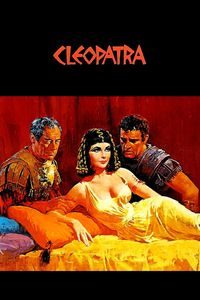
  • Cleopatra (1963)

    Cleopatra (1963)

    (On TV, January 2018) Some films are epic enough that they transcend time, and so Cleopatra remains even today a reference for excess in filmmaking. Long a yardstick for the most expensive movie ever produced, Cleopatra is still notable today for the lavishness of its super-production, whether it’s re-creating Cairo or Rome at the height of their power, putting hundreds of extras on-screen or giving more than sixty different costumes to its title character. And then there’s Elizabeth Taylor herself—while people of my generation mostly remember Taylor as an older woman of multiple marriages and excessive makeup, movies like Cleopatra firmly justify why she was a sex symbol for most of her career. Compelling even when the melodrama around her gets too thick to be taken seriously, Taylor is the film’s centrepiece and offers an unqualified reason to watch the film despite the nearly oppressive running time. Not that she’s the only reason: Seeing her play off future-husband Richard Burton is a great way to get into one of cinema history’s most remarkable romance and an insight in the frenzy that their affair created in mid-sixties pop culture and tabloid reporting. Spread the viewing over two evenings if you can—there’s an intermission and a somewhat different tone to the film’s two halves: the first half (Cleopatra and Julius Caesar) is better, but the second half (Cleopatra and Burton’s Mark Anthony) is more interesting. Cleopatra should have been much shorter, but there’s a lot of stuff shown on-screen, and more peak-era Taylor is never a bad thing.

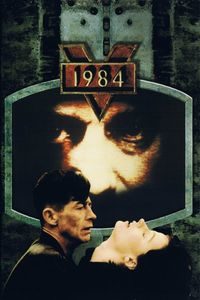
  • Nineteen Eighty-Four (1984)

    Nineteen Eighty-Four (1984)

    (On Cable TV, November 2017) I remember reading George Orwell’s Nineteen Eighty-Four during high school and being bleakly depressed for the rest of the day. I’m pretty sure we saw clips of the movie in class, but not the entire film. As it turns out, Nineteen Eighty-Four itself is just about the most straightforward adaptation that anyone could have made of the novel. The high points are all there (even down to the device of having the protagonist keep a diary as a way to insert voiceover narration), the atmosphere is bleakly industrial and the film, at times, seems to have emerged straight from the dreary post-war years in Britain, all bathed in dusty grays and dirty browns. It is also powerfully depressing to a degree that I had almost forgotten: By the time the film discusses removing fundamental biological imperatives as a way to further control the masses, we’re way past most of the nicest dystopias out there. (In fact, Nineteen Eighty-Four makes most post-apocalyptic stories look positively cheerful in comparison.)  John Hurt is both bland and good as protagonist Winston Smith—Richard Burton is more lively as voice-of-authority O’Brien. Writer/director Michael Radford did an exceptional job putting Orwell’s genre-defining vision on-screen. But, as faithful as the film can be to the novel, it’s also limited by that faithfulness. Having seen Brazil, I know which bleak dystopia I prefer.

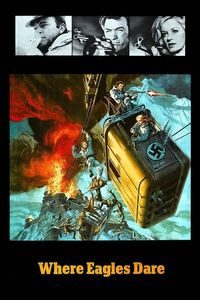
  • Where Eagles Dare (1968)

    Where Eagles Dare (1968)

    (On Cable TV, November 2017) As far as war thrillers go, there’s something almost awe-inspiring in seeing Where Eagles Dare take on so many familiar thriller tropes and dance with them. Considering that the screenwriter is none other than once-best-selling novelist Alistair MacLean, the strength of the script may not be a surprise. Still, there’s a pleasant mixture of familiar elements handled well as the characters punch Nazis, confront a hidden traitor, set out to expose a double agent (through a remarkably good scene), fight their way in and out of a mountain fortress … and so on. The production techniques are dated, but the film keeps a certain interest largely based on its straight-ahead plotting. Seeing Clint Eastwood in a solid role also helps, although Richard Burton does have an unusual screen presence here. Where Eagles Dare is big-budget blockbuster filmmaking from another era, and while it certainly has its problems now, it’s an avowed crowd pleaser, and as a straight-ahead adventure movie, a bit of a change from the kind of self-important WW2 drama that now seems the norm.