Richard Chamberlain

  • Night of the Hunter (1991)

    Night of the Hunter (1991)

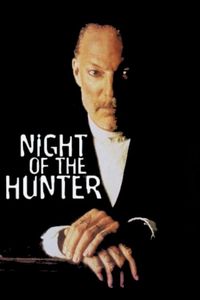
    (In French, On Cable TV, April 2021) It’s really not fair to compare a mediocre made-for-TV remake to an all-time classic, but it can be instructive. 1955’s Night of the Hunter, for classic movie fans, is the case example of how a film can be a commercial disaster upon release, only to become an acclaimed masterpiece later on, with the added tragedy that the commercial failure was so severe, and the recognition so late in coming, that the director (legendary actor Charles Laughton) never made a second movie. Even today, the original Night of the Hunter’s sense of style remains an exceptional example of film noir blended with eerie fairy-tale surrealism, the likes of which we wouldn’t see in cinema for quite a while. Considering that the other main asset of Night of the Hunter are the memorable performances of Robert Mitchum, Lillian Gish and Shelley Winters, it’s a lightning-in-a-bottle kind of film that requires a high bar for a remake — you’d have to find a gifted director and just as memorable performers and even then, the result would be unlikely to strike the same extraordinary combination. That’s why I’m ghoulishly fascinated by the thought process that went into authorizing a remake as a made-for-TV low-budget production with flat aesthetics, a director (David Greene) almost exclusively known as a TV-movie specialist, and a lead actor (Richard Chamberlain) who was past his prime at the time. How else could it have turned out but a humdrum suspense drama, perfunctorily shot and largely disposable? Almost custom-designed to be unfavourably compared to the original, this remake clearly fetishizes the original (as per the focus on the LOVE and HATE knuckle tattoos) but never even tries to strike its own way in exploiting the material — it’s undistinguishable from countless other bland TV movies striking exploitative notes (such as child endangerment) but without any of the additional charges that great acting and directorial flair could have brought to the result. Compare, contrast and despair.
  • The Four Musketeers (1974)

    The Four Musketeers (1974)

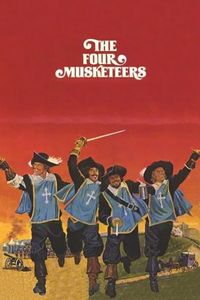
    (On Cable TV, February 2021) There are informal series of remakes out there that become generational touch points of sorts. Well-known stories are reinterpreted every few years with a new crop of actors, giving us a glimpse at how each era makes its movies. The generational updates to dramas such as Little Women and A Star is Born certainly count, but Alexandre Dumas’ Les Trois Mousquetaires is in a category of its own. As an adventure with strong dramatic content, the Musketeers story can be adapted to a variety of contexts, either as out-and-out action spectacles, as costume dramas, or as classic swashbuckling adventures. Actors as different as Douglas Fairbanks, Gene Kelly and Luke Evans have played in well-known versions of The Three Musketeers, and the 1974 version fits right in the middle of 1970s Hollywood. To be fair, this is the second half of a story begun with 1973’s The Three Musketeers, so the comparisons are not exact — this film covers the second half of the Dumas novel that often gets short thrift in other adaptations. (Something not apparent to viewers is how both movies were originally conceived as one and led to movie contract history — with producers splitting the film in two during production, and getting in such incredible judicial problems regarding the cast and crew contracts that the film led to the imposition of the SAG’s “Salkind Clause” to prevent such shenanigans from happening again.)  Watching The Four Musketeers isn’t as much about the story as it is about how they made mid-budget adventure spectacles in the 1970s — with an all-star cast of actors such as Michael York, Oliver Reed, Richard Chamberlain, Charlton Heston, Faye Dunaway, Christopher Lee and Raquel Welch (!!!), a director like Richard Lester (who was still a few years away from superstardom as Superman director) and expansive European on-location shooting. Alas, movies from the 1970s also share the putrid cinematography of the time, with flat colours, dull images and perfunctory sets. I’m not interested in whether the entire shoot was done under overcast weather — I’m interested in the results, and they are as gray and featureless as the story should be vivacious and fun. Some biting dialogue and voice-overs make the film almost as interesting as the Dumas original, but the impression left by this film is one of heaviness and gracelessness: the action sequences pale in comparison to other adaptions of the story, and even the star-power can’t quite elevate the material. I may, however, be interested in watching the film again as part of a double feature with the original. While it’s fun to watch a musketeer film that pays attention to the often-neglected second half of the novel, I probably would have had more fun in watching the introduction first. Still, I did like to see that cast with that story, and in this regard The Four Musketeers does achieve its goal of being one more entry in a century-old conversation between Hollywood and Dumas’ novel.