Richard Quine

  • The Notorious Landlady (1962)

    The Notorious Landlady (1962)

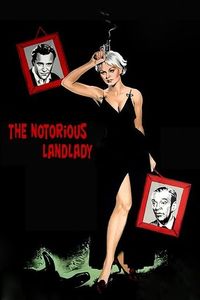
    (On Cable TV, August 2021) Sometimes, a good cast is all you really need. While the script for The Notorious Landlady is decent enough, it’s the presence of Kim Novak, Jack Lemmon and Fred Astaire (in a non-dancing, non-singing role) that really makes the film a joy to watch. It begins as an American diplomat newly arrived in London goes flat-hunting and finds a rather nice place at a good price — although there’s clearly something off in the way the neighbours treat the landlady. With Novak as the landlady, Lemmon as the diplomat and Astaire as the diplomat’s superior, the cast is well-aligned to the script’s blend of comedy with just a bit of suspense: what has the landlady done, and is it likely to happen again? Disappointing shot in black-and-white at a time when that kind of light-hearted film had no reason not to be in colour (indeed, director Richard Quine’s films prior and following this one were both comedies shot in colour), The Notorious Landlady does make the most out of its cast playing roles well-suited to them. Lemmon is instantly likable as a do-gooder diplomat, while Novak is clearly not the monster that her neighbours whisper about, while Astaire is funny on his own as a senior official stuck with a very visible situation he doesn’t want. (He has the film’s best quote, one that I can see myself using at the office: “Gridley, you will learn that the higher your position, the more mistakes you’re allowed. In fact, if you make enough of them, it’s considered your style.”) The script, co-written by future-comedy-superstar director Blake Edwards, blends a fair amount of comedy, romance and criminal suspense. The Notorious Landlady is a solid film, not something that ranks as a classic, but something fit to be appreciated as a decent unassuming studio product, aimed to entertain. (I suspect that the film would be more widely appreciated had it been shot in colour, but that’s something else.)
  • Hotel (1967)

    Hotel (1967)

    (On Cable TV, April 2021) As someone who read almost all of Arthur Hailey’s novels as a teenager, I knew what I was getting into in approaching Hotel: A sprawling, ensemble-cast look at a particular environment, with a narrative built of subplots exploring that environment. Some call it didactic fiction — I just liked the stuff. Now, novels like Hailey’s can’t very well be replicated in film: viewers won’t stand for it in the same way that readers do, and there’s only so many subplots you can fit in a two-hour film (as opposed to, say, a miniseries). So, it’s not a surprise if Hotel-the-film is a markedly simpler thing than Hotel-the-novel, nor if the depths of the docufiction aren’t as satisfying. Accordingly, I got far more fun out of the film’s first half than the second, as the job of the hotel manager protagonist is demonstrated, as the subplots are set in motion, as the film takes some time (even fleetingly) to explore its setting. There’s a beautiful one-shot, for instance, coming out of an elevator into the hotel lobby, tracking the protagonist as he takes care of business, then goes back into the elevator. After that, well, the subplots take over and don’t necessarily converge toward a happy ending, and the hotel itself is not allowed to remain the central character like it did in the book. Still, I liked the final result quite a bit — Rod Taylor brings his square-jawed charm to the role of the hotel manager, Catherine Spaak plays a great femme fatale in very 1960s style, the incredible racism of the hotel owner is a reminder of how far we’ve come in fifty years, the production design is impressive and Richard Quine’s direction has its moments. There probably wasn’t room to fit anything more in the film short of turning it into a TV show (which is still not a bad idea, hint). Fleetingly, Hotel did take me back to earlier days reading through Hailey’s brick-sized novels, and that’s also a plus.